





How to Integrate Bespoke Furniture in Luxury Interiors
Defining the unique aspirations of discerning clients is never a box-ticking exercise for British interior designers and high-end home decorators. Integrating bespoke furniture into luxury residences means synchronising each choice with individual needs and sophisticated tastes. A solution-based design thinking process lays the groundwork, guiding every stage from in-depth consultations to the artful placement of custom pieces. This guide sheds light on proven methods for crafting interiors where every element is both deeply personal and flawlessly executed.
Table of Contents
- Step 1: Assess Client Needs And Design Objectives
- Step 2: Select Bespoke Furniture Tailored To Spaces
- Step 3: Coordinate Finishes With Existing Interiors
- Step 4: Install And Position Bespoke Pieces Strategically
- Step 5: Validate Integration Meets Aesthetic Standards
Quick Summary
| Key Point | Explanation |
|---|---|
| 1. Conduct an In-Depth Consultation | Understand your client’s needs and design vision through active listening and probing questions during initial meetings. |
| 2. Create a Comprehensive Design Brief | Document both explicit and implicit requirements to ensure bespoke furniture aligns with the client’s lifestyle and aesthetics. |
| 3. Focus on Spatial Analysis | Evaluate room flow and spatial dynamics to choose bespoke pieces that enhance functionality and complement the interior. |
| 4. Prioritise Aesthetic Harmony in Finishes | Ensure new furniture finishes align with existing interiors for a cohesive visual experience and consider sustainability. |
| 5. Validate Design Integration | Use frameworks to assess how bespoke furniture interacts with the space and seek feedback to confirm aesthetic coherence. |
Step 1: Assess Client Needs and Design Objectives
Successfully integrating bespoke furniture into luxury interiors begins with a comprehensive understanding of your client’s unique requirements and design vision. Your primary goal is to transform their aspirations into a tangible, extraordinary spatial experience.
The assessment process requires a systematic yet personalised approach. Start by scheduling an in-depth consultation where you deeply understand client expectations. During this meeting, employ active listening techniques to uncover not just surface preferences, but underlying lifestyle needs, aesthetic sensibilities, and functional requirements. Ask probing questions about their daily routines, design inspirations, colour palettes, and spatial interactions. Sketch preliminary conceptual ideas in real-time to demonstrate your commitment to their vision.
Adopt a design thinking methodology that prioritises empathy and user-centred solutions. Document every nuanced requirement meticulously, creating a comprehensive brief that captures both explicit and implicit design objectives. This approach ensures your bespoke furniture recommendations will seamlessly integrate with the client’s existing interior while elevating their living environment.
Expert Suggestion: Keep a visual mood board during consultations to help clients articulate their design preferences more effectively and collaboratively.
Step 2: Select Bespoke Furniture Tailored to Spaces
Selecting the perfect bespoke furniture requires an artful balance between aesthetic vision and spatial functionality. Your goal is to curate pieces that not only complement the room’s architectural elements but also enhance the client’s lifestyle and design narrative.
Begin by conducting a meticulous spatial analysis that goes beyond basic measurements. Interactive furniture layout systems can help you understand how different pieces will interact within the given environment. Consider the room’s natural flow, existing architectural features, light sources, and potential traffic patterns. Sketch multiple potential arrangements that demonstrate how each bespoke piece will integrate harmoniously. Pay close attention to proportion scale and visual weight ensuring that no single item overwhelms the space.
When collaborating with bespoke furniture makers, communicate your precise spatial requirements with technical drawings and detailed briefs. Discuss material selections that align with the room’s aesthetic and functional demands. Each piece should serve a dual purpose of visual statement and practical utility. Consider how custom furniture can solve specific design challenges such as awkward room layouts or unique architectural constraints.
Expert Suggestion: Always request miniature mock-ups or digital renderings from furniture makers to visualise how bespoke pieces will truly look within the actual space.
Step 3: Coordinate Finishes with Existing Interiors
Coordinating furniture finishes with existing interiors requires a nuanced approach that balances aesthetic harmony and design coherence. Your objective is to create a seamless visual dialogue between new bespoke pieces and the established interior environment.
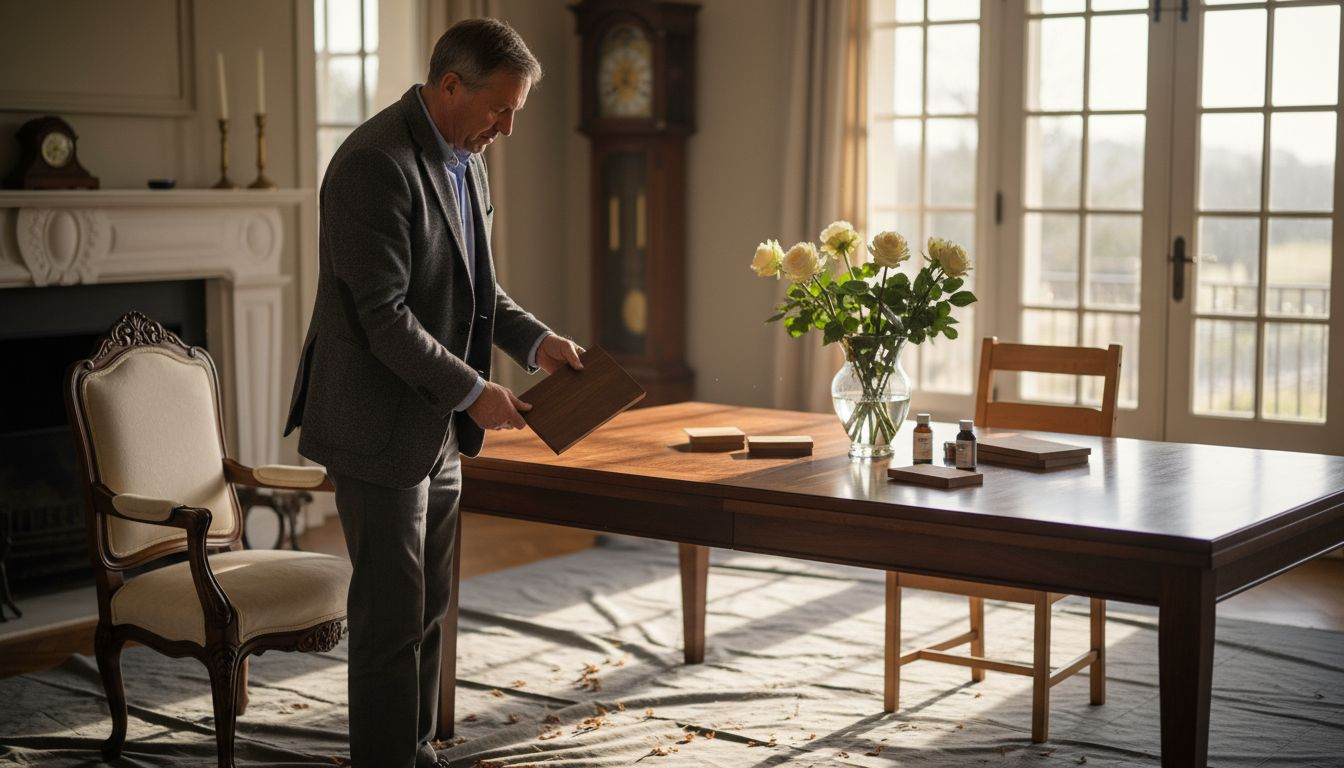
Begin by thoroughly analysing the existing interior palette and furniture placement techniques. Examine the current colour scheme, texture variations, and material compositions to identify complementary and contrasting elements. Look beyond surface colours and consider the underlying tonal qualities and material reflectivity. Develop a sophisticated colour and texture strategy that either subtly integrates new pieces or creates intentional visual counterpoints that enhance the overall design narrative.
When selecting finishes, prioritise materials that not only match aesthetic requirements but also align with sustainable design principles. Consider how different surface treatments interact with natural and artificial lighting, creating depth and visual interest. Consult with material specialists who can provide expert guidance on finish durability, maintenance requirements, and long term aesthetic performance. Your selections should demonstrate a refined understanding of how texture, sheen, and material quality contribute to the overall sensory experience of the space.
Expert Suggestion: Create physical material sample boards that combine existing interior finishes with proposed new furniture materials to visualise complete design harmony.
Here is a comparison of the roles of two essential tools for effective bespoke furniture integration:
| Tool | Main Purpose | Impact on Project |
|---|---|---|
| Visual Mood Board | Clarifies client preferences visually | Reduces miscommunication, inspires ideas |
| Material Sample Board | Coordinates finishes and textures | Ensures tactile and tonal harmony |
Step 4: Install and Position Bespoke Pieces Strategically
Positioning bespoke furniture requires precision and an artistic understanding of spatial dynamics. Your ultimate goal is to transform custom pieces from mere objects into integral components of the room’s architectural narrative.
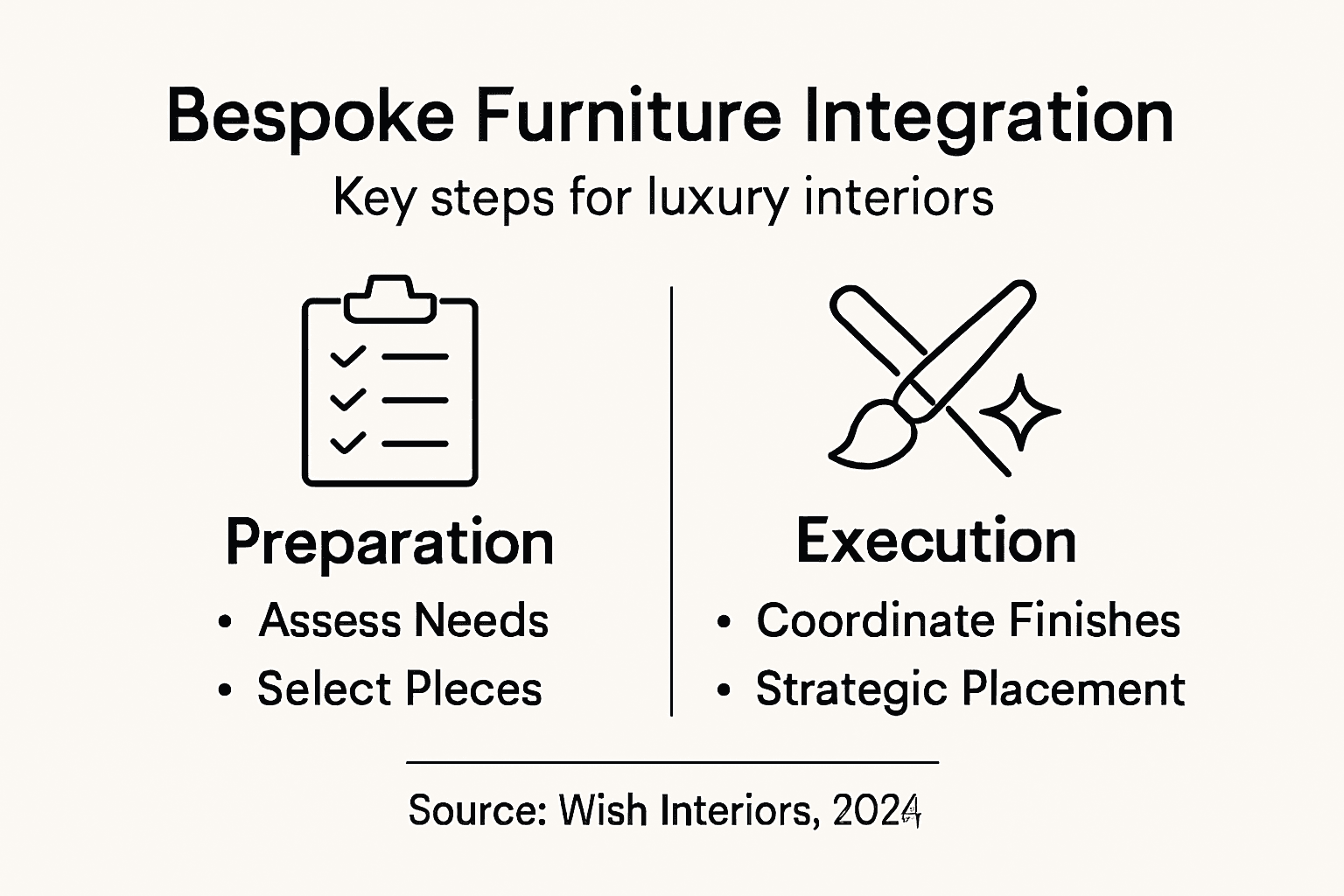
Begin by conducting a detailed site survey using strategic furniture installation techniques. Measure spaces meticulously and create digital or physical templates that represent each furniture piece. Consider critical factors like natural light paths, architectural focal points, traffic flow, and potential visual sightlines. Ensure each bespoke item is positioned to maximise both functional utility and aesthetic impact. Think beyond conventional placement strategies and explore how unique positioning can create unexpected visual dialogues between furniture and architectural elements.
Pay extraordinary attention to installation details that elevate the overall design experience. Collaborate closely with installation professionals who understand the nuanced requirements of luxury bespoke furniture. Verify precise alignment tolerances and implement specialised mounting techniques that preserve both the furniture’s integrity and the surrounding architectural surfaces. Consider how each piece interacts with surrounding elements creating a holistic spatial composition that feels intentional and harmonious.
Expert Suggestion: Use painter’s tape to outline furniture placement before final positioning to visualise spatial relationships and potential configuration adjustments.
Step 5: Validate Integration Meets Aesthetic Standards
Validating the seamless integration of bespoke furniture requires a meticulous and discerning approach that goes beyond superficial visual assessment. Your objective is to conduct a comprehensive evaluation that ensures every design element contributes to a cohesive and extraordinary interior experience.
Utilise design integration frameworks to systematically assess how bespoke pieces interact with the existing interior environment. Create a critical checklist that evaluates multiple sensory and visual dimensions. Examine how each furniture piece responds to natural and artificial lighting, how its material qualities complement surrounding surfaces, and whether its positioning creates intentional visual dialogue. Analyse the spatial rhythm by stepping back and observing how the furniture contributes to the room’s overall compositional balance.
Engage in rigorous iterative validation by documenting your design decisions through professional photography and detailed sketches. Invite critical feedback from trusted colleagues or design mentors who can provide an objective perspective. Consider conducting a client walkthrough where you carefully explain the rationale behind each design choice, demonstrating how the bespoke furniture transcends mere functionality to become an integral part of the interior narrative.
Expert Suggestion: Create a comparative digital rendering that allows side by side evaluation of the space before and after furniture integration to objectively assess design improvements.
The following table summarises how each step in the bespoke furniture integration process adds value to luxury interiors:
| Step | Primary Value | Key Consideration |
|---|---|---|
| Client Needs Assessment | Aligns design with client lifestyle | Capturing implicit and explicit preferences |
| Furniture Selection | Enhances both form and function | Balancing visual impact and usability |
| Finish Coordination | Fosters interior harmony | Integrating new and existing materials |
| Strategic Installation | Maximises design intent | Attention to spatial relationships |
| Integration Validation | Ensures cohesive results | Detailed aesthetic and functional reviews |
Elevate Your Luxury Interiors with Bespoke Furniture Solutions
Integrating bespoke furniture into luxury interiors demands precision and a deep understanding of client needs, spatial dynamics and finish coordination. If you seek to overcome challenges like balancing aesthetic vision with practical functionality or ensuring seamless harmony with your existing interiors, you are in the right place. Discover how our curated collection of on trend luxury furniture and bespoke items can help you realise your design aspirations effortlessly.
Explore unique pieces that enhance form and function, tailored to your exact specifications and lifestyle. Visit Wish Interiors to access expert craftsmanship and exceptional finishes that coordinate beautifully with your space. Dont wait to transform your interiors — start your bespoke furniture journey now and experience truly personalised design solutions at https://wishinteriors.com.
Find inspiration and practical support every step of the way by choosing our bespoke furniture collection designed specifically for luxury spaces that demand perfection.
Frequently Asked Questions
How should I start assessing my client’s needs for bespoke furniture integration?
To begin assessing your client’s needs, schedule an in-depth consultation to thoroughly understand their lifestyle, design preferences, and functional requirements. Prepare precise questions regarding their daily routines and aesthetic sensibilities to create a comprehensive design brief.
What techniques can I use to select bespoke furniture that fits the space?
Utilise a meticulous spatial analysis to ensure the furniture complements the room’s architectural features and meets the client’s lifestyle needs. Sketch multiple arrangements to visualise how each piece will interact within the space, focusing on proportion and scale.
How can I ensure the finishes of bespoke furniture coordinate with my existing interiors?
Analyse the current colour scheme and textures to identify complementary materials for your bespoke furniture. Develop a colour and texture strategy that integrates the new pieces seamlessly, considering how they will interact with lighting and existing finishes.
What are the best practices for installing bespoke furniture?
During installation, use precise measurements and templates to position each piece, ensuring it enhances both functionality and aesthetics. Collaborate with professionals to confirm proper alignment and installation techniques that maintain the integrity of both the furniture and architectural features.
How do I validate that the bespoke furniture integration meets aesthetic standards?
Conduct a comprehensive evaluation of how each piece interacts with the existing interior by using a critical checklist that considers lighting, material qualities, and positioning. Document observations through sketches or photography, and invite feedback from colleagues or clients to assess overall cohesion in the design.
Recommended
Sample Image Gallery


