





Why Invest in Designer Furniture: Value and Impact
Selecting furniture for a London home goes far beyond matching fabrics or chasing fleeting trends. Designer furniture signals refined judgment and a pursuit of genuine value, distinguishing interiors with thoughtful form and lasting quality. Increasingly, affluent homeowners recognise that bespoke pieces crafted by skilled designers combine investment potential with cultural significance and personal expression, delivering more than mere decoration. Discover how designer furniture’s artistry, durability, and tailored design elevate living spaces—and unlock value beyond the price tag.
Table of Contents
- Defining Designer Furniture And Common Myths
- Key Qualities Of Bespoke And Luxury Pieces
- Investment Value: Appreciation And Longevity
- Personalisation, Sustainability, And Prestige
- Financial Implications Versus Alternatives
Key Takeaways
| Point | Details |
|---|---|
| Designer furniture represents a lasting investment. | Quality pieces typically maintain or appreciate in value over decades, offering better financial returns than mass-produced options. |
| Bespoke furniture reflects individual identity and values. | Personalisation ensures that furniture aligns with specific needs and aesthetics, enhancing user satisfaction and engagement. |
| Sustainability is integral to contemporary luxury. | Custom furniture can be crafted from eco-friendly materials and ethical practices, appealing to the environmentally conscious consumer. |
| Evaluate long-term costs over initial price. | Consider the annual cost of ownership, factoring lifespan and potential resale value, to understand the true financial advantages of designer pieces. |
Defining Designer Furniture and Common Myths
Designer furniture represents far more than aesthetically pleasing pieces for your home. At its core, designer furniture encompasses bespoke or branded pieces created by trained designers who prioritise both function and form, moving beyond standard mass-produced options to deliver intentional craftsmanship. These pieces often reflect cultural significance and artistic expression, embodying the designer’s vision whilst addressing your specific lifestyle needs. In London’s affluent interior design circles, designer furniture serves as a marker of refined taste and intentional living rather than simply filling empty spaces. The distinction matters because designer pieces are conceived with meticulous attention to materials, proportions, and longevity—qualities that justify their investment value.
Several persistent myths cloud judgement around designer furniture purchases. The most damaging is the belief that designer furniture is purely decorative or unnecessarily expensive. Reality tells a different story. Quality designer pieces often cost more initially because they use superior materials, undergo rigorous testing, and benefit from the designer’s expertise built over decades. Unlike high street alternatives that might require replacement within 3-5 years, well-chosen designer furniture often appreciates in value or maintains its worth for 15-20 years. Another common myth suggests designer furniture must match a singular style or trend. In truth, exceptional designer pieces adapt to evolving preferences and newer additions because they’re built on timeless design principles rather than fleeting fashion cycles. The notion that designer furniture lacks practicality is equally misguided—contemporary designers obsess over usability, understanding that beauty without function creates expensive clutter rather than cherished investment pieces.
The shift towards personalisation in design has dismantled the old assumption that designer furniture follows one-size-fits-all aesthetics. Today’s approach recognises that your home reflects individual identity and values, not designer dogma. This evolution means designer furniture increasingly incorporates sustainable materials and ethical production practices, aligning with the priorities of discerning London homeowners who view their purchases as reflections of their principles. Understanding these distinctions helps you approach designer furniture investments with clarity, separating marketing hype from genuine value propositions.
Pro tip: When evaluating designer furniture, scrutinise the designer’s background and previous work rather than brand recognition alone—a lesser-known designer with proven craftsmanship often delivers superior value than a trendy name with inconsistent quality.
Key Qualities of Bespoke and Luxury Pieces
Bespoke furniture stands apart from mass-produced alternatives because it treats each piece as a unique architectural element rather than a standard commodity. When you commission bespoke furniture, you’re investing in personalised design that maximises your space and reflects your individual aesthetic vision. This process begins with understanding your lifestyle, spatial constraints, and design preferences—then translating these into something tangible. A bespoke sofa isn’t simply a larger or smaller version of an existing design; it’s conceived specifically for your room dimensions, your colour preferences, and your functional needs. The distinction matters profoundly because bespoke pieces integrate personal vision with artisan skill, creating furniture that evolves with your life rather than against it.
Luxury bespoke furniture distinguishes itself through three interconnected qualities: precision craftsmanship, premium material selection, and exclusivity. Precision craftsmanship means every joint, seam, and finish receives meticulous attention—the kind of attention that typically takes skilled artisans weeks or months rather than days. Premium materials like artisanal leathers, designer textiles, and sustainably sourced hardwoods aren’t selected merely for appearance; they’re chosen for their performance characteristics and ageing properties. A quality leather develops a patina over years, becoming more beautiful rather than worn. Designer textiles resist fading and maintain structural integrity through decades of use. These materials perform roles that cheaper alternatives cannot sustain. Exclusivity completes the picture—your bespoke piece exists nowhere else, making it a genuine investment in something irreplaceable. Unlike trend-driven furniture that loses relevance within 3-5 years, bespoke luxury pieces often appreciate in value or maintain their worth indefinitely.
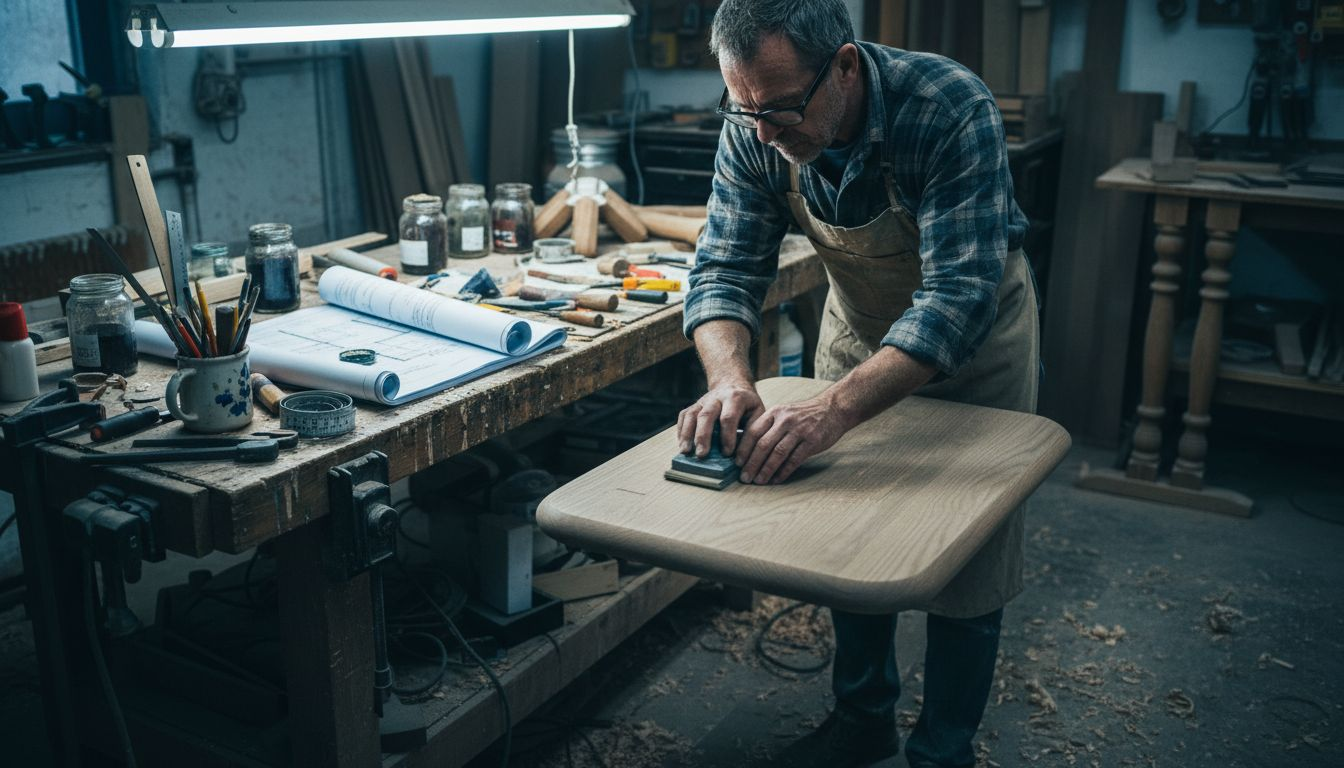
Luxury bespoke furniture enhances spatial flow and aesthetic balance by functioning as integrated architectural elements rather than separate items occupying space. A custom-designed bookcase doesn’t just hold books; it addresses wall proportions, complements your interior’s visual rhythm, and creates spatial zones. Custom seating adapts to your room’s dimensions perfectly, eliminating the awkward gaps that ready-made pieces inevitably create. This holistic approach means your home feels intentionally designed rather than assembled from disparate sources. For London’s affluent homeowners, this represents the distinction between a house that looks nice and a home that tells your story through every detail. The longevity of bespoke luxury pieces—often spanning 20, 30, or even 50 years with proper care—transforms the initial investment into genuine value when measured across decades.
Pro tip: Request samples of materials and finishes before finalising your bespoke order, and visit the maker’s workshop if possible to witness their craftsmanship firsthand—this eliminates surprises and deepens your connection to the final piece.
To help clarify core differences, here is a summary of qualities separating bespoke designer furniture from mass-produced alternatives:
| Quality | Designer Bespoke Furniture | Mass-Produced Furniture |
|--------------------|----------------------------------|------------------------------|
| Materials | Sustainably sourced, premium | Standard, lower-grade |
| Design Approach | Personalised, custom architecture | Uniform, generic styling |
| Craftsmanship | Skilled artisans, hand-finished | Factory-assembled, limited detail |
| Longevity | 20 to 50 years (with care) | 3 to 8 years |
| Investment Value | Often appreciates, retains value | Depreciates rapidly |
Investment Value: Appreciation and Longevity
Designer furniture functions as a financial investment in ways that mass-produced pieces simply cannot replicate. When you purchase a quality designer sofa or bespoke dining table, you’re acquiring an asset that typically holds or increases in value over decades, unlike high street alternatives that depreciate the moment you bring them home. Consider the mathematics: a £2,500 designer piece that lasts 25 years costs roughly £100 annually, whereas a £600 budget sofa requiring replacement every 4 years costs £150 annually. The financial advantage compounds when you factor in the superior condition of well-maintained designer pieces. A 15-year-old designer chair from a respected craftsman often commands 60 to 75 percent of its original purchase price on the secondary market, whilst a comparable budget piece from the same era has zero resale value. This durability differential is the primary driver of investment returns for affluent London homeowners who view their furnishings as long-term assets rather than temporary solutions.
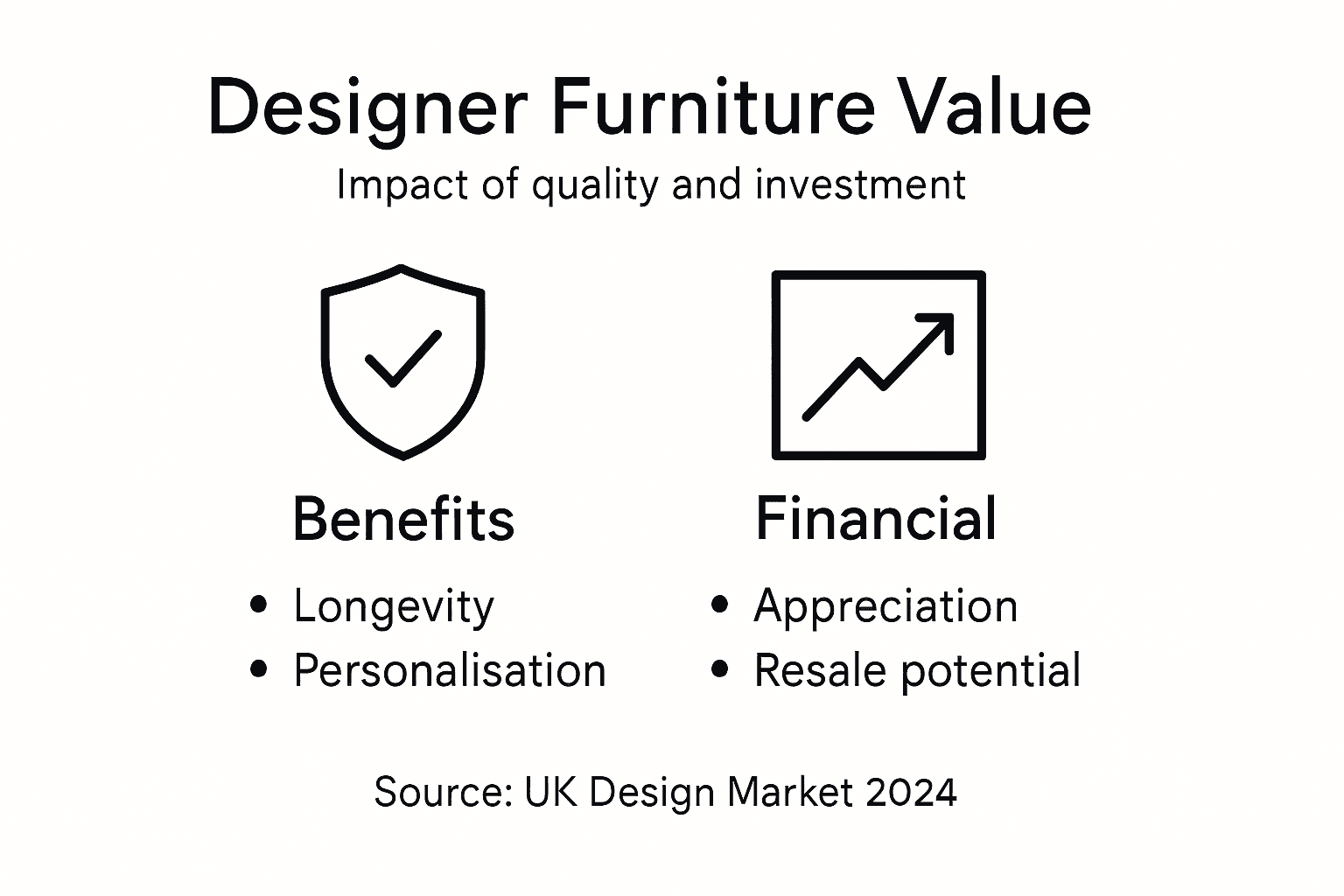
Appreciation occurs through multiple mechanisms. Vintage and classic designer pieces frequently increase in value as production ends and scarcity increases—a phenomenon well-documented in the design market where iconic mid-century pieces now sell for multiples of their original cost. Contemporary bespoke pieces appreciate differently, gaining value through the maker’s growing reputation and the piece’s proven longevity. A custom sofa crafted by an emerging designer 10 years ago becomes a documented example of that designer’s work, lending credibility and desirability to new commissions. Even pieces that don’t appreciate financially maintain their value substantially better than alternatives because they remain functional, beautiful, and relevant across changing design trends. A timeless mid-grey linen sectional works equally well in 2024 as it did in 2010, whereas trends in colour and form render dated budget furniture obsolete within 5 to 7 years.
Longevity directly translates to investment protection. Designer furniture crafted from premium materials and built by skilled artisans genuinely lasts 20, 30, or even 50 years with proper care. This creates a compounding financial advantage: the longer you own a quality piece, the lower its annual cost becomes. A bespoke leather Chesterfield sofa costing £4,200 that lasts 35 years costs £120 annually, whilst replacing a budget equivalent every 5 years costs £240 annually before factoring in disposal costs and environmental impact. Professional restoration services for designer pieces—reupholstering, refinishing, or structural repairs—cost substantially less per year of extended life than replacement cycles for inferior furniture. The key insight is that investment value in designer furniture stems not from speculation but from superior utility, timeless design, and documented quality that accumulates value through years of reliable performance and can be enjoyed across generations.
Pro tip: Request detailed care instructions from your designer or craftsperson at purchase, and budget £150 to £300 annually for professional cleaning and maintenance—this investment preserves value far more effectively than waiting for costly repairs after damage occurs.
Personalisation, Sustainability, and Prestige
Personalisation has become the defining characteristic of luxury furniture investment, particularly among London’s discerning homeowners who view their interiors as extensions of personal identity rather than decorative backdrops. When you commission bespoke furniture, you’re not simply choosing colours and fabrics; you’re articulating your values, aesthetic preferences, and lifestyle requirements through tangible form. This level of customisation fundamentally changes your relationship with the pieces inhabiting your home. A personalised dining table isn’t just furniture you eat at—it’s a reflection of how you entertain, what materials you value, and the impression you wish to create. This personalisation directly increases user engagement and satisfaction because the piece genuinely addresses your specific needs rather than forcing compromise. A standard sectional sofa might not fit your room’s dimensions or your preferred seating configuration, but a bespoke alternative solves these problems entirely, creating a piece that feels purposefully designed for your life rather than coincidentally acquired.
Sustainability and personalisation operate synergistically in ways that challenge conventional thinking about luxury consumption. Personalised design reduces overconsumption by aligning products with genuine user needs, meaning you purchase what you actually require rather than settling for approximations and accumulating unused alternatives. A custom sofa built precisely to your specifications lasts longer because it fits your space perfectly and serves your actual lifestyle, reducing the temptation to replace it prematurely with something that works better. Green personalisation encourages sustainable choices through tailored product design, allowing you to specify eco-friendly materials, ethical production methods, and construction techniques prioritising longevity over trends. Rather than purchasing mass-produced pieces containing unnecessary features you’ll discard, bespoke design lets you specify only what matters. This conscious consumption approach appeals deeply to affluent homeowners who recognise that true luxury lies in quality and intention rather than quantity and excess. The European Union’s Circular Economy Action Plan increasingly supports innovations combining sustainability with bespoke design, cementing the idea that personalised luxury furniture represents environmentally responsible choice.
Prestige in contemporary design markets increasingly derives from ethical and sustainable practices rather than brand names alone. Your bespoke sofa crafted from sustainably sourced leather and constructed by skilled artisans using traditional joinery commands respect not because of a famous label but because it embodies values: environmental responsibility, artisanal craftsmanship, and personal authenticity. London’s most influential interior designers now prioritise sustainable bespoke pieces over trending mass-market alternatives, recognising that discerning clients value substance over fashion. This cultural shift means investing in personalised, sustainable designer furniture positions you at the forefront of intelligent consumption rather than conspicuous spending. Your choices become conversation pieces that reveal sophisticated understanding of value, longevity, and responsibility—the hallmarks of true prestige in an era increasingly critical of wasteful consumption.
Pro tip: When commissioning bespoke furniture, explicitly request information about material sourcing and production methods, then ask the designer how their choices support longevity and environmental responsibility—this transparency often reveals makers genuinely committed to sustainable luxury rather than greenwashing.
Financial Implications Versus Alternatives
The decision to invest in designer furniture requires honest financial analysis rather than romantic notions about luxury. Yes, a bespoke sofa costs significantly more upfront than a high street alternative. A custom piece might demand £3,500 to £6,000 whilst budget options retail for £400 to £900. This sticker shock is real and deserves scrutiny. However, the financial comparison becomes substantially more nuanced when you extend the timeline beyond the initial purchase. Consider this scenario: you buy a £600 budget sofa expecting it to last 8 years. Within 4 years the frame deteriorates, cushions flatten, and fabric shows permanent wear. Replacement costs £600 again. Over 20 years, you’ve spent £3,000 plus disposal costs, environmental impact, and the endless cycle of shopping for replacements. The £4,000 designer alternative, built with eight-way hand-tied springs and premium suspension systems, still performs beautifully after 20 years, costing £200 annually. The actual financial advantage of designer furniture emerges not from a single purchase but from compounding savings across decades.
Current market conditions present both challenges and opportunities for designer furniture investment. Supply chain disruptions and inflation impact pricing across the furniture industry, affecting everything from raw materials to artisan labour costs. This means designer furniture prices have increased 8 to 15 percent in recent years, squeezing entry points for new buyers. Conversely, this market pressure creates opportunities for strategic purchasing. Established designers with proven track records now command premium pricing, but emerging makers offer exceptional quality at lower price points before their reputation inflates costs. Additionally, economic uncertainty makes quality investments more sensible, not less. When discretionary spending becomes constrained, investing in durable pieces that won’t require replacement protects your long-term budget better than perpetual cheap alternatives. Your financial resilience improves when you own fewer, better things rather than numerous disposable items requiring constant replacement.
Comparison frameworks help clarify financial decisions. Rather than comparing purchase price alone, calculate cost per year of ownership: divide the total cost (including replacements over time) by the expected lifespan. A £2,000 designer sofa lasting 25 years costs £80 annually. A £500 budget sofa lasting 4 years costs £125 annually. Factor in restoration costs for designer pieces (typically £200 to £400 annually for professional cleaning and minor repairs) versus replacement cycles for budget alternatives, and the mathematics favour investment in quality dramatically. For London homeowners with established careers and stable housing, designer furniture represents a financially rational decision that simultaneously improves your living environment, reduces consumption cycles, and preserves capital value across decades. This isn’t about status; it’s about intelligent resource allocation.
Here’s a concise comparison illustrating the financial impact of choosing designer versus budget furniture over time:
| Aspect | Designer Furniture | Budget Furniture |
|---|---|---|
| Initial Cost | £2,500 to £6,000 | £400 to £900 |
| Typical Lifespan | 20–35 years | 4–8 years |
| Annual Cost Estimate | £80–£200 | £100–£150 |
| Resale Value | Retains 60–75% original value | Negligible after 5 years |
| Maintenance Approach | Professional cleaning/restoration | Frequent replacement |
Pro tip: Calculate your true cost per year of ownership by dividing total lifetime cost (including replacements) by expected years of service, then compare across options—this reveals that designer furniture often costs less annually despite higher upfront prices.
Discover the True Value of Investing in Designer Furniture Today
The challenge many face when choosing furniture is balancing style, longevity and investment value. This article highlights the importance of selecting bespoke designer pieces that offer personalised craftsmanship, premium materials and enduring appeal—key factors that elevate your home environment while protecting your financial commitment. If you seek furniture that goes beyond fleeting trends and truly reflects your identity and values, it is essential to explore solutions that prioritise sustainability, functionality and prestige.
Start your journey with Wish Interiors, where we specialise in on trend luxury furniture and bespoke designs in the UK tailored to your exact needs. Our collection exemplifies the principles of timeless design and responsible craftsmanship discussed in the article. Don’t compromise on quality or longevity — invest confidently knowing your furniture will remain beautiful and valuable for decades. Visit Wish Interiors now to browse exclusive pieces and embrace the intelligent furniture investment your home deserves.
Frequently Asked Questions
What is designer furniture, and how is it different from mass-produced furniture?
Designer furniture is crafted by trained designers and focuses on bespoke pieces that prioritise both aesthetics and functionality. Unlike mass-produced furniture, designer pieces use superior materials and craftsmanship, ensuring longevity and a unique design tailored to individual needs.
Why is designer furniture considered a good investment?
Designer furniture typically appreciates in value over time due to its quality, limited availability, and timeless design. Unlike budget furniture that may need to be replaced every few years, well-made designer pieces can last decades, offering better long-term value and durability.
How does bespoke furniture enhance personalisation compared to standard options?
Bespoke furniture is custom-designed to fit specific dimensions and style preferences, creating a unique piece that reflects personal identity and functional needs. In contrast, standard options often require compromises in fit and layout, making them less tailored to the individual’s lifestyle.
What are the long-term financial advantages of investing in designer furniture?
Investing in designer furniture often leads to lower annual costs due to its longevity and sustained value. While the upfront cost is higher, the durability means fewer replacements over time, resulting in significant savings when calculated over years of use.
Recommended
- Karli Glass And Chrome Finish Vertical Light – Wish Interiors
- Farran Deco Wall Mirror – Wish Interiors
- Safira Genuine Leather Multicolour Wall Art – Wish Interiors
- Safira Genunie Leather Abstract Wall Art – Wish Interiors
- Collaborating with Interior Designers | FrameTheWorld
- What Is Upholstery Cleaning? Guide for Yarra Valley Homes 2025 - Yarra Valley Carpet Cleaning
Sample Image Gallery


