





Workflow for Custom Furniture Design That Delivers Results
Getting the requirements right from the start is the linchpin of every luxury custom furniture project. For British interior designers, clear communication and documented client needs are the foundation for achieving high-end results. When you focus on accurately identifying the client’s requirements and integrate collaborative design and prototyping, you protect against costly revisions and deliver experiences that delight. Discover efficient steps that shape your workflow from client briefing to flawless delivery.
Table of Contents
- Step 1: Define Project Requirements With Your Client
- Step 2: Develop Detailed Design Concepts And Prototypes
- Step 3: Collaborate With Craftsmen For Production
- Step 4: Review And Refine The Finished Piece Before Delivery
Quick Summary
| Key Point | Explanation |
|---|---|
| 1. Define requirements clearly | Establishing a comprehensive project brief ensures alignment and reduces costly revisions later. |
| 2. Engage in prototyping | Creating both digital and physical prototypes helps identify potential issues before full production. |
| 3. Collaborate with craftsmen | Strong partnerships with skilled makers lead to high-quality custom furniture that meets client desires. |
| 4. Conduct thorough inspections | Rigorous inspection of finished pieces protects both client investments and your professional reputation. |
Step 1: Define project requirements with your client
This is where your entire project gets built or broken. Getting the requirements right from the start shapes every decision that follows, from materials and timelines to budget and final aesthetics. Skip this step or rush it, and you’ll find yourself reworking designs, managing scope creep, and frustrating both yourself and your client.
Start by having a genuine conversation, not an interrogation. Your client has a vision, even if they can’t articulate it perfectly yet. Ask open-ended questions about how they live in the space, what frustrates them about their current furniture, and what brings them joy. Listen more than you talk.
Then get specific. Accurately identifying the client’s needs involves moving beyond vague statements like “I want something modern.” You need clarity on:
- Budget parameters and flexibility
- Timeline expectations and deadlines
- Specific functional requirements (storage, seating capacity, durability needs)
- Aesthetic preferences with visual references
- Lifestyle factors (pets, children, entertaining frequency)
- Integration with existing décor and architectural features
Document everything. Use a requirements brief that captures their vision in writing. This isn’t just for your reference—it’s your shared understanding. When clients see their thoughts documented, they often refine or clarify. You’re building consensus, not just collecting information.
Address constraints openly. Discuss space limitations, delivery access, installation challenges, and maintenance expectations. A luxury piece that requires specialist care is only luxury if your client is willing to provide that care.
Clear requirements documented upfront prevent costly revisions and keep both you and your client aligned throughout the design process.
Before moving forward, confirm mutual understanding. Walk through the brief together and ask if anything is missing or misrepresented. This moment of alignment saves countless hours later.
Pro tip: Create a visual mood board together during this conversation—pin images to a shared Pinterest board or physical samples board. Seeing how your client responds to actual materials and finishes reveals preferences that words alone never capture.
Step 2: Develop detailed design concepts and prototypes
This is where your vision becomes tangible. You move from conversations and sketches to actual representations your client can visualise and interact with. Design concepts and prototypes transform abstract ideas into something real, revealing problems before they become expensive mistakes.
Start with multiple concept directions. Don’t present just one option, even if you’re confident in it. Develop three distinct approaches that honour the requirements but take different aesthetic or functional directions. This gives your client genuine choice and often sparks conversations you wouldn’t have had otherwise.
Detailed design concepts use CAD software to create precise digital representations. This isn’t about pretty renderings—it’s about accuracy. CAD allows you to specify dimensions, test proportions, and visualise how the piece integrates with the client’s space. Use scaled floor plans and 3D models to show exactly how the furniture will look in context.
Move from digital to physical. Digital models are powerful, but nothing replaces seeing actual materials and scale. Create sample boards showing fabric options, wood finishes, hardware details, and colour combinations. Let your client touch and feel these elements under their own lighting conditions.
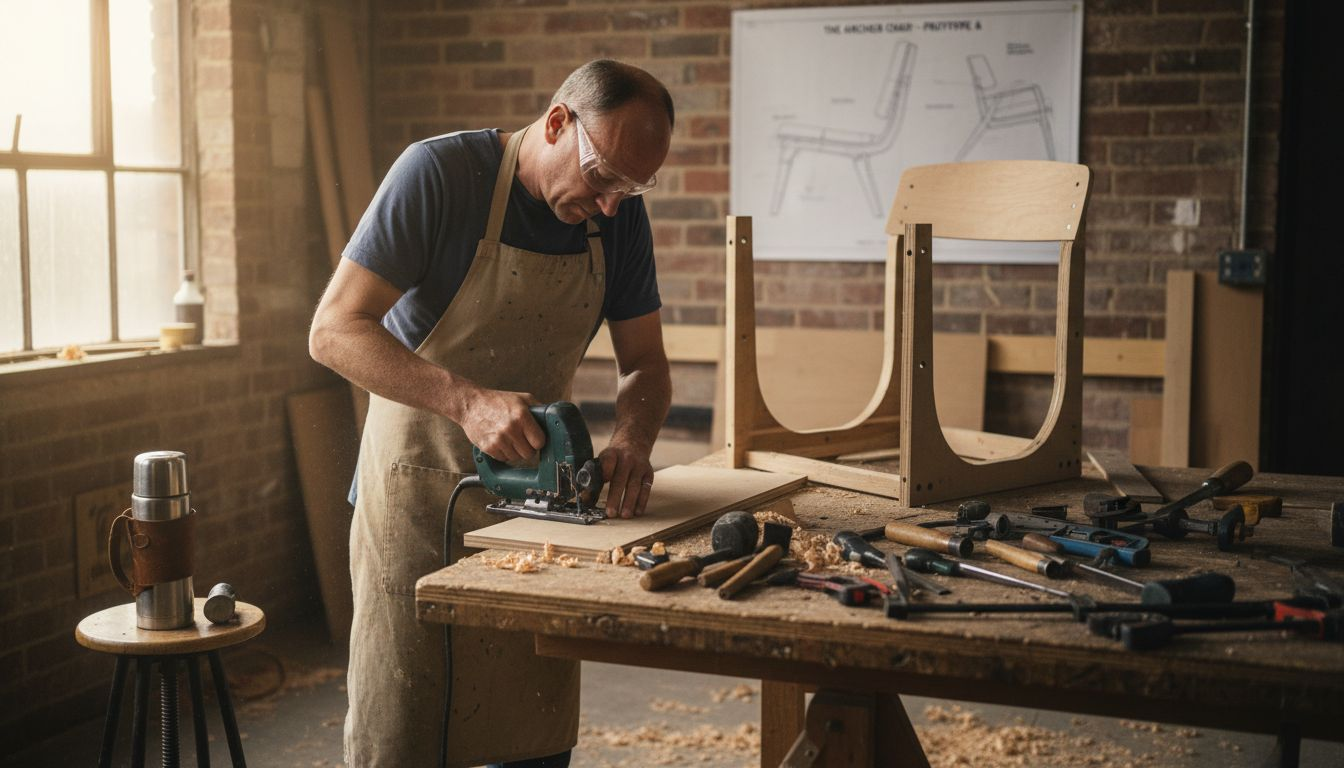
Prototyping is essential to test functionality and aesthetics before committing to full production. For luxury custom pieces, consider building a prototype or mock-up of critical components. This might be a seat mock-up, a drawer system test, or a detailed section showing joinery and finish quality.
The prototype conversation reveals what works and what doesn’t:
- Does the scale feel right in the actual space?
- Are storage solutions truly functional?
- Does the finish quality match expectations?
- Are there unforeseen manufacturing challenges?
Build feedback loops into this stage. Present concepts, gather input, refine, and present again. This iterative approach prevents major revisions later and builds client confidence in your process.
Prototyping catches problems early when they’re cheap to fix, not after production has begun.
Pro tip: Create a simple physical mock-up using cardboard or MDF at full scale for statement pieces—especially seating or large case goods. Clients walking around a cardboard silhouette instantly understand proportions in ways no rendering can convey.
The following table compares digital and physical prototyping methods in furniture design:
| Aspect | Digital Prototyping | Physical Prototyping |
|---|---|---|
| Cost | Lower for early changes | Higher, uses real materials |
| Feedback Quality | Visual, abstract | Tactile, spatially accurate |
| Error Detection | Detects design mismatches | Reveals ergonomic issues |
| Client Engagement | Conceptual understanding | Real-world experience |
Step 3: Collaborate with craftsmen for production
Your design is only as good as the craftspeople who build it. This is where luxury custom furniture separates itself from mass-produced alternatives. The relationship between you and your craftsmen determines whether your vision becomes reality or a compromise.
Start by choosing the right makers. Look for craftspeople whose previous work aligns with your aesthetic and quality standards. Visit their workshops, see their tools, and understand their process. A maker who specialises in contemporary upholstery might not be the best fit for hand-carved traditional joinery.
Effective collaboration between designers and craftsmen combines traditional craft knowledge with design processes. This isn’t a one-way relationship where you hand over drawings and wait. You’re partners solving problems together. A skilled craftsperson sees details in your design that might be difficult to execute and offers practical solutions.
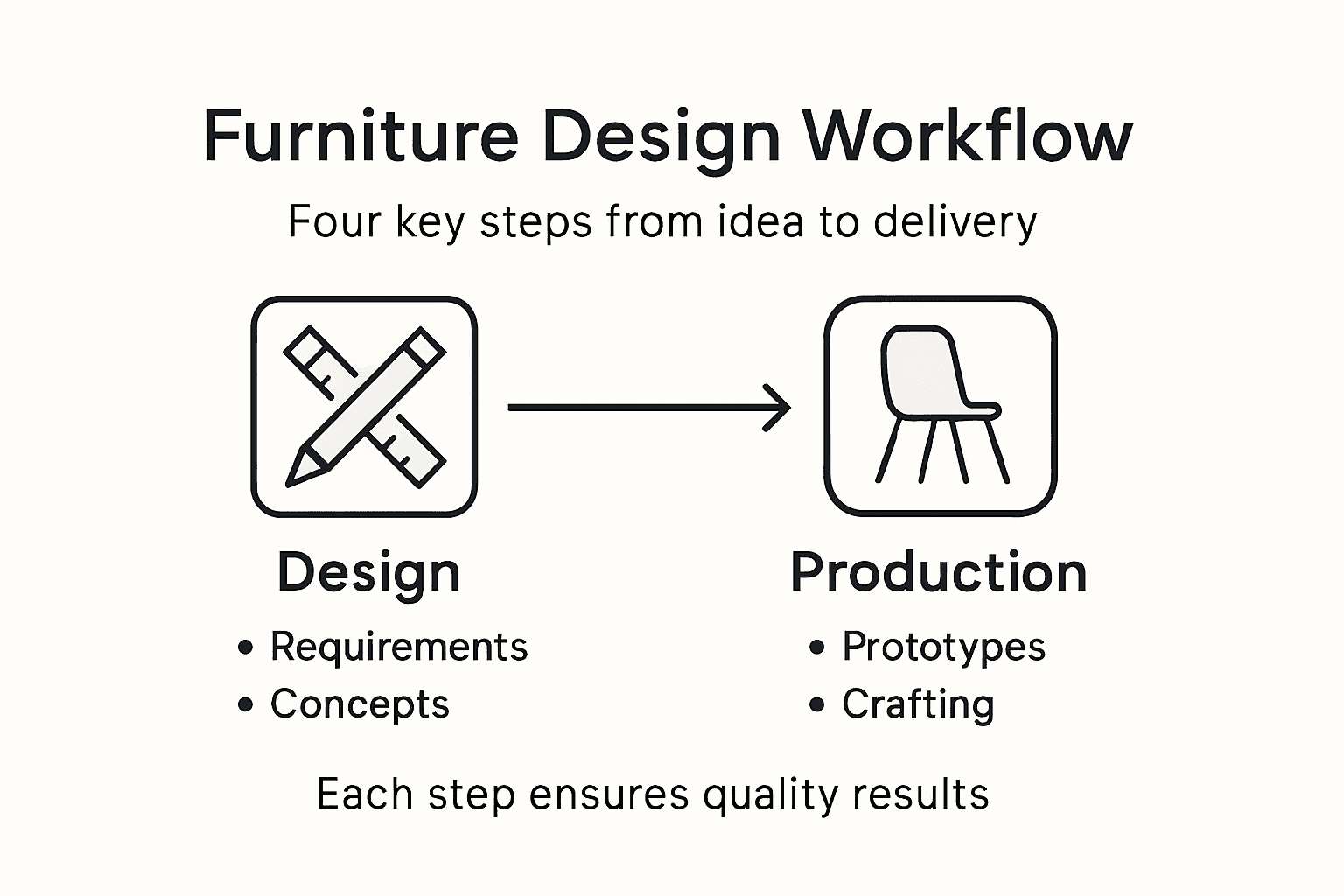
Communication is non-negotiable. Share your complete design specifications, material samples, finish references, and quality expectations clearly. But leave room for craftspeople to offer their expertise. They might suggest a different joinery method that improves durability, or a finishing technique that enhances the natural beauty of the timber.
Set realistic timelines. Custom furniture takes time—and rushing craftspeople compromises quality. Build in adequate production schedules that allow for the meticulous work your clients are paying for.
Manage the production workflow strategically:
- Confirm material specifications and sourcing timelines
- Schedule site visits or progress checks at key milestones
- Establish a clear process for design changes or unforeseen issues
- Define finishing standards and quality acceptance criteria
- Plan delivery logistics and installation support
Designers act as facilitators to integrate craft techniques into contemporary design, promoting co-creation and shared value. Your role is bridging the gap between what clients imagine and what craftspeople can deliver.
Great custom furniture emerges from genuine dialogue, not from designers dictating specifications to passive makers.
Pro tip: Arrange a workshop visit with your client if possible. Seeing the maker at work and understanding the craftsmanship involved deepens client appreciation for the final piece and justifies the investment.
Here is a summary of key roles in the custom furniture process:
| Role | Main Responsibility | Contribution to Outcome |
|---|---|---|
| Client | Shares vision and requirements | Guides final design direction |
| Designer | Interprets needs and develops solutions | Ensures aesthetic and function |
| Craftsperson | Executes designs with skilled techniques | Delivers build quality |
| Inspector (Designer) | Reviews and refines finished pieces | Maintains quality standards |
Step 4: Review and refine the finished piece before delivery
This is your final quality checkpoint. Before the piece leaves the workshop and arrives at your client’s home, you need to inspect it thoroughly. A single overlooked flaw can undermine months of collaboration and damage your professional reputation.
Schedule an inspection visit at the maker’s workshop. See the finished piece in natural light, examine it from every angle, and test all functional elements. Don’t rely on photographs or the craftsperson’s assurance that everything is perfect.
The finishing stage includes sanding, coating, and inspection for defects to guarantee quality. Check these critical areas systematically to ensure the piece meets your standards.
Start with the surfaces. Run your hand over every edge and panel feeling for splinters, rough spots, or inconsistent finishes. Look at the coating under different lighting angles—gloss variations, dust particles, or brush marks become obvious when you’re thorough. Wood grain should be even and natural, not streaky or patchy.
Examine joinery and construction. Open every drawer and door multiple times. Hinges should operate smoothly without creaking or sticking. Drawers should glide effortlessly and close with a satisfying, precise click. Check that legs are level and the piece doesn’t rock or wobble on uneven floors.
Inspect upholstery and soft furnishings carefully:
- Seams are straight and stitching is consistent
- Fabric grain matches across panels if patterned
- Cushions are firm and evenly filled
- No visible wear, stains, or damage to surfaces
- Zips function smoothly and discreetly
Test hardware, handles, and mechanisms. Turn knobs, slide hinges, and operate any moving parts. Everything should feel substantial and operate without resistance or noise. Poor hardware undermines the entire luxury experience.
Document any issues clearly and discuss solutions with the maker. Minor refinements can often be addressed immediately. More significant concerns require honest conversation about whether the piece meets your original specifications.
Quality inspection isn’t about being difficult—it’s about protecting your client’s investment and your professional credibility.
Pro tip: Take photographs during your inspection visit, both of finished quality and any areas needing refinement. These records protect you if delivery issues arise and provide valuable documentation for your project portfolio.
Transform Your Vision Into Bespoke Luxury Furniture with Confidence
Struggling to bring your custom furniture dreams to life without costly revisions and misaligned expectations? This article unpacks the essential workflow challenges like defining clear project requirements, collaborating effectively with skilled craftspeople, and conducting meticulous quality inspections to ensure excellence. Avoid the frustration of unexpected flaws and delayed timelines by embracing a structured design journey that respects your unique lifestyle and tastes.
Experience the seamless process of bespoke furniture creation through Wish Interiors, where contemporary design meets artisan craftsmanship. Our luxury furniture and homeware solutions in the UK ensure every detail reflects your vision — from initial consultation to final delivery. Act now to elevate your living spaces with elegant, tailor-made pieces that truly last. Explore more and start your personalised journey with us today at Wish Interiors.
Frequently Asked Questions
What are the key steps in the workflow for custom furniture design?
The key steps are defining project requirements with the client, developing detailed design concepts and prototypes, collaborating with craftsmen for production, and reviewing and refining the finished piece before delivery. Follow this order to ensure thoroughness and alignment with client expectations throughout the design process.
How can I effectively gather client requirements for custom furniture design?
Engage in open conversations with your client to explore their vision, lifestyle needs, and aesthetic preferences. Ask specific questions about budget, timeline, and functional requirements, and document their responses in a requirements brief to clarify mutual understanding.
Why is prototyping essential in the custom furniture design process?
Prototyping is crucial as it allows you to test functionality and aesthetics before full production. Create physical mock-ups to detect and address issues early, reducing the likelihood of costly revisions later in the project.
How should I choose craftsmen for producing custom furniture?
Select craftsmen whose previous work aligns with your design vision and quality standards. Visit their workshops to assess their processes and ensure they possess the skills necessary to bring your designs to life effectively.
What should I look for during the final inspection of custom furniture?
During the inspection, check surfaces for smooth finishes, test joinery for proper function, and evaluate upholstery for quality. Ensure all aspects meet design specifications to protect the client’s investment and maintain your professional credibility.
How can I improve client engagement throughout the custom furniture design workflow?
Foster client engagement by involving them in key stages of the design process, such as co-creating a mood board or discussing prototypes. Keep communication open and frequent to build trust and keep clients informed, potentially increasing satisfaction and referrals.
Recommended
- Why Custom Furniture Matters for Luxury Homes – Wish Interiors
- 7 Key Benefits of Bespoke Furniture for Luxury Homes – Wish Interiors
- How to Design Unique Furniture Pieces for Bespoke Homes – Wish Interiors
- Bespoke Furniture Selection Guide for Luxury Homes – Wish Interiors
- Why Custom Window Treatments Matter for Homes – Shop Designer Fabrics by the Yard | Curtains & Drapery
Sample Image Gallery


