





Bespoke Furniture Selection Guide for Luxury Homes
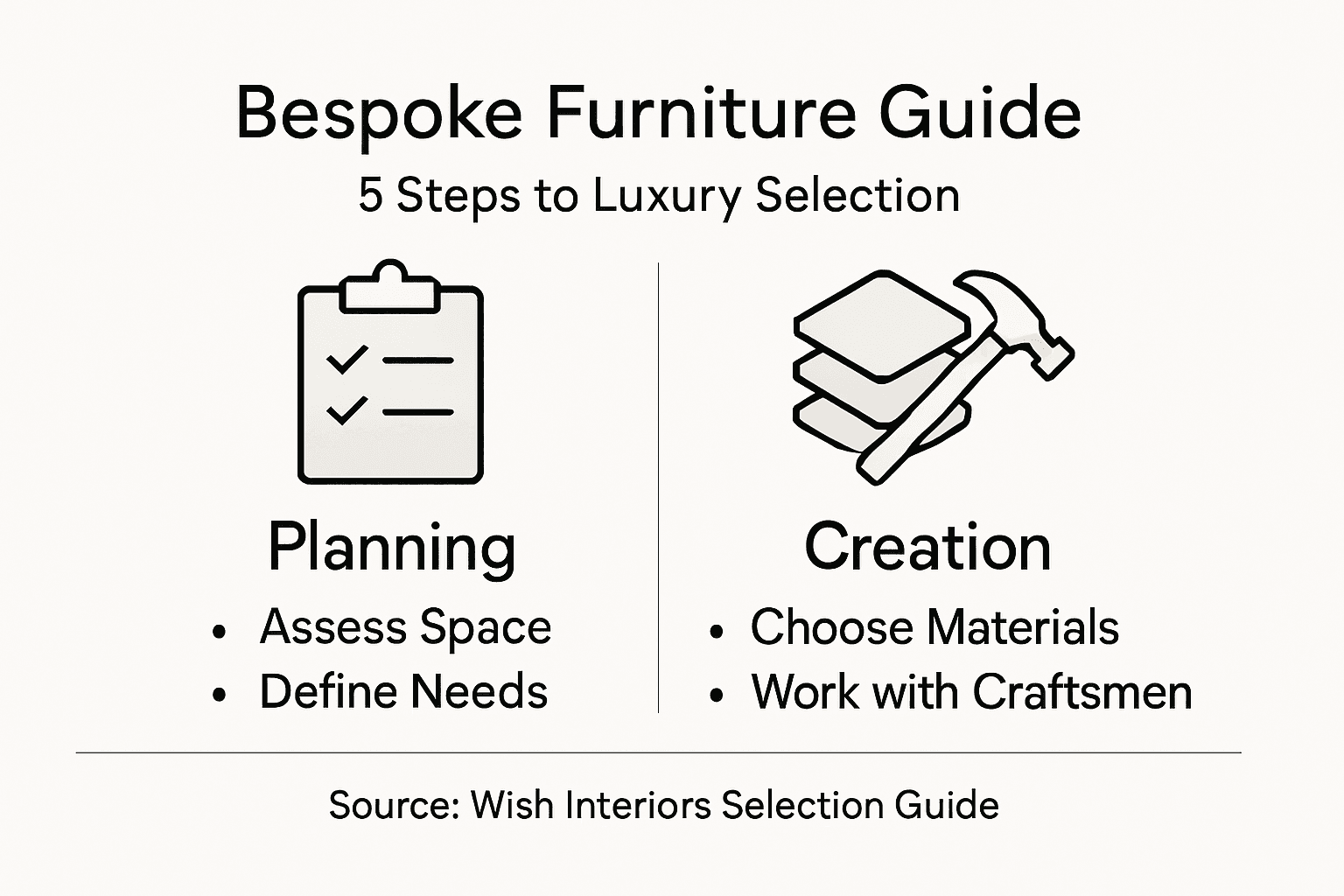
Finding the perfect bespoke furniture for your luxury home often begins with scrutinising every inch of your space and imagining how elegant new pieces will shape its atmosphere. The process involves much more than choosing a style or material; it demands careful evaluation of room dimensions, architectural features, and how people move through your home. This guide helps you master each step, ensuring human-centred space planning and exquisite craftsmanship fit seamlessly into your British property.
Table of Contents
- Step 1: Assess Design Requirements And Space
- Step 2: Define Bespoke Furniture Specifications
- Step 3: Select Materials And Finishes
- Step 4: Collaborate With Craftsmen And Designers
- Step 5: Verify Craftsmanship And Installation
Quick Overview
| Key Insight | Explanation |
|---|---|
| 1. Assess your space meticulously | Conduct a thorough evaluation of room dimensions, layout, and architectural features before selecting bespoke furniture to ensure optimal fit and aesthetics. |
| 2. Clearly define furniture specifications | Provide detailed requirements about dimensions, materials, and functionality to artisans, ensuring the end product aligns with your needs and preferences. |
| 3. Choose materials with care | Select materials based on aesthetic appeal, durability, and maintenance needs, understanding that each choice impacts the final look and longevity. |
| 4. Collaborate with artisans effectively | Foster open communication and share references with craftsmen to translate your vision into reality while remaining receptive to their expert advice. |
| 5. Thoroughly verify craftsmanship | Inspect final pieces for quality and functionality during installation to ensure they meet your standards and integrate seamlessly into your space. |
Step 1: Assess design requirements and space
Selecting bespoke furniture for luxury homes demands a comprehensive understanding of your spatial landscape. Room layout evaluation requires meticulous analysis of dimensions, architectural features, and potential furniture placements to create a harmonious living environment.
Begin by conducting a thorough spatial assessment. Measure your room precisely, noting critical details such as:
- Wall lengths and potential obstruction points
- Natural light source locations
- Existing architectural elements like fireplaces, windows, or built-in structures
- Floor material and potential weight-bearing considerations
Human-centred space planning is paramount in luxury home design. Consider how you’ll actually use the space beyond aesthetic requirements. Walk through potential furniture arrangements mentally, understanding traffic flow and ensuring each piece contributes to both functionality and visual appeal. Visualise how people will move through the room and interact with potential furniture placements.
Pro tip: Create a digital floor plan or use painter’s tape to outline potential furniture dimensions directly on your floor, helping you truly understand spatial relationships before making significant investments.
Step 2: Define bespoke furniture specifications
Defining bespoke furniture specifications is a crucial step in creating truly personalised luxury pieces that perfectly match your living space. Precise furniture specifications transform abstract design concepts into tangible, functional artworks tailored exclusively to your requirements.
To create your ideal bespoke piece, you’ll need to consider several critical elements:
- Dimensional requirements matching your exact room measurements
- Material selections that complement your existing interior design
- Functional specifications addressing specific usage needs
- Aesthetic preferences including colour, finish, and stylistic details
The specification process involves collaborative dialogue with skilled craftspeople. You’ll want to provide detailed insights about your lifestyle, aesthetic preferences, and practical requirements. This means discussing everything from the wood grain’s texture to the precise height of armrests or the specific curvature of a chair back. Consider how the furniture will interact with other pieces in your space and your daily living patterns.

Pro tip: Bring photographs, fabric swatches, and rough sketches to your initial consultation to help artisans precisely understand your vision and translate your ideas into bespoke furniture design.
Step 3: Select materials and finishes
Selecting the right materials and finishes is fundamental to creating bespoke furniture that embodies luxury and longevity. Material choices dramatically impact the aesthetic, durability, and overall character of your custom pieces.
Your material selection should consider multiple critical aspects:
- Solid wood for timeless elegance and natural grain patterns
- Engineered wood for stability and cost-effectiveness
- Metal accents to introduce contemporary sophistication
- Glass elements for lightness and modern visual appeal
Each material brings unique characteristics to your bespoke furniture. Solid hardwoods like walnut or oak offer rich textures and natural beauty, while engineered woods provide consistent performance and more budget-friendly options. Consider the practical implications of your choices - some materials require more maintenance, while others are more resistant to wear and environmental changes.
The following table compares popular materials used in luxury bespoke furniture:
| Material | Aesthetic Qualities | Durability |
|---|---|---|
| Solid hardwood | Rich grains, timeless look | Very high, long lasting |
| Engineered wood | Uniform appearance | Medium, stable |
| Metal accents | Sleek, modern finish | Highly resilient |
| Glass elements | Light, airy elegance | Fragile, scratch-prone |
Pro tip: Always request material samples and test them in your actual living space’s lighting and against existing furnishings to ensure perfect visual harmony and compatibility.
Step 4: Collaborate with craftsmen and designers
Collaborating effectively with craftsmen and designers transforms your bespoke furniture journey from a mere transaction to a creative partnership. Successful design collaborations require open communication, mutual respect, and a shared vision for your luxury furniture project.
Key aspects of productive collaboration include:
- Clear communication about your design expectations
- Detailed sketches and reference materials
- Willingness to listen to professional recommendations
- Flexibility in design refinement processes
Architectural design synergy ensures that your bespoke pieces not only look stunning but integrate seamlessly with your existing space. Professional craftsmen bring decades of expertise, understanding subtle nuances like material interactions, structural integrity, and design ergonomics. Your role is to articulate your vision while remaining open to their creative insights and technical recommendations.
Pro tip: Prepare a comprehensive mood board showcasing your aesthetic preferences, colour palette, and inspirational images to help artisans quickly understand your design language and vision.
Step 5: Verify craftsmanship and installation
Verifying the craftsmanship and installation of your bespoke furniture represents the pinnacle of your luxury design journey, ensuring every detail meets your exacting standards. The final inspection is your opportunity to confirm that the piece not only looks stunning but functions perfectly within your living space.
During the verification process, pay close attention to these critical elements:
- Surface finish and aesthetic consistency
- Structural integrity and stability
- Precision of joints and connection points
- Alignment with original design specifications
- Functionality of moving parts or mechanisms
Careful examination requires a methodical approach. Inspect each surface under different lighting conditions, run your hands along edges and joints to check for smoothness, and test any moving components. Assess how the piece interacts with your room’s existing architecture - does it create the intended visual and functional harmony? Remember that exceptional bespoke furniture should feel like a natural extension of your living space, with impeccable craftsmanship that speaks volumes about its careful creation.
Pro tip: Request a detailed walkthrough from the craftsman during installation, asking them to demonstrate the piece’s key features and explain any specific maintenance recommendations to preserve its long-term quality.
Here is a summary of common mistakes to avoid during the bespoke furniture process:
| Mistake | Consequence | How to Avoid |
|---|---|---|
| Inaccurate measurements | Poor fit and wasted investment | Double-check dimensions |
| Ignoring lifestyle needs | Reduced usability and comfort | Plan with practical use |
| Overlooking material maintenance | Quick wear and increased upkeep | Choose suitable finishes |
| Skipping final inspection | Missed flaws and costly repairs | Attend installation review |
Elevate Your Luxury Living with Bespoke Furniture Solutions
Choosing bespoke furniture for luxury homes is a rewarding yet challenging journey. The need for precise measurements, material selections, and seamless design collaboration can feel overwhelming. If you want to avoid costly mistakes like poor fit or ignoring your lifestyle needs, embracing expert guidance and on-trend options is essential. At Wish Interiors, we understand these pain points and offer an exquisite range of luxury furniture and bespoke services designed to transform your vision into reality.
Discover how our expertly crafted pieces bring together solid craftsmanship, elegant materials, and personalised specifications. Whether you seek luxury furniture reflecting timeless style or bespoke options tailored to your unique space, our curated collections and professional support ensure every detail matches your expectations.
Don’t wait to perfect your living space. Visit Wish Interiors today to explore bespoke furniture that blends functionality with stunning aesthetics. Start your luxury home transformation now and enjoy the confidence of furniture designed to fit your life beautifully.
Frequently Asked Questions
How do I assess the design requirements for bespoke furniture in my luxury home?
To assess design requirements, begin by measuring your room accurately to understand dimensions and layout. Create a digital floor plan or use painter’s tape to outline potential furniture placements and ensure each piece works harmoniously within the space.
What specifications should I define for my bespoke furniture?
Defining specifications involves considering dimensions, materials, functionality, and aesthetic preferences. Prepare detailed insights about your lifestyle and design vision to guide craftsmen in creating a piece that perfectly anchors your living space.
How can I select the right materials and finishes for my bespoke furniture?
Select materials by evaluating their aesthetic qualities, durability, and maintenance requirements. Request samples and test them in your home’s lighting to ensure they visually complement your existing décor.
What should I focus on when collaborating with craftsmen and designers?
Focus on clear communication, sharing detailed sketches, and being open to professional recommendations. This collaboration helps ensure that your bespoke furniture aligns with your vision while benefiting from the expertise of skilled artisans.
How do I verify the craftsmanship and installation of my bespoke furniture?
Verify craftsmanship by closely examining the surface finish, structural integrity, and alignment with your design specifications. Attend the installation process and request a walkthrough to understand key features and maintenance tips for long-term quality assurance.
What are common mistakes to avoid during the bespoke furniture selection process?
Common mistakes include inaccurate measurements, ignoring lifestyle needs, and skipping final inspections. To avoid these, double-check dimensions, include practical planning for usability, and be present during the final inspection to catch any potential flaws.
Recommended
Sample Image Gallery


