





How to Design Unique Furniture Pieces for Bespoke Homes
Personalising your living space can feel daunting when every detail counts. For British homeowners aiming to achieve truly distinctive interiors, understanding how to assess your environment and draw from diverse inspiration is invaluable. Research shows that visual stimuli are particularly powerful in enhancing design creativity and originality, giving you the tools to develop bespoke ideas that align with your unique vision. This guide shows how to craft extraordinary furniture that elevates your home and reflects your individuality.
Table of Contents
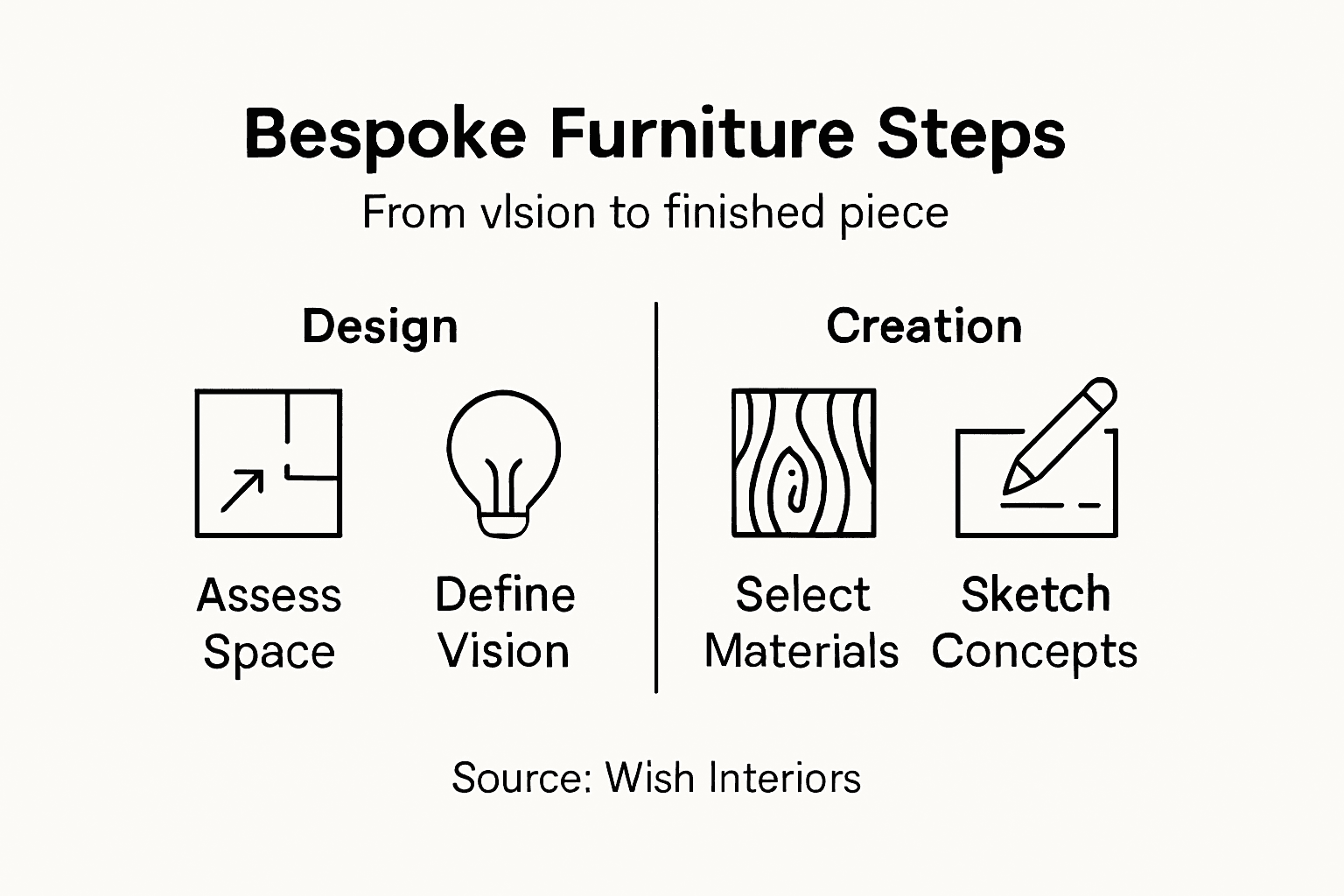
- Step 1: Assess Your Space And Inspiration Sources
- Step 2: Define Your Bespoke Design Vision
- Step 3: Select Materials And Finishes
- Step 4: Sketch And Model Your Concepts
- Step 5: Refine And Verify Unique Features
Quick Summary
| Key Point | Explanation |
|---|---|
| 1. Assess Your Space Carefully | Measure rooms to understand layout, light, and style, noting any challenges for bespoke furniture design. |
| 2. Diversify Inspiration Sources | Gather ideas from magazines, galleries, and cultural artefacts to ignite creativity and develop a unique design vision. |
| 3. Define Your Aesthetic Vision | Create a mood board capturing your personal style, considering emotional responses and functional needs for each piece. |
| 4. Select Suitable Materials | Choose materials based on durability, aesthetics, and sustainability to ensure your furniture meets both practical and design standards. |
| 5. Refine and Validate Designs | Test prototypes for functionality and comfort, seeking feedback to enhance and perfect each unique furniture piece. |
Step 1: Assess your space and inspiration sources
Transforming your home into a bespoke sanctuary begins with a thoughtful assessment of your living space and gathering meaningful design inspiration. This initial stage is crucial for creating furniture pieces that truly resonate with your personal style and spatial requirements.
Start by conducting a comprehensive survey of your existing interior. Measure each room meticulously, noting architectural details, natural light patterns, current furniture placement, and potential design challenges. Culturally-oriented design research emphasises understanding the spatial context as a fundamental inspiration source, encouraging designers to integrate cultural preferences and sustainable development opportunities.
To spark creativity and develop unique design concepts, diversify your inspiration sources:
- Explore interior design magazines and digital platforms
- Visit museums and galleries showcasing contemporary furniture
- Collect digital mood boards on platforms like Pinterest
- Study architectural design publications
- Examine cultural artefacts and traditional craftsmanship styles
Visual stimuli are particularly powerful in enhancing design creativity and originality.
Carefully document your research, saving images, sketches, and notes that capture your design vision. Experiential design studies confirm that diverse inspiration sources significantly influence the ideation process, helping you develop truly unique furniture concepts.
Here’s a summary of inspiration sources and their unique benefits for bespoke furniture design:
| Inspiration Source | Creative Benefit | Typical Application |
|---|---|---|
| Design magazines | Current design trends | Identifying popular aesthetics |
| Museums & galleries | Artistic innovation | Exploring unique forms and materials |
| Digital mood boards | Visual idea integration | Collating personal style preferences |
| Architectural publications | Structural insight | Understanding spatial relationships |
| Cultural artefacts | Authentic narrative | Adding heritage to design concepts |
Expert advice: Always maintain a physical or digital inspiration portfolio that you can regularly update and refine throughout your design journey.
Step 2: Define your bespoke design vision
Crafting a truly unique furniture design begins with crystallising your personal aesthetic vision and understanding the deeper purpose behind each piece. This crucial stage transforms abstract ideas into a coherent design strategy that reflects your individual style and functional requirements.
Concept generation strategies reveal that developing a design vision requires balancing creativity with practical insights. Start by exploring your personal aesthetic preferences through a structured approach:
- Analyse your existing interior design style
- Identify colours and materials that resonate with you
- Consider the emotional response you want each furniture piece to evoke
- Reflect on how the piece will interact with your living space
- Determine functional requirements beyond aesthetic appeal
A successful bespoke design integrates personal narrative with functional elegance.
Design context research emphasises understanding how cultural, economic, and personal factors shape your design needs. Develop a mood board that captures your vision, combining visual references, material swatches, and sketches that communicate your unique design language.
Expert tip: Create a design narrative that tells a story through your furniture, connecting personal experiences with functional aesthetic choices.
Step 3: Select materials and finishes
Selecting the right materials and finishes is a pivotal moment in your bespoke furniture design journey, transforming conceptual ideas into tangible, exquisite pieces that reflect your unique aesthetic and functional requirements.
Material selection research demonstrates how thoughtful choices can dramatically influence the perceived ambience and style of your interior. Consider these key factors when evaluating materials:
- Durability and longevity of different material types
- Aesthetic compatibility with your existing interior design
- Texture and sensory qualities of potential finishes
- Maintenance requirements for each material
- Colour palette and how it complements your space
The perfect material tells a story beyond its physical properties.
Sustainable design strategies recommend prioritising environmentally responsible materials that offer both aesthetic appeal and long-term adaptability. Look for reconfigurable materials that support modularity and can evolve with your changing lifestyle and design preferences.
Compare key material selection criteria and their impact on bespoke furniture outcomes:
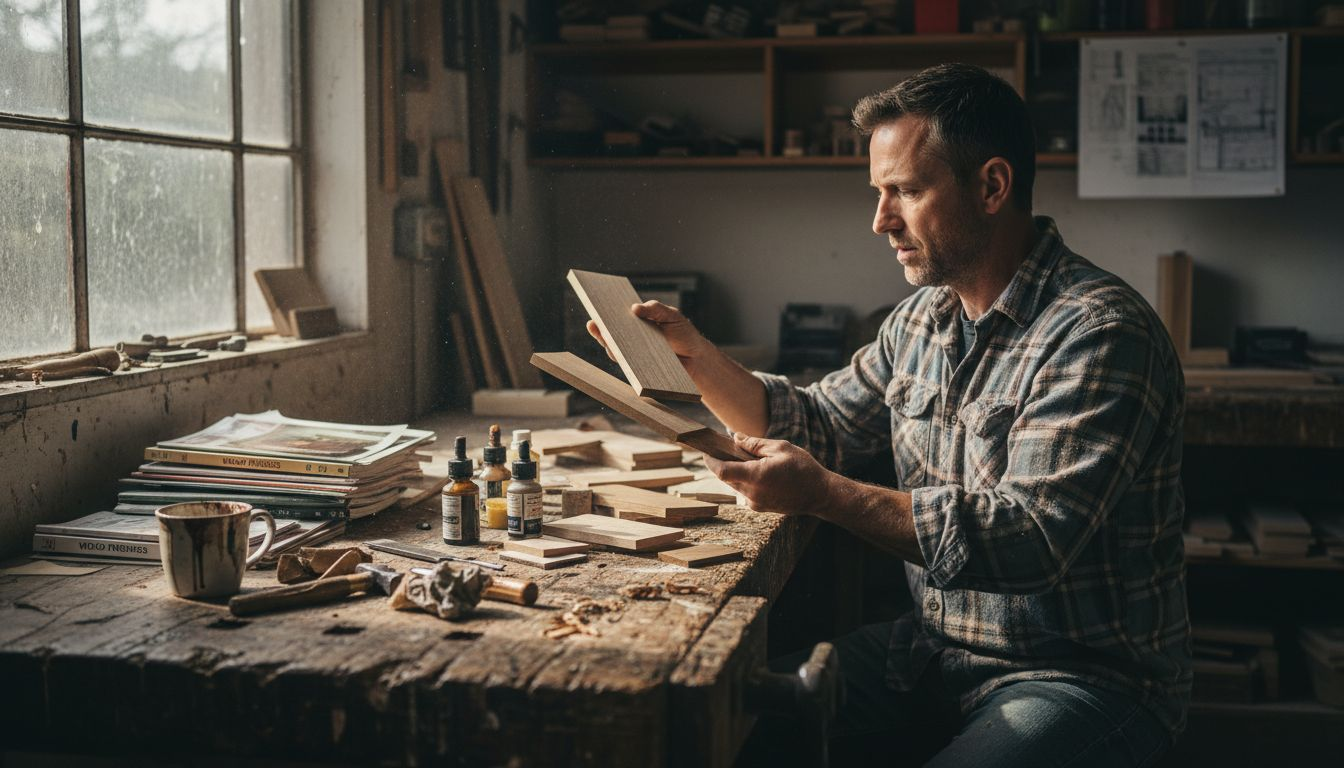
| Selection Criterion | Impact on Design | Long-term Benefit |
|---|---|---|
| Durability | Sturdiness and reliability | Prolongs product lifespan |
| Aesthetic compatibility | Seamless visual integration | Enhances coherence with décor |
| Maintenance | Ease of cleaning | Preserves appearance over time |
| Sustainability | Eco-friendly choices | Supports environmental goals |
| Modularity | Flexible design adaptation | Accommodates changing needs |
Expert tip: Request material samples and observe them in your actual living space under different lighting conditions before making a final selection.
Step 4: Sketch and model your concepts
Transforming your design vision into tangible sketches and models marks a critical transition from abstract imagination to concrete furniture creation. This stage breathes life into your initial design concepts, allowing you to explore and refine your unique furniture piece with precision and creativity.
Design process research reveals how sketching can draw inspiration from natural and biological forms, enabling designers to bridge conceptual ideas with technical development. Begin your sketching journey with these strategic approaches:
- Use multiple drawing techniques (quick thumbnails, detailed renderings)
- Experiment with different perspectives and angles
- Capture both aesthetic and functional dimensions
- Include detailed annotations about materials and construction
- Explore variations on your initial design concept
Every sketch is a conversation between imagination and potential reality.
Spatial design methodologies emphasise iterative visual exploration as a powerful design technique. Create physical or digital models that allow you to examine the practicalities and aesthetics of your furniture piece, ensuring it aligns perfectly with your original design vision and spatial context.
Expert tip: Photograph your sketches and models at different stages to track your design evolution and capture unexpected moments of creative breakthrough.
Step 5: Refine and verify unique features
Refinement represents the critical stage where your bespoke furniture design transitions from promising concept to exceptional, meticulously crafted piece. This process demands careful scrutiny and systematic validation of every design element to ensure your furniture meets the highest standards of functionality and aesthetic excellence.
Bespoke design validation emphasises comprehensive evaluation through human-centered design checks. Implement these strategic refinement approaches:
- Conduct detailed functional prototype testing
- Validate ergonomic performance and user comfort
- Assess structural integrity and load-bearing capabilities
- Review aesthetic harmony with intended interior style
- Evaluate material durability and long-term performance
Perfection lies in the nuanced details of design refinement.
Material verification techniques recommend systematic material and colour validation, ensuring each design feature maintains coherence with your original vision while meeting practical performance requirements. Consider creating multiple iterations that progressively enhance the piece’s unique characteristics.
Expert tip: Invite trusted colleagues or design professionals to provide objective feedback during your refinement process, offering fresh perspectives that can elevate your bespoke furniture design.
Elevate Your Home with Truly Bespoke Furniture
Designing unique furniture pieces for bespoke homes requires insight into your personal style, spatial details and material choices. If you are struggling to translate your vision into luxury furniture that matches your exact needs and aesthetics, you are not alone. The challenge often lies in refining your design narrative and selecting materials that combine durability with elegance while reflecting your individual story.
At Wish Interiors, we understand these challenges and offer a curated selection of on trend luxury furniture and bespoke pieces crafted to transform your living space into a perfect sanctuary. Whether you are inspired by rich textures, modular adaptability or want to capture a timeless design narrative, our collection supports your journey from inspiration to tangible beauty.
Experience how thoughtful bespoke design can elevate your home environment today.
Discover our luxury range now and let us help you create furniture that speaks uniquely to you.
Explore our bespoke furniture collection
Start your design journey with Wish Interiors
Do not wait to bring your distinctive furniture vision to life. Visit Wish Interiors and find pieces that redefine your home’s elegance and comfort.
Frequently Asked Questions
How do I assess my space for designing unique furniture pieces?
Begin by meticulously measuring each room in your home, noting key architectural features, natural light sources, and current furniture placements. Create a detailed sketch that highlights both opportunities and challenges in your space to inform your design process.
What sources of inspiration should I explore for bespoke furniture design?
Diversify your inspiration by exploring design magazines, visiting museums, and creating digital mood boards on platforms like Pinterest. Collect various visual stimuli to enhance your creativity and unique design concepts.
How do I define my personal design vision for bespoke furniture?
Clarify your personal aesthetic by analysing your existing style, choosing colours and materials that resonate with you, and considering the emotional response you wish to evoke. Develop a mood board that captures your vision and reflects your unique preferences.
What factors should I consider when selecting materials and finishes for my furniture?
Evaluate durability, aesthetic compatibility, texture, maintenance requirements, and sustainability when choosing materials. Request samples and observe them in your living space under different lighting to make an informed decision that aligns with your design vision.
How can I effectively sketch and model my furniture concepts?
Use various drawing techniques, including quick thumbnails and detailed renderings, to bring your ideas to life. Explore multiple perspectives and create physical or digital models to assess the aesthetics and practicality of your designs.
What steps are involved in refining and verifying the unique features of my furniture design?
Conduct thorough testing of your prototype to validate functionality, ergonomics, and structural integrity. Gather feedback from trusted peers to identify areas for improvement and ensure your design meets both aesthetic and practical standards.
Recommended
Sample Image Gallery


