





Why Interior Designers Value Bespoke Furniture
Finding furniture that truly reflects your distinctive taste and fits seamlessly into unique London or Manchester interiors often feels impossible with standard offerings. For luxury homeowners and boutique designers, bespoke furniture promises far more than mass-produced pieces. By embracing custom-crafted design, you gain access to personalisation, lasting quality, and artistry that elevates every room. Explore how bespoke furniture sets new standards in craftsmanship, value, and emotional impact to shape your interior vision.
Table of Contents
- Bespoke Furniture Defined And Common Misconceptions
- Key Types Of Bespoke Pieces For Interiors
- Craftsmanship, Materials, And Quality Value
- Personalisation, Uniqueness, And Emotional Impact
- Cost, Investment, And Sustainable Advantages
- Bespoke Versus Mass-Produced: Making Your Choice
Key Takeaways
| Point | Details |
|---|---|
| Bespoke Furniture Offers Complete Customisation | Each piece is uniquely crafted to meet specific dimensions, materials, and aesthetic preferences, enhancing personal living spaces. |
| Long-Term Value and Sustainability | While bespoke furniture may have a higher upfront cost, it offers lower long-term replacement expenses and reduced waste generation. |
| Emotional Connection and Personalisation | Bespoke pieces reflect individual identity and create meaningful connections, transforming spaces into personalised sanctuaries. |
| Quality Craftsmanship | Bespoke furniture is characterised by superior materials and artisan skills, ensuring durability and structural integrity beyond mass-produced options. |
Bespoke Furniture Defined and Common Misconceptions
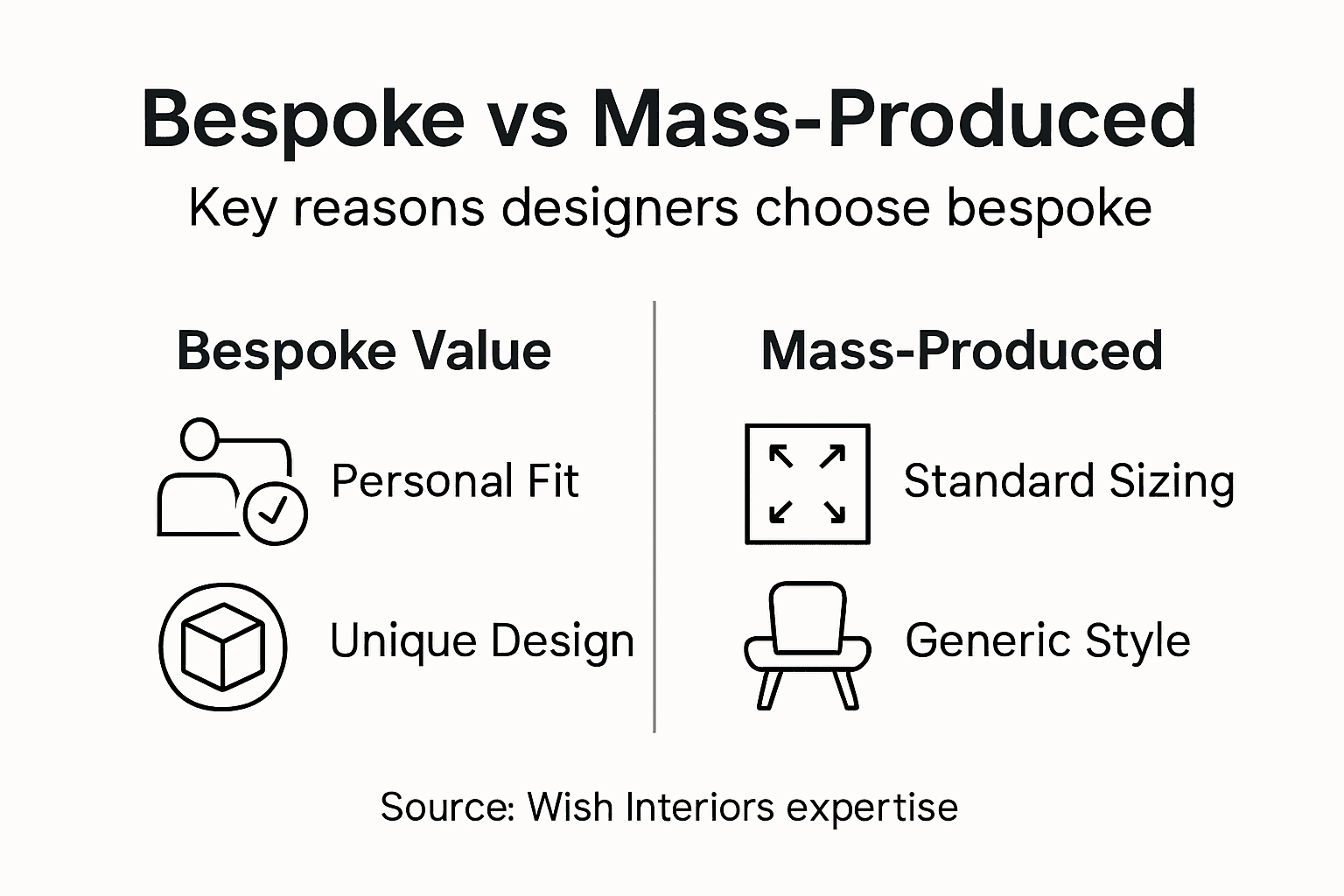
Bespoke furniture represents the pinnacle of personalised design, offering far more than standard mass-produced pieces. Unlike conventional furniture manufacturing, bespoke design creates custom-crafted pieces uniquely tailored to individual specifications, spaces, and aesthetic preferences.
At its core, bespoke furniture is characterised by several defining attributes:
- Complete customisation from dimensions to materials
- Handcrafted production by skilled artisans
- Unique design that reflects personal style
- Superior quality materials selected specifically for each piece
- Precise measurements matching exact spatial requirements
Many individuals misunderstand bespoke furniture, assuming it’s prohibitively expensive or unnecessarily complex. However, furniture design research reveals that custom pieces offer remarkable long-term value by connecting humans more intimately with their living environments.
Contrary to popular misconceptions, bespoke furniture isn’t just about luxury—it’s about creating sustainable, adaptable pieces that evolve with users’ changing needs. Production management studies demonstrate that these pieces challenge traditional mass-production models by emphasising individual craftsmanship and design integrity.
Pro tip: When considering bespoke furniture, prioritise understanding your specific spatial and aesthetic requirements before engaging with designers to ensure a truly personalised outcome.
Key Types of Bespoke Pieces for Interiors
Bespoke furniture encompasses a diverse range of specialised pieces designed to transform interior spaces with unparalleled precision and personalisation. Comprehensive furniture research reveals multiple categories of custom-crafted furniture that cater to specific functional and aesthetic requirements.
The primary categories of bespoke furniture include:
-
Seating Solutions
- Custom armchairs tailored to individual body dimensions
- Bespoke sofas matching exact room proportions
- Ergonomically designed dining chairs
-
Storage Innovations
- Built-in wardrobes with personalised compartment configurations
- Custom shelving units adapting to unique wall spaces
- Modular storage systems with client-specific design requirements
-
Table Designs
- Dining tables crafted to accommodate specific room geometries
- Coffee tables with integrated technological or functional features
- Side tables matching precise height and style specifications
Interior designers increasingly recognise that customised furniture production allows for unprecedented levels of personalisation beyond standard market offerings. These pieces aren’t merely furniture; they’re carefully engineered solutions that seamlessly integrate form, function, and individual aesthetic preferences.
Each bespoke piece represents a unique collaboration between designer and client, transforming interior spaces from generic environments into personalised, functional art. The intricate design process ensures that every element—from material selection to final finish—reflects the client’s distinct vision and lifestyle requirements.
Pro tip: When exploring bespoke furniture options, prioritise understanding your spatial constraints, lifestyle needs, and aesthetic preferences to guide designers in creating truly personalised pieces.
Craftsmanship, Materials, and Quality Value
The essence of bespoke furniture lies in its exceptional craftsmanship and material selection, which elevate these pieces from mere functional objects to extraordinary works of artistic expression. Custom furniture benefits represent a profound commitment to quality that transcends standard manufacturing approaches.
Key elements that define superior bespoke furniture craftsmanship include:
-
Artisan Expertise
- Generations of inherited woodworking skills
- Precision hand-finishing techniques
- Meticulous attention to minute design details
-
Material Selection
- Sustainably sourced premium timber
- Carefully curated natural materials
- Unique wood grains and textures
-
Quality Indicators
- Seamless joint construction
- Superior structural integrity
- Durability beyond mass-produced alternatives
Bespoke furniture craftsmen employ techniques that transform raw materials into extraordinary pieces, selecting each component with extraordinary care. The selection process involves rigorous evaluation of material properties, aesthetic potential, and long-term performance characteristics.
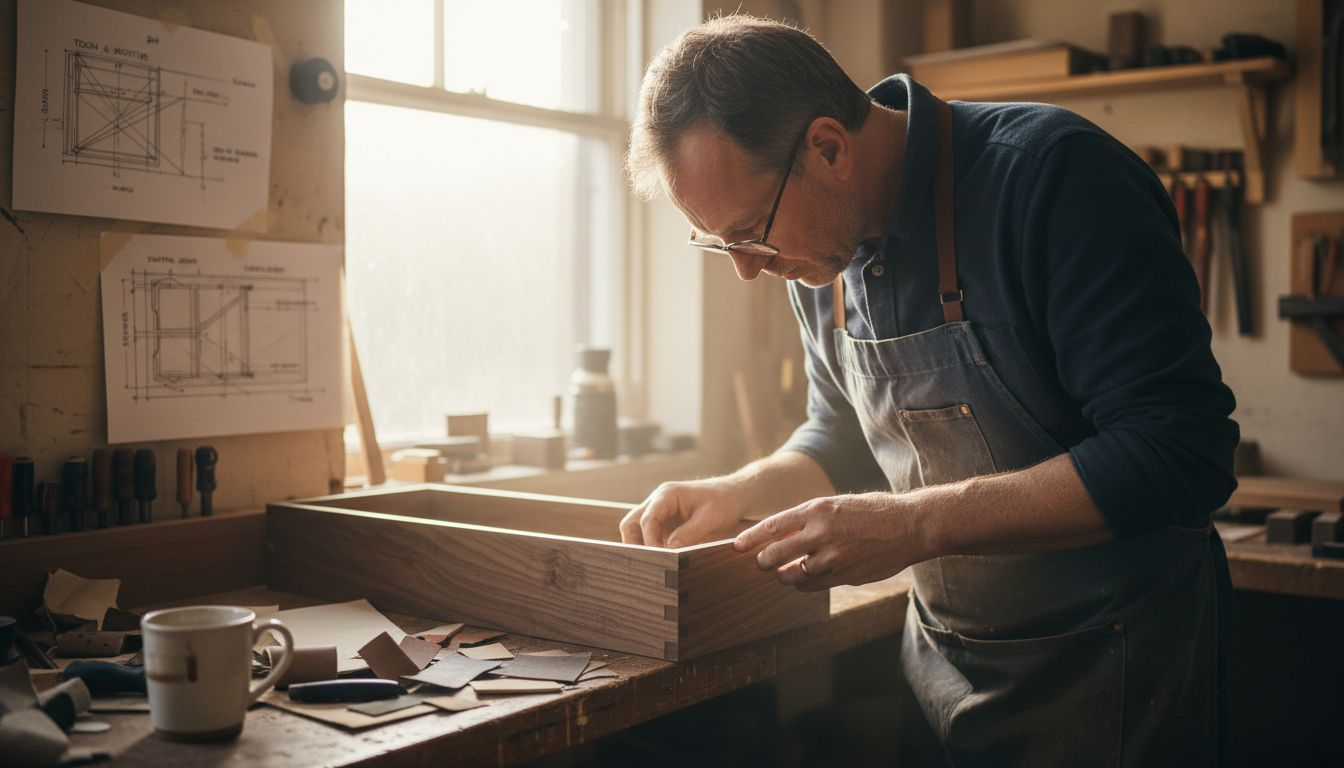
Quality in bespoke furniture extends beyond visual appeal, encompassing structural integrity, material sustainability, and emotional resonance. Each piece represents a harmonious blend of technical skill, artistic vision, and client-specific requirements, creating furniture that becomes an integral part of a living environment.
Pro tip: When evaluating bespoke furniture, examine the joinery, material grain, and finishing details to truly appreciate the craftsmanship invested in each unique piece.
Personalisation, Uniqueness, and Emotional Impact
Personalisation represents the heart of bespoke furniture, transforming ordinary living spaces into extraordinary reflections of individual identity. Sustainable furniture design demonstrates how custom pieces create deep emotional connections that transcend traditional product interactions.
Key aspects of personalisation in furniture design include:
-
Cultural Expression
- Reflecting personal heritage
- Incorporating family narratives
- Representing individual aesthetic preferences
-
Emotional Resonance
- Creating lasting attachments
- Developing meaningful connections
- Generating sense of belonging
-
Individual Storytelling
- Capturing personal memories
- Communicating unique life experiences
- Representing individual journeys
Bespoke furniture’s unique identity goes beyond aesthetic considerations, fundamentally transforming how individuals interact with their living environments. Each piece becomes a personal statement, embodying memories, aspirations, and individual narratives that mass-produced furniture cannot replicate.
The emotional impact of personalised furniture extends far beyond simple functionality. These pieces become living artifacts that evolve with their owners, carrying stories, preserving memories, and creating deep psychological connections that elevate interior spaces from mere physical environments to personal sanctuaries.
Pro tip: When designing bespoke furniture, consider incorporating personal elements that tell your unique story and create an emotional connection with your living space.
Cost, Investment, and Sustainable Advantages
Long-term investment represents the cornerstone of bespoke furniture’s economic value, challenging traditional perceptions of furniture purchasing. Sustainable furniture design demonstrates that custom pieces offer remarkable financial advantages beyond initial purchase costs.
Key economic and sustainable benefits include:
-
Financial Considerations
- Lower long-term replacement expenses
- Higher durability and longevity
- Reduced waste generation
-
Environmental Impact
- Minimised carbon footprint
- Resource-efficient production
- Support for circular economy principles
-
Value Retention
- Potential appreciation of crafted pieces
- Superior material quality
- Timeless design aesthetic
Bespoke furniture transcends traditional cost calculations by introducing a sophisticated approach to consumption. These pieces represent investments that depreciate slower and maintain intrinsic value through exceptional craftsmanship, material selection, and design integrity.
The sustainable advantages extend beyond immediate financial metrics, encompassing broader environmental and social responsibilities. Custom furniture production typically involves more thoughtful resource allocation, reduced manufacturing waste, and a commitment to creating lasting, emotionally durable products that resist throwaway culture.
The following table summarises the long-term benefits gained from bespoke furniture investments:
| Benefit Type | Bespoke Furniture Advantage | Typical Mass-Produced Outcome |
|---|---|---|
| Financial Value | Low replacement cost, high durability | Frequent replacements, lower lifespan |
| Environmental Impact | Reduced waste, sustainable materials | Higher resource use, less sustainability |
| Personalisation | Precise design for client needs | Limited customisation, generic designs |
| Value Retention | Timeless appearance, lasting worth | Dated styles, faster depreciation |
Pro tip: Calculate the total lifecycle cost of furniture, considering longevity, maintenance, and potential resale value when making purchasing decisions.
Bespoke Versus Mass-Produced: Making Your Choice
Choosing between bespoke and mass-produced furniture represents a nuanced decision that extends far beyond simple price comparisons. Furniture selection strategies reveal critical distinctions that impact long-term satisfaction and personal expression.
Key comparative factors include:
-
Design Flexibility
- Bespoke: Complete customisation
- Mass-Produced: Limited design options
- Bespoke: Precise spatial adaptation
-
Cost Considerations
- Mass-Produced: Lower upfront investment
- Bespoke: Higher initial expense
- Bespoke: Lower long-term replacement costs
-
Quality Indicators
- Bespoke: Superior craftsmanship
- Mass-Produced: Standardised manufacturing
- Bespoke: Higher material integrity
Mass-produced furniture offers immediate affordability and widespread availability, appealing to budget-conscious consumers seeking quick solutions. Conversely, bespoke furniture represents a deliberate investment in individual expression, durability, and personalised design that transcends standardised manufacturing approaches.
The decision between bespoke and mass-produced furniture ultimately reflects personal values, aesthetic preferences, and long-term lifestyle considerations. While mass-produced pieces provide convenient, cost-effective solutions, bespoke furniture offers unparalleled customisation, emotional resonance, and potential legacy value.
Below is a comparison of bespoke versus mass-produced furniture for key purchasing factors:
| Factor | Bespoke Furniture | Mass-Produced Furniture |
|---|---|---|
| Customisation | Fully tailored to user | Standard sizes, minimal options |
| Craftsmanship | Handcrafted, detail focused | Machine made, uniform quality |
| Emotional Impact | Strong personal connection | Functional, little emotional value |
| Longevity | Built to last decades | Often replaced within years |
Pro tip: Evaluate your furniture investment by considering not just initial cost, but potential longevity, emotional connection, and alignment with your personal design narrative.
Discover the Lasting Value of Bespoke Furniture with Wish Interiors
Interior designers appreciate bespoke furniture because it resolves the challenge of creating truly personalised and timeless interiors that reflect unique lifestyles and tastes. The article reveals key pain points such as the need for complete customisation, superior craftsmanship, and pieces that foster emotional connections while offering sustainable advantages. At Wish Interiors, we understand these goals and provide a curated selection of luxury bespoke furniture crafted to meet your exact specifications and elevate your living spaces.
Embrace handcrafted quality, distinctive design, and long-term investment benefits by exploring our exclusive collections. Every piece at Wish Interiors embodies the personalised craftsmanship and aesthetic flexibility that interior designers value so highly.
Transform your home into a sanctuary of style and meaning today.
Experience the power of bespoke furniture to enrich your interiors. Visit Wish Interiors now to explore our bespoke options and start creating your perfect space with furniture that truly speaks to you. Learn more about the artistry and value behind our collections by visiting our landing page and make your interior design vision a reality.
Frequently Asked Questions
What is bespoke furniture?
Bespoke furniture refers to custom-crafted pieces designed specifically to meet individual specifications, including dimensions, materials, and style preferences. Unlike mass-produced items, bespoke furniture is tailored to fit unique spaces and express personal tastes.
Why should I consider bespoke furniture over mass-produced options?
Bespoke furniture offers complete customisation, superior craftsmanship, and a unique design that reflects your personal style. It provides a long-term investment in quality, durability, and emotional resonance that mass-produced furniture typically lacks.
How does bespoke furniture contribute to sustainability?
Bespoke furniture is often made from sustainably sourced materials and involves resource-efficient production processes. This approach reduces waste and supports long-lasting pieces that minimise the need for replacements, contributing to a more sustainable ecosystem.
What are the main benefits of investing in bespoke furniture?
Investing in bespoke furniture yields multiple benefits, including lower long-term replacement costs, greater quality retention, superior craftsmanship, and the ability to create pieces that emotionally resonate, enhancing your living space significantly.
Recommended
Sample Image Gallery


