





Why Custom Furniture Matters for Luxury Homes
Choosing how to furnish a luxurious British home often means weighing the charm of unique pieces against the convenience of showroom options. For those who value personal expression, custom furniture represents more than decoration. It delivers tailored comfort, meticulous craftsmanship, and a seamless blend with your distinctive living space. This guide dispels common myths and highlights how custom furniture can turn your vision into a truly refined statement.
Table of Contents
- Defining Custom Furniture and Common Myths
- Types of Custom Furniture and Key Distinctions
- Personalisation, Craftsmanship, and Quality Impact
- Custom Furniture Versus Mass-Produced Alternatives
- Financial, Environmental, and Lifestyle Implications
Key Takeaways
| Point | Details |
|---|---|
| Custom Furniture Advantages | Custom furniture offers unique personalisation, superior materials, and craftsmanship that mass-produced options cannot match. |
| Cost Perception | While initial investments may be higher, custom pieces provide long-term value through durability and reduced replacement costs. |
| Environmental Benefits | Sustainable practices in custom furniture production lead to lower ecological footprints and less waste compared to mass production. |
| Emotional Connection | Custom furniture facilitates a deeper emotional connection with living spaces, enhancing personal expression and individuality. |
Defining Custom Furniture and Common Myths
Custom furniture represents a sophisticated intersection of artistry, functionality, and personal expression that transcends mass-produced alternatives. Furniture design involves creating pieces that combine intricate structure, proportion, and human-centric balance, requiring exceptional craftsmanship and thoughtful engineering.
At its core, custom furniture means designing and constructing pieces explicitly tailored to individual spatial requirements, aesthetic preferences, and lifestyle needs. Unlike standardised furniture that follows generic templates, custom pieces are meticulously crafted to harmonise with specific architectural environments, personal tastes, and functional demands.
Several persistent myths often discourage homeowners from exploring bespoke furniture options:
- Cost Misconception: Many believe custom furniture is prohibitively expensive
- Complexity Assumption: People think designing custom pieces requires extensive technical knowledge
- Limited Style Range: Some assume custom furniture means sacrificing contemporary design aesthetics
- Time-Consuming Process: Potential clients worry about lengthy design and production timelines
Pioneering designers like Charles and Ray Eames demonstrated that innovative furniture design can balance affordability, flexibility, and personalisation. Their approach challenged traditional manufacturing constraints by developing solutions that were both accessible and extraordinary.
Pro tip: When exploring custom furniture, prioritise understanding your specific spatial requirements and aesthetic vision before engaging with designers.
Types of Custom Furniture and Key Distinctions
Custom furniture encompasses a sophisticated range of design possibilities that extend far beyond traditional mass-produced options. Furniture types span multiple functional categories, including intricate seating, sophisticated storage solutions, bespoke tables, and fully integrated architectural pieces.
The fundamental key distinctions in custom furniture emerge through several critical dimensions:
- Material Selection: Ranging from solid hardwoods to contemporary metal and composite materials
- Design Complexity: From minimalist contemporary styles to ornate traditional craftsmanship
- Functional Specialisation: Pieces tailored to specific spatial and lifestyle requirements
- Personalisation Level: Unique dimensions, finishes, and architectural harmony
Different furniture design approaches integrate material choice, construction techniques, and user-specific requirements. This means each piece becomes more than just an object—it transforms into a personalised solution that reflects individual aesthetic preferences and functional needs.
Custom furniture types typically include:
- Bespoke Seating (Chairs, Sofas, Recliners)
- Personalised Storage Units
- Tailored Dining and Work Tables
- Built-in Architectural Furniture
- Specialised Bedroom Configurations
Pro tip: When commissioning custom furniture, always prioritise understanding your specific spatial constraints and lifestyle requirements before discussing design details.
Personalisation, Craftsmanship, and Quality Impact
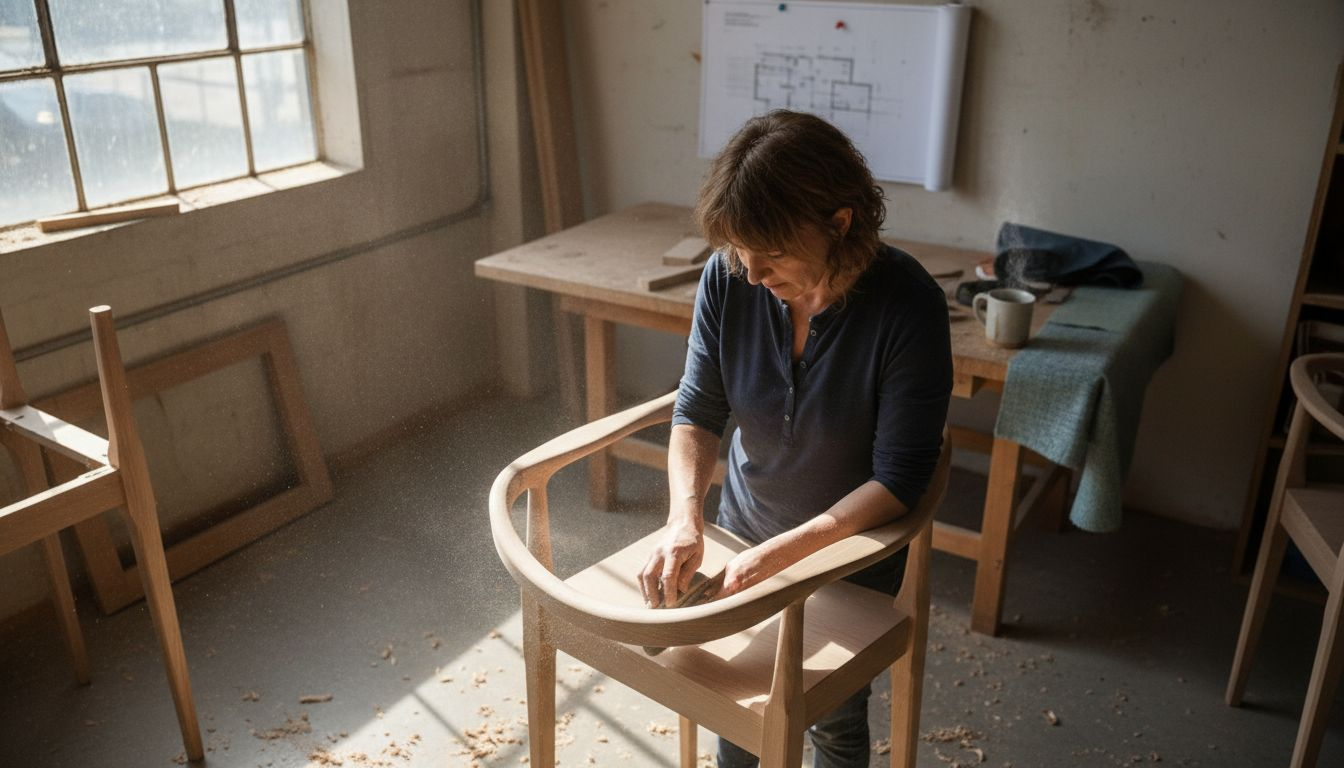
Craftsmanship represents the pinnacle of furniture creation, transforming ordinary pieces into extraordinary expressions of individual style and technical mastery. The intricate dance between personalisation and skilled artisanship elevates custom furniture from mere functional objects to remarkable artistic statements.
The psychological dimensions of craftsmanship extend far beyond aesthetic appeal:
- Emotional connection to uniquely designed pieces
- Personal investment in the creative process
- Reflection of individual taste and lifestyle
- Validation of skilled human labour
Psychological research on craftsmanship reveals that high-quality custom furniture deeply resonates with consumers by addressing both functional requirements and emotional needs. Each piece becomes a narrative of personal expression, meticulously crafted to harmonise with specific spatial environments and individual preferences.
Key quality impact factors in custom furniture include:
- Superior material selection
- Precision engineering
- Detailed finishing techniques
- Ergonomic design considerations
- Long-term durability and performance
Pro tip: Invest time in detailed consultations with artisan furniture makers to ensure your personalised piece perfectly captures both your aesthetic vision and functional requirements.
Custom Furniture Versus Mass-Produced Alternatives
Bespoke furniture represents a profound departure from standardised manufacturing, offering discerning homeowners unparalleled customisation and quality that mass-produced alternatives simply cannot match. The fundamental distinction lies in the approach to design, materials, and craftsmanship.
Key differences between custom and mass-produced furniture include:
- Personalisation Depth: Tailored to individual spatial and aesthetic requirements
- Material Quality: Superior, carefully selected materials versus standard components
- Construction Technique: Handcrafted precision versus assembly-line production
- Longevity: Designed for enduring performance and generational use
- Aesthetic Uniqueness: One-of-a-kind pieces versus repetitive designs
Digital manufacturing technologies are increasingly bridging the gap between mass production efficiency and bespoke customisation. This emerging approach allows for more personalised solutions without compromising manufacturing economics.
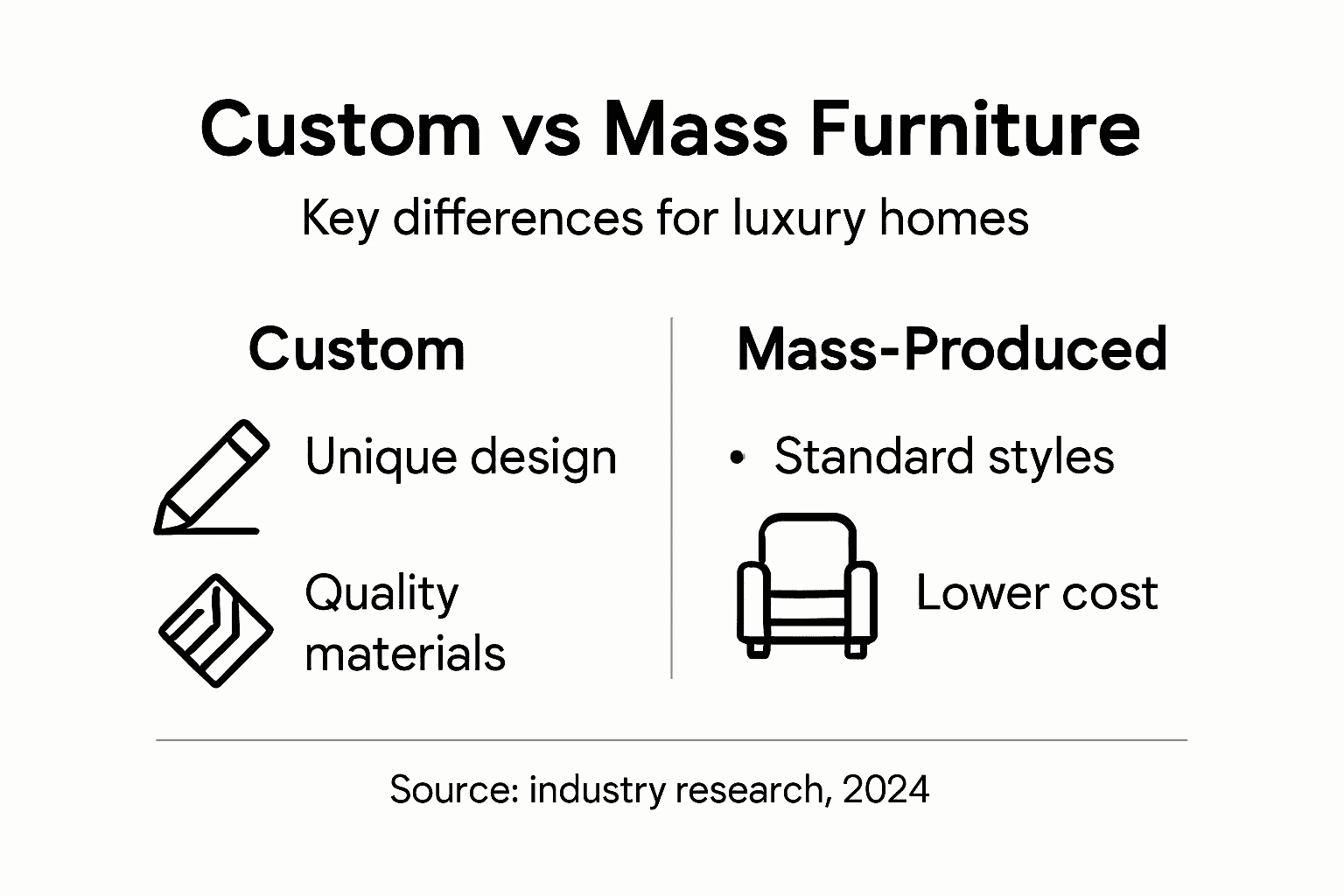
Mass-produced furniture limitations become especially apparent in luxury home contexts:
To clarify how custom furniture excels over mass-produced options, consider the following side-by-side comparison:
| Aspect | Custom Furniture | Mass-Produced Furniture |
|---|---|---|
| Design Flexibility | Fully adaptable to any space | Fixed, standard dimensions |
| Material Selection | Premium and diverse choices | Limited, cost-driven options |
| Emotional Value | Strong personal connection | Minimal personal attachment |
| Repair & Longevity | Easier to refurbish or upgrade | Often difficult to repair |
- Generic design lacking character
- Limited size and configuration options
- Lower-quality materials
- Reduced structural integrity
- Minimal emotional connection
Pro tip: Prioritise furniture pieces that offer a balance between custom design flexibility and reasonable production timelines to achieve optimal results.
Financial, Environmental, and Lifestyle Implications
Sustainable furniture production represents a complex intersection of economic, environmental, and personal value considerations that extend far beyond traditional purchasing decisions. Custom furniture emerges as a sophisticated solution that addresses multiple stakeholder concerns simultaneously.
The financial implications of custom furniture are multifaceted:
- Higher initial investment
- Long-term value retention
- Reduced replacement frequency
- Potential appreciation of artisan-crafted pieces
- Lower lifecycle replacement costs
Comprehensive furniture industry studies reveal that environmentally conscious consumers increasingly demand sustainable production methods. Custom furniture offers significant ecological advantages by minimising waste, utilising superior materials, and creating pieces designed for generational use.
Lifestyle considerations that distinguish custom furniture include:
Below is a summary of how custom furniture impacts financial, environmental, and lifestyle outcomes:
| Impact Area | Custom Furniture Contribution | Long-Term Benefit |
|---|---|---|
| Financial | Lower replacement frequency | Reduced total ownership cost |
| Environmental | Minimal production and disposal waste | Lower ecological footprint |
| Lifestyle | Enhances individuality in the home | Deepened sense of belonging |
- Personal expression through design
- Alignment with individual spatial requirements
- Enhanced emotional connection to living spaces
- Support for local artisan economies
- Reduced environmental impact
Pro tip: Calculate the total lifecycle cost of furniture, considering durability and potential resale value, rather than focusing solely on initial purchase price.
Elevate Your Luxury Home with Truly Custom Furniture
The challenge highlighted in “Why Custom Furniture Matters for Luxury Homes” centres on overcoming the limitations of mass-produced furniture by embracing personalised design that perfectly fits your unique space and lifestyle. Pain points such as limited style choices, emotional disconnect, and concerns about cost and craftsmanship are real hurdles for homeowners seeking bespoke solutions. This article reminds us that true luxury lies in custom pieces that combine superior materials, expert craftsmanship, and a personal narrative tailored specifically to you.
At Wish Interiors, we understand the emotional and functional importance of custom furniture for luxury homes in the UK. Our carefully curated on trend luxury furniture and homeware bring you exceptional options that are both timeless and personalised. Experience the unique blend of artistry and functionality that only bespoke furniture can offer.
Discover our exclusive collection and explore how we turn your vision into reality.
Find out more about our bespoke offerings by visiting Wish Interiors.
Ready to transform your living space with furniture that truly reflects your style and needs Take the first step today by exploring our luxury bespoke collection at Wish Interiors. Your dream home awaits with pieces crafted just for you.
Frequently Asked Questions
What is custom furniture and how does it differ from mass-produced options?
Custom furniture is designed and constructed specifically to meet individual spatial requirements, aesthetic preferences, and lifestyle needs, unlike mass-produced furniture which follows generic templates and standard dimensions.
Why is craftsmanship important in custom furniture?
Craftsmanship ensures that custom furniture is not only visually appealing but also functional and durable. It reflects skilled artistry and personal investment, resulting in pieces that resonate emotionally with the owner.
How does custom furniture impact the value of luxury homes?
Custom furniture can enhance the overall aesthetic and functionality of luxury homes, providing unique, high-quality pieces that may appreciate in value over time, while also reducing the frequency of replacements.
What are the environmental benefits of choosing custom furniture?
Custom furniture promotes sustainable practices by minimising waste through efficient design and material choices. It is often crafted from high-quality materials designed for longevity, reducing the ecological footprint associated with frequent replacements.
Recommended
Sample Image Gallery


