





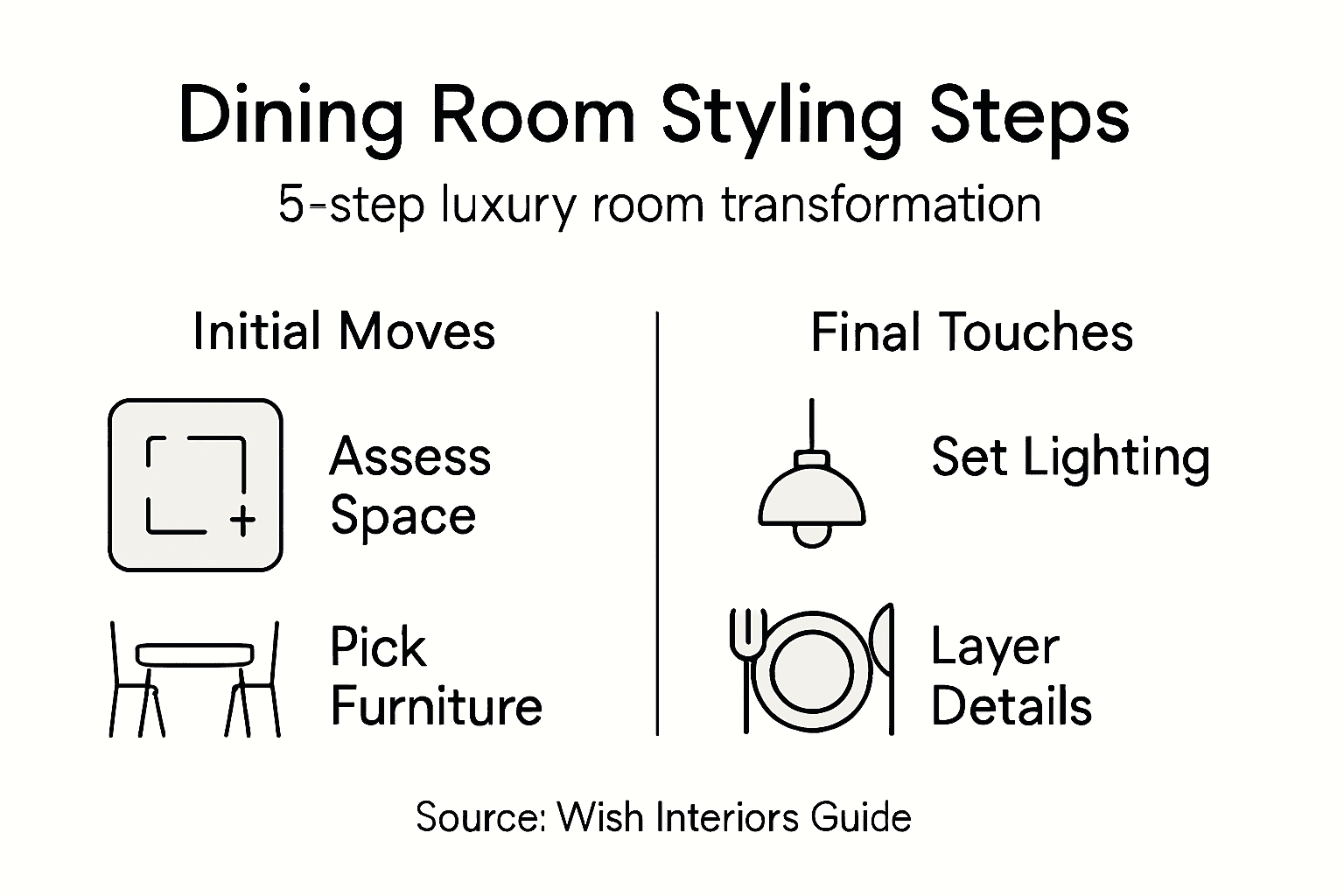
Step by Step Dining Room Styling for Luxury Homes
Redesigning a dining room in a prestigious British home is more than a simple refresh—it is an opportunity to create an inviting sanctuary for sophisticated entertaining. For those seeking to blend timeless style with true practicality, a thoughtful approach to spatial analysis and material choice forms the foundation for a remarkable transformation. This guide reveals how bespoke furniture, curated lighting, and textural details come together for a tailored luxury dining experience that reflects your individual taste.
Table of Contents
- Step 1: Assess The Existing Dining Space
- Step 2: Select Statement Bespoke Furniture
- Step 3: Curate Lighting And Colour Palette
- Step 4: Layer Textures And Decorative Details
- Step 5: Review And Refine The Finished Dining Room
Quick Summary
| Key Insight | Explanation |
|---|---|
| 1. Assess the Dining Space | Measure dimensions and document functionality to optimise the layout effectively. |
| 2. Choose Bespoke Furniture | Select high-quality, customised pieces that enhance both style and comfort in your dining area. |
| 3. Curate Lighting and Colours | Use layered lighting and a cohesive colour palette to create an inviting atmosphere and emotional resonance. |
| 4. Layer Textures and Details | Combine various materials and textures to add depth and sophistication to your space. |
| 5. Review and Refine Design Elements | Conduct a thorough evaluation of design aspects, making minor adjustments to enhance harmony and luxury. |
Step 1: Assess the Existing Dining Space
Evaluating your current dining area is the foundational first step in transforming a luxury home’s dining experience. By conducting a comprehensive spatial analysis, you’ll gain critical insights into how to optimise your room’s potential and create a sophisticated dining environment that reflects your personal style.
Begin by measuring the entire dining space carefully, noting precise dimensions including length, width, and ceiling height. Systematic spatial design assessment reveals that understanding room proportions is crucial for effective design interventions. Consider these key aspects during your assessment:
- Natural light availability and window placement
- Proximity to kitchen and adjacent living spaces
- Current floor material and condition
- Existing architectural features like archways or built-in elements
- Potential traffic flow patterns through the room
Next, document the room’s current functionality by creating a detailed sketch or digital floor plan. Pay special attention to dining room spatial layout and how the space connects with surrounding areas. Note any limitations or challenges that might impact your design vision, such as awkward corners, structural columns, or uneven flooring.
Expert insight: Take high-resolution photographs from multiple angles to help you analyse the space objectively and capture nuanced details that might be overlooked during initial assessment.
Step 2: Select Statement Bespoke Furniture
Selecting statement bespoke furniture transforms your dining space from ordinary to extraordinary, creating a personalised sanctuary that reflects your unique aesthetic and functional requirements. This crucial step involves carefully curating pieces that not only complement your room’s spatial design but also communicate your individual style and sophistication.
Understand your design vision by considering how customised luxury furniture can elevate your dining experience. Look for handcrafted pieces that balance aesthetic elegance with practical functionality. Consider these key factors when selecting bespoke furniture:
- Materials that match your existing interior palette
- Ergonomic design supporting comfort and style
- Proportions that harmonise with your dining space
- Craftsmanship quality and artisan techniques
- Potential for personalisation and unique detailing
Prioritise high-quality natural materials like solid hardwoods, premium leathers, and handwoven textiles that demonstrate exceptional craftsmanship. Each piece should tell a story and create a profound sensory experience, transforming your dining area into a remarkable environment that goes beyond mere functionality.

Expert tip: Request material samples and miniature design mockups before committing to ensure the bespoke furniture perfectly integrates with your existing interior scheme.
Step 3: Curate Lighting and Colour Palette
Curating the perfect lighting and colour palette is essential for transforming your dining room into an elegant, inviting sanctuary that stimulates sensory experiences and emotional connections. This step requires a thoughtful approach to creating a harmonious environment that balances visual comfort, aesthetic appeal, and atmospheric depth.
Begin by exploring professional lighting design strategies that incorporate layered illumination techniques. Your lighting design should include three fundamental layers:
- Ambient lighting: Providing overall room illumination
- Task lighting: Focused illumination for specific dining activities
- Accent lighting: Highlighting architectural features and creating visual drama
Select a cohesive colour palette that complements your chosen lighting scheme, considering how different hues interact with light and create emotional resonance. Opt for a balanced palette that includes:
- Primary neutral base colours
- Complementary accent tones
- Subtle metallic or shimmering elements
- Textures that enhance light reflection
Consider the psychological impact of your colour choices, understanding how different tones can influence mood and perception within your dining space. Warm tones like soft golds and rich terracottas can create intimacy, while cooler greys and blues offer a more contemporary, sophisticated ambience.
Expert tip: Test your chosen lighting and colour palette by creating small-scale mockups and observing how they interact at different times of day.
Here is a comparison of lighting and colour palette strategies for luxury dining rooms:
| Strategy Type | Key Benefit | Recommended Use |
|---|---|---|
| Layered Lighting | Enhances depth and ambience | Use for both day and evening use |
| Neutral Palette | Timeless, versatile appeal | Ideal for frequent redecorating |
| Accent Colours | Adds personality, zonal feel | Best for feature walls or art |
| Reflective Surfaces | Amplifies light, luxury feel | For small spaces or low ceilings |
Step 4: Layer Textures and Decorative Details
Layering textures and decorative details transforms your dining room from a simple eating space into a sophisticated, multidimensional sanctuary that engages the senses and tells a unique design story. This crucial step involves carefully orchestrating different materials, patterns, and decorative elements to create depth, visual interest, and tactile richness.
Begin by exploring botanical texture strategies that introduce subtle sophistication to your dining environment. Your texture layering should incorporate a strategic mix of materials:
- Natural wood grains
- Soft linen and velvet upholstery
- Handcrafted ceramic accessories
- Subtle botanical patterns
- Metallic accent pieces
Create visual contrast by combining soft and hard textures that complement each other. Luxury interior layering techniques recommend blending elements like polished metals with plush textiles to generate visual intrigue and sensory depth. Focus on selecting pieces that interact harmoniously while maintaining individual character.
Consider the emotional impact of your chosen textures, understanding how different materials communicate sophistication and comfort. Silk runners, wool throws, and hand-glazed ceramics can elevate your dining space from functional to extraordinary, creating an environment that feels both curated and inviting.
Expert tip: Always purchase textile and decorative samples before final selection to understand how they interact with your existing colour palette and lighting conditions.
Step 5: Review and Refine the Finished Dining Room
Reviewing and refining your newly styled dining room is the final crucial step in creating a truly exceptional luxury space that reflects your personal aesthetic and functional needs. This process transforms your design from good to extraordinary by ensuring every element works harmoniously.
Conduct a comprehensive assessment of high-end interior design principles to evaluate your dining room’s overall composition. Your review should systematically address several key aspects:
- Spatial flow and movement
- Proportion and scale of furniture
- Material quality and craftsmanship
- Cohesiveness of design elements
- Emotional and functional comfort
Examine the room from multiple perspectives, walking around and sitting in different positions to understand how the space feels and functions. Pay attention to subtle details like how light interacts with surfaces, the visual balance between different elements, and the overall sensory experience.
Consider making minor adjustments to enhance the room’s sophistication. This might involve subtle repositioning of furniture, introducing a carefully chosen accent piece, or fine-tuning lighting to create more nuanced atmospheric effects. Remember that true luxury is found in the thoughtful refinement of details.
To guide your finishing touches, here is a summary of what to check when reviewing and refining your dining space:
| Element Evaluated | Why It Matters | How to Optimise |
|---|---|---|
| Spatial Flow | Ensures comfort and movement | Adjust furniture positioning |
| Material Quality | Impacts longevity and luxury | Select premium, tactile finishes |
| Emotional Ambience | Affects atmosphere and enjoyment | Fine-tune lighting and textures |
| Visual Balance | Maintains a cohesive look | Harmonise colours and proportions |
Expert tip: Photograph the space and review the images objectively, as they often reveal design nuances that are less apparent in person.
Transform Your Dining Room Into a Luxurious Sanctuary Today
Creating a truly elegant dining space requires more than just aesthetic choices. If you find yourself struggling to achieve the perfect balance of spatial flow, statement bespoke furniture, and harmonious lighting with exquisite textures then enhancing your luxury home’s dining room can feel overwhelming. With key challenges like selecting materials that complement your style and ensuring every detail tells your unique story it is important to access expert solutions that streamline this journey.
Discover how on trend luxury furniture and homeware from Wish Interiors can help you effortlessly realise the sophisticated dining space you envision. Our curated selection of high quality bespoke furniture is designed to elevate your home’s ambiance and perfectly complement your lighting and colour palette choices. Visit Wish Interiors now to explore personalised options crafted to match your unique style and begin transforming your dining room with confidence. Your exquisite dining experience awaits.
Frequently Asked Questions
How do I assess the existing dining space for luxury styling?
Begin by carefully measuring your dining area, noting the length, width, and ceiling height. Make a detailed sketch or digital floor plan to document its current functionality and any layout challenges.
What types of bespoke furniture should I choose for my dining room?
Select statement bespoke furniture that reflects your personal style while complementing the spatial design of your dining area. Prioritise high-quality materials and ergonomic designs that provide both comfort and elegance.
How can I effectively curate lighting and a colour palette?
Curate your dining room’s lighting by incorporating layered illumination, including ambient, task, and accent lighting. Choose a cohesive colour palette that balances neutral tones with accent colours to create an inviting atmosphere.
What textures and decorative details should I layer in my dining room?
Layer a mix of textures, including natural wood, soft linens, and metallic accents to create depth and visual interest. Focus on combining soft and hard materials for a harmonious and sophisticated look.
How can I review and refine my finished dining room?
Conduct a comprehensive assessment of your newly styled dining room by evaluating spatial flow, material quality, and emotional ambience. Make minor adjustments, such as repositioning furniture or fine-tuning lighting, to enhance the overall sophistication of the space.
Recommended
Sample Image Gallery


