





What Is Bespoke Furniture and Its Impact on Luxury Homes
Every luxurious home tells a story, and for those who value true individuality, bespoke furniture offers far more than just tailored dimensions. For British homeowners and interior designers seeking standout results, the world of custom-made pieces delivers unrivalled quality, sustainability, and artistry. Discover how this collaborative approach blends skilled craftsmanship, eco-conscious practices, and personal expression, challenging outdated myths while ensuring every piece becomes a lasting reflection of your unique taste.
Table of Contents
- Defining Bespoke Furniture and Common Myths
- Types of Bespoke Furniture for Homes
- How Bespoke Creation Process Works
- Comparing Bespoke and Ready-Made Options
- Costs, Lead Times, and Quality Assurance
Key Takeaways
| Point | Details |
|---|---|
| Bespoke Furniture Definition | Represents personalised craftsmanship, tailored to individual preferences, standing apart from mass-produced furniture. |
| Sustainability Focus | Utilises locally sourced materials, challenging myths about bespoke furniture being environmentally irresponsible. |
| Creation Process | Involves a detailed consultation and rigorous quality assurance, ensuring the final product meets client specifications. |
| Cost and Value Consideration | Typically 30%-200% more expensive than mass-produced options, but offers superior durability and unique aesthetic appeal. |
Defining Bespoke Furniture and Common Myths
Bespoke furniture represents a pinnacle of personalised craftsmanship, transcending mass-produced designs by offering truly unique pieces tailored precisely to individual preferences. Unlike standard furniture, these custom creations are meticulously designed and handcrafted to reflect the distinct vision and aesthetic sensibilities of each client.
The art of bespoke furniture involves a deeply collaborative process where skilled artisans work intimately with clients to transform abstract design concepts into tangible, functional masterpieces. Customisation and individual craftsmanship are at the heart of this approach, challenging common misconceptions about handmade furniture being prohibitively expensive or time-consuming.
Contrary to popular belief, bespoke furniture is not just about luxury, but about creating sustainable, high-quality pieces that transcend transient design trends. Artisans often utilise locally sourced materials like reclaimed wood and recycled metals, ensuring each piece not only tells a unique story but also minimises environmental impact. This approach dispels myths about custom furniture being wasteful or environmentally irresponsible.
Pro tip: When commissioning bespoke furniture, communicate your precise functional requirements and aesthetic preferences upfront to ensure the final piece perfectly matches your vision.
Types of Bespoke Furniture for Homes
Bespoke furniture offers homeowners an extraordinary range of custom-crafted pieces designed to transform living spaces with unparalleled precision and personal expression. Customised furniture options span multiple categories, each meticulously tailored to meet specific functional and aesthetic requirements of discerning homeowners.
In the realm of residential spaces, bespoke furniture encompasses several key categories. Kitchen furniture stands out as a prime example, where custom-designed cabinetry, islands, and storage solutions can be crafted to maximise space efficiency and reflect individual cooking and entertaining styles. Similarly, bedroom furniture like wardrobes and beds can be precisely dimensioned to fit unique room layouts, ensuring optimal use of available space and creating a harmonious personal sanctuary.
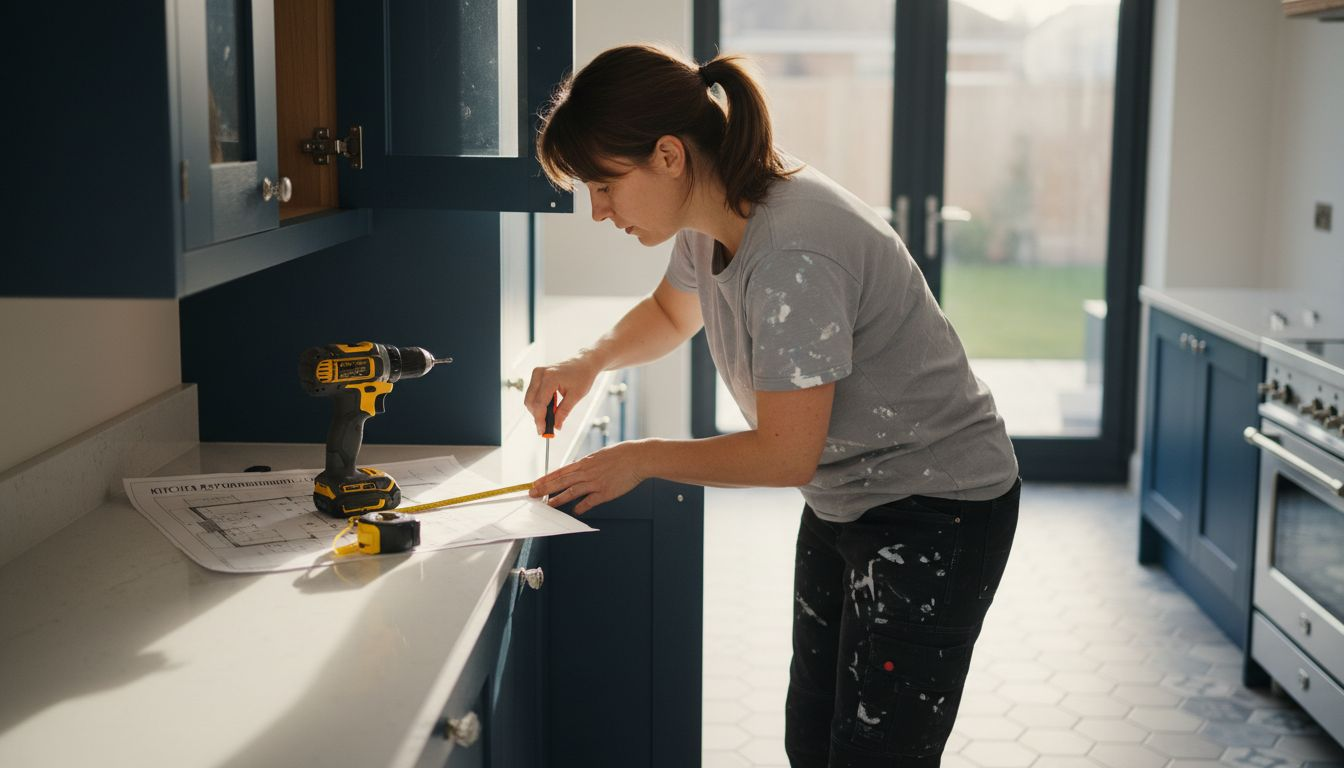
Beyond standard living areas, bespoke furniture extends to specialised spaces such as home offices, entertainment rooms, and bathrooms. Custom-designed pieces like built-in bathroom vanities, media units, and home office desks can be constructed to integrate seamlessly with architectural features, providing both functional storage and aesthetic cohesion. Materials can range from rich hardwoods to contemporary metals, allowing complete personalisation of texture, finish, and design.
Pro tip: Measure your space meticulously and consider future lifestyle changes when commissioning bespoke furniture to ensure longevity and adaptability of your custom pieces.
How Bespoke Creation Process Works
The bespoke furniture creation process is a meticulously orchestrated journey that transforms client vision into tangible, personalised design. Advanced manufacturing techniques blend traditional craftsmanship with cutting-edge digital technologies, ensuring each piece is a unique representation of individual style and functional requirements.
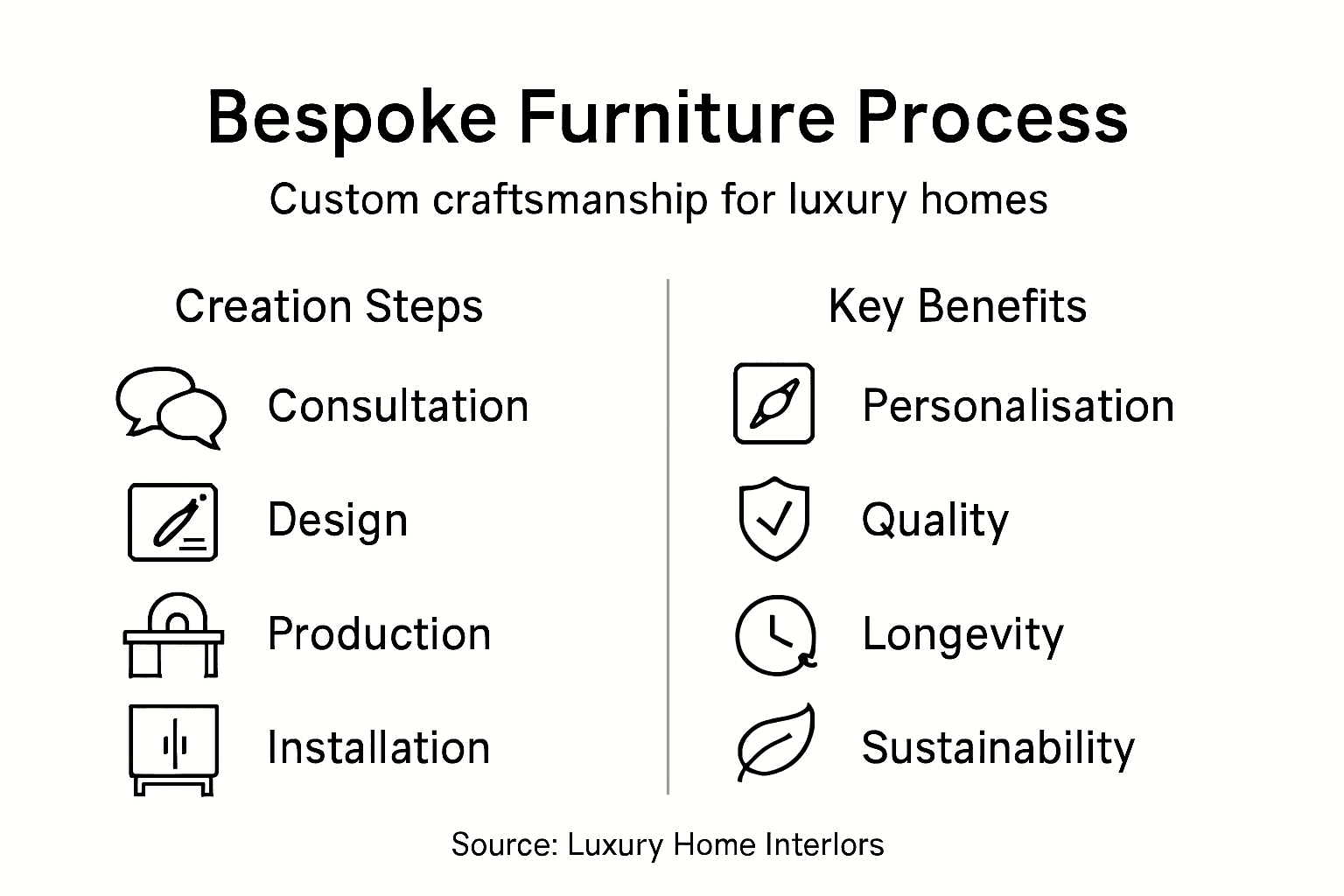
Initially, the process begins with an in-depth consultation where skilled artisans engage clients in comprehensive discussions about their precise needs, aesthetic preferences, and spatial constraints. Professional designers then translate these conversations into detailed technical drawings, creating a blueprint that serves as the foundational roadmap for the furniture’s creation. This stage involves precise measurements, material selection, and preliminary design renderings that allow clients to visualise the final product before fabrication begins.
The fabrication stage represents where true craftsmanship emerges. Highly skilled artisans employ a combination of traditional woodworking techniques and modern technologies like Computer Numerical Control (CNC) machining to transform selected materials into bespoke pieces. Each component is carefully cut, shaped, assembled, and finished with meticulous attention to detail. Quality assurance checks are integrated throughout the manufacturing process, ensuring that the final piece not only meets but often exceeds the client’s original specifications and expectations.
Pro tip: Request detailed progress photographs and maintain open communication with your artisan throughout the creation process to ensure your bespoke furniture perfectly aligns with your vision.
Comparing Bespoke and Ready-Made Options
The choice between bespoke and ready-made furniture represents a critical decision for homeowners seeking to balance aesthetic preferences, functional requirements, and budgetary constraints. Furniture selection strategies reveal nuanced differences that extend far beyond initial price considerations.
Bespoke furniture distinguishes itself through unparalleled customisation and precision. Unlike mass-produced alternatives, custom pieces are meticulously designed to address specific spatial challenges, architectural nuances, and personal style preferences. Skilled artisans can create furniture that seamlessly integrates with unique room dimensions, accommodating irregular spaces, unusual architectural features, and individual lifestyle needs that standard furniture simply cannot match.
While ready-made furniture offers immediate availability and lower upfront costs, it fundamentally compromises on quality, longevity, and personal expression. Mass-produced pieces typically employ standardised manufacturing processes, resulting in generic designs that lack character and fail to withstand rigorous use. Architectural integration considerations demonstrate that custom furniture not only provides superior craftsmanship but also contributes to a more harmonious and thoughtfully designed living environment, ultimately delivering superior long-term value despite higher initial investment.
Below is a comparison of key aspects between bespoke and ready-made furniture options:
| Aspect | Bespoke Furniture | Ready-Made Furniture |
|---|---|---|
| Design Flexibility | Fully customised to needs | Fixed designs, limited choices |
| Material Selection | Chosen for quality and style | Standardised, often generic |
| Time to Delivery | 6-16 weeks, project specific | Immediate, off-the-shelf |
| Long-term Value | Superior durability and lifespan | Often replaced more frequently |
Pro tip: Consider the lifetime value of furniture by calculating cost per year of use, not just the initial purchase price, when comparing bespoke versus ready-made options.
Costs, Lead Times, and Quality Assurance
Bespoke furniture represents a significant investment that requires careful consideration of multiple factors beyond initial pricing. Quality management strategies reveal a complex landscape of production techniques, sustainability considerations, and long-term value propositions that discerning homeowners must evaluate.
The financial investment in bespoke furniture typically ranges from 30% to 200% higher than mass-produced alternatives, reflecting the extensive craftsmanship, personalised design, and superior materials involved. Lead times can extend from 6 to 16 weeks, depending on design complexity, material availability, and artisan workload. These extended timelines allow for meticulous attention to detail, including multiple design consultations, precise measurements, material selection, and iterative refinements that ensure the final piece perfectly matches client specifications.
Quality assurance in bespoke furniture production transcends standard manufacturing processes. Skilled artisans employ rigorous methodologies including total quality management, lean manufacturing principles, and comprehensive quality function deployment to minimise defects and maximise product longevity. These approaches involve detailed inspections at each production stage, ensuring structural integrity, aesthetic precision, and functional excellence. Unlike mass-produced furniture, which often prioritises cost-efficiency, bespoke pieces undergo exhaustive quality checks that guarantee exceptional durability and performance.
Here is a summary of main factors influencing bespoke furniture costs and assurance:
| Factor | Typical Bespoke Approach | Impact on Homeowners |
|---|---|---|
| Price Range | 30%-200% higher than mass-produced | Requires larger investment |
| Lead Time | 6-16 weeks average | Demands advance planning |
| Quality Control | Multi-stage, rigorous inspections | Ensures lasting satisfaction |
Pro tip: Request a detailed quality assurance report and material certification when commissioning bespoke furniture to understand the precise standards and craftsmanship behind your investment.
Discover Bespoke Luxury Furniture Tailored to Your Home
Navigating the world of bespoke furniture can feel overwhelming when seeking the perfect balance of craftsmanship, sustainability, and personalised style for your luxury home. Key challenges like long lead times, ensuring exact design alignment, and investing wisely demand trusted expertise and exceptional quality assurance. At Wish Interiors, we understand these concerns and offer bespoke furniture solutions that turn your vision into timeless reality while embracing superior materials and meticulous craftsmanship.
Elevate your living space with truly custom pieces designed for both beauty and durability. Explore how our bespoke furniture services at Wish Interiors bring your unique style to life with expert precision. Act now to experience personalised consultation, flexible design options, and a commitment to quality that matches the highest standards discussed in the article. Begin your bespoke journey today by visiting Wish Interiors and transform your luxury home with furniture that speaks to you.
Frequently Asked Questions
What is bespoke furniture?
Bespoke furniture is custom-made, uniquely designed and handcrafted pieces tailored to individual preferences, reflecting personal style and functional requirements.
How does bespoke furniture differ from ready-made options?
Bespoke furniture offers full customisation and superior quality, while ready-made furniture is mass-produced with fixed designs and limited choices.
What factors influence the cost of bespoke furniture?
The cost of bespoke furniture can range from 30% to 200% higher than mass-produced alternatives, influenced by craftsmanship, materials used, and the complexity of the design.
What is the process for commissioning bespoke furniture?
The process involves an in-depth consultation, detailed technical drawings, and careful fabrication by skilled artisans, with a focus on quality assurance at each production stage.
Recommended
Sample Image Gallery


