





Sustainable Materials for Luxury Office Desks
Table of Contents
- Why Sustainable Materials Matter for Luxury Office Desks
- FSC-Certified Timber for Office Furniture
- Reclaimed Wood Luxury Office Desks: Character and Responsibility
- Low-VOC Furniture Finishes: Protecting Health and Environment
- Renewable and Recycled Materials in High-End Design
- Certifications and Standards That Guarantee Sustainability
- Durability and Lifecycle: Building Desks That Last
- Conclusion
- Frequently Asked Questions
Last Updated: September 22, 2026
Why Sustainable Materials Matter for Luxury Office Desks
When you invest in sustainable materials office desks, you're making a decision that affects not just your workspace aesthetics but also your environmental footprint and long-term value. Choosing sustainable materials for luxury office desks has shifted from niche preference to essential consideration for discerning designers and homeowners. The intersection of craftsmanship, durability, and environmental responsibility defines what modern luxury actually means.
At Wish Interiors, we've spent over 60 years perfecting the art of bespoke furniture creation, and we've seen firsthand how material choice determines whether a piece becomes a cherished heirloom or a landfill candidate within a decade. Sustainable luxury isn't a compromise, it's an upgrade. A desk built from FSC-certified timber or reclaimed wood doesn't just look better; it performs better, ages more gracefully, and carries a story worth telling.
The real question isn't whether to choose sustainable materials. It's understanding which ones deliver the performance, aesthetics, and longevity that justify a luxury investment. That's what separates a genuinely valuable piece from one that merely looks expensive.
FSC-Certified Timber for Office Furniture
FSC-certified timber represents the gold standard when sourcing wood for high-end desks. The Forest Stewardship Council certification guarantees that wood has been harvested responsibly, with forest ecosystems and worker rights protected throughout the supply chain. For luxury office desks, this certification matters because it connects material quality to ethical sourcing, something increasingly important to professionals who understand that their purchasing decisions have real consequences.
FSC timber comes from managed forests where harvesting actually supports forest health rather than depleting it. Hardwoods like walnut, oak, and cherry certified by FSC deliver the visual depth and durability expected in luxury pieces. These woods develop character over time, their grain patterns becoming more pronounced as they age, which is precisely what clients commissioning bespoke furniture want to see happen.
The performance difference is measurable. FSC-certified timber typically comes from forests managed with long rotation cycles, meaning trees grow slower and develop denser grain structures. This density translates to desks that resist warping, scratching, and the everyday wear that compromises cheaper alternatives. A walnut desk finished with low-VOC stains can last 40+ years with basic maintenance, far outlasting trends or the buyer's actual need for it.
One practical consideration: FSC-certified timber costs more upfront than uncertified wood. But when you calculate the lifecycle cost, accounting for durability, refinishing intervals, and replacement cycles, the premium shrinks considerably. A desk lasting four decades costs less per year than one lasting eight years, even at double the initial price.
Reclaimed Wood Luxury Office Desks: Character and Responsibility
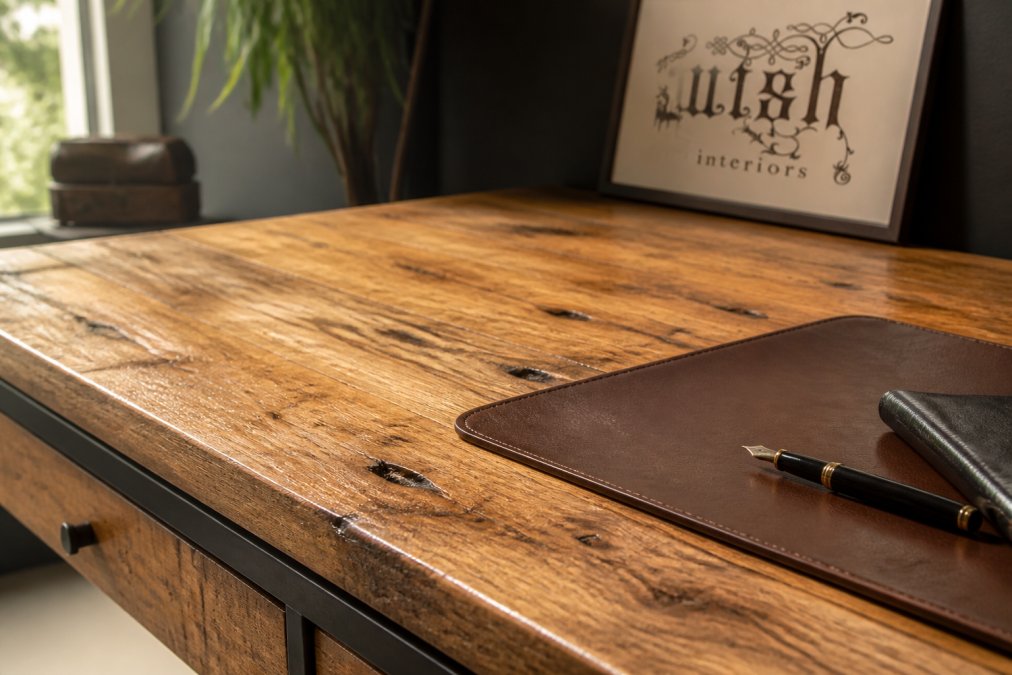
Reclaimed wood represents a different philosophy entirely. Rather than harvesting new timber, reclaimed wood sources material from deconstructed buildings, old barns, and salvaged architectural elements. For luxury office desks, this approach offers something no new material can replicate: authentic history embedded in the grain.
A desk built from reclaimed barn wood or salvaged flooring carries visual evidence of its past. The nail holes, colour variations, and weathering patterns tell a story that modern finishes deliberately try to erase. Designers and architects increasingly specify reclaimed wood precisely because these imperfections read as authenticity in an era of mass-produced uniformity.
Beyond aesthetics, reclaimed wood is a circular economy solution. Every board repurposed is timber that doesn't require new forest harvesting. The environmental impact is profound: no logging, no transportation from managed forests, no processing waste. The carbon sequestered in the wood remains locked in place rather than released through new harvesting and milling.
The durability of reclaimed wood often exceeds new timber. Old-growth wood from structures built 100+ years ago typically has tighter grain than modern plantation timber, making it harder and more stable. A desk built from reclaimed hardwood won't shift with humidity changes the way lesser materials do. This stability is why architects specify it for commercial installations where furniture must perform reliably across seasons.
The trade-off is availability and cost. Reclaimed wood sources are finite, you can't simply order more once a batch sells. This scarcity is precisely why luxury clients choose it. The desk becomes genuinely one-of-a-kind, not just custom-made. At Wish Interiors, we work to source authentic reclaimed materials, ensuring each piece carries provenance that matters.
Low-VOC Furniture Finishes: Protecting Health and Environment
The finish applied to a desk matters as much as the wood itself. Volatile organic compounds (VOCs) are chemicals released from conventional stains, varnishes, and adhesives during and after application (Construction hazardous substances: Solvents). A luxury desk finished with standard polyurethane can off-gas for months, affecting indoor air quality and the health of everyone using that workspace.
Low-VOC finishes eliminate this problem. These formulations use water-based resins, plant-derived solvents, and alternative binders that deliver the same protective performance as traditional finishes without the chemical off-gassing. The difference is tangible: no chemical smell, no respiratory irritation, no guilt about what you're breathing while working.
For luxury office desks, low-VOC finishes have become non-negotiable. High-end clients expect their bespoke furniture to be beautiful and safe. Natural oil finishes, tung oil, linseed oil, and proprietary blends, represent one approach, offering a warm appearance while allowing the wood grain to remain visible. These finishes require more frequent maintenance (reapplication every 1-2 years) but deliver an aesthetic that synthetics can't match.
Water-based polyurethane and acrylic finishes provide another option, offering durability comparable to solvent-based products while eliminating VOC concerns. These finishes dry quickly, require fewer coats, and deliver a clear protective layer that enhances rather than obscures wood colour. They're particularly effective on light-coloured woods where maintaining visual clarity matters.
The performance trade-off is minimal. Modern low-VOC finishes resist scratching, water rings, and heat marks as effectively as conventional alternatives. This repairability extends the useful life of luxury pieces, reducing the need for replacement.
Renewable and Recycled Materials in High-End Design
Beyond timber, sustainable luxury desks incorporate renewable and recycled materials in structural and decorative elements. Recycled metals, aluminium, steel, and copper, reduce mining impact while delivering the same performance as virgin material. A desk frame built from recycled aluminium performs identically to one made from newly extracted ore, but without the environmental extraction cost. Integrating these reclaimed components into high-end furniture requires a discerning eye for sustainable decor quality to ensure that the final piece maintains its structural integrity and aesthetic refinement.
Bamboo represents the fastest-growing renewable material available. It reaches harvest maturity in 3-5 years compared to timber species requiring decades. Bamboo's tensile strength exceeds many hardwoods, making it suitable for desk structures, frames, and decorative veneers. The visual warmth of bamboo appeals to designers seeking organic aesthetics without the carbon footprint of slow-growth hardwoods.
Recycled glass and reclaimed stone offer design flexibility for desk surfaces and inlay work. A desk featuring a recycled glass top with a reclaimed wood base combines material stories, one salvaged, one renewable, creating a conversation piece that justifies its luxury positioning through both beauty and responsibility.
Natural fibres like linen, hemp, and cork appear increasingly in desk accessories and storage components. These materials biodegrade at end-of-life, eliminating the landfill burden of synthetic alternatives. A cork desk pad or hemp storage box complements a sustainable desk frame, reinforcing the material philosophy throughout the workspace.
The key consideration is material compatibility.
Certifications and Standards That Guarantee Sustainability
Understanding which certifications actually verify sustainability claims separates genuine responsibility from marketing language. FSC certification for timber is the most rigorous standard, requiring independent audits of forest management, labour practices, and community impact. When you see the FSC logo on a desk, you know the wood source has been verified by a third party.
| Certification | Focus Area | Verification Level | Best For |
|---|---|---|---|
| FSC | Forest management & sourcing | Third-party audits | Timber desks |
| Greenguard Gold | Chemical emissions | Laboratory testing | Indoor air quality |
| PEFC | European forestry standards | Regional certification | European-sourced wood |
| Cradle to Cradle | Lifecycle design | Material assessment | Circular economy goals |
Durability and Lifecycle: Building Desks That Last
A desk built from sustainable materials office desks isn't one made from green materials alone, it's one designed to outlast its owner's career. Durability is the ultimate sustainability metric. A desk lasting 50 years has a dramatically lower environmental cost per year of use than one lasting five years, regardless of material source.
Conclusion
Selecting sustainable materials for luxury office desks requires understanding the intersection of environmental responsibility, material performance, and genuine craftsmanship. The choices you make, FSC-certified timber, low-VOC finishes, reclaimed wood, recycled metals, determine whether your desk becomes a lasting asset or an eventual landfill item.
Frequently Asked Questions
What makes FSC certification important for sustainable office furniture?
FSC (Forest Stewardship Council) certification guarantees that timber comes from responsibly managed forests where environmental, social and economic standards are met. For office desks, FSC timber ensures your furniture supports sustainable forestry practices, reduces illegal logging, and protects biodiversity. When choosing sustainable materials for luxury office desks, FSC-certified wood is one of the most credible environmental markers available.
Are low-VOC finishes necessary for a home office desk?
Low-VOC (volatile organic compound) finishes significantly reduce harmful off-gassing that can affect indoor air quality. Particularly in a home office where you spend many hours, low-VOC finishes protect your health and create a healthier workspace. They also emit less odour during and after installation, making the process more pleasant. For luxury office desks, low-VOC finishes are increasingly standard among high-end makers who prioritise both durability and occupant wellbeing.
Is reclaimed wood suitable for a luxury office desk?
Reclaimed wood is excellent for luxury office desks because it combines environmental responsibility with distinctive character. Each piece tells a story through its natural patina, grain variation, and weathered finish. Reclaimed timber reduces waste, requires no new tree harvesting, and often proves more durable than new wood due to its age and density. High-end makers like Wish Interiors can craft bespoke desks from reclaimed wood that become statement pieces while delivering genuine sustainability credentials.
What other sustainable materials work well in luxury office desk design?
Beyond wood, sustainable options include recycled metals for frames and hardware, which reduce mining impacts and energy consumption. Natural fibres like linen or hemp can be used in upholstered desk chairs paired with your desk. Renewable materials such as bamboo (which grows rapidly) and mango wood offer durability comparable to traditional hardwoods. Repurposed glass can feature in desktop surfaces or storage elements. The best choice depends on your aesthetic and functional needs, but combining multiple sustainable materials creates a truly eco-conscious workspace.
Sample Image Gallery


