





Reupholstering Antique Chairs vs Buying New: 2026 Guide
Table of Contents
- Antique Chair Reupholstery vs Buying New: The Honest Trade-Offs
- The Cost to Reupholster an Antique Chair, Itemised
- How to Choose Upholstery Fabric for an Antique Chair
- How Long Does Chair Reupholstery Take?
- Does Reupholstery Affect Antique Furniture Value?
- Inspection Checklist: Is Your Antique Chair Worth Reupholstering?
- Antique Chairs Ready to Reupholster or Buy Today
- Frequently Asked Questions
Last Updated: October 7, 2026
Antique Chair Reupholstery vs Buying New: The Honest Trade-Offs
Antique chair reupholstery replaces the fabric, padding and sometimes the webbing or springs while keeping the original frame. When weighing reupholstering antique chairs vs buying new, a sound frame usually makes reupholstery the better investment.
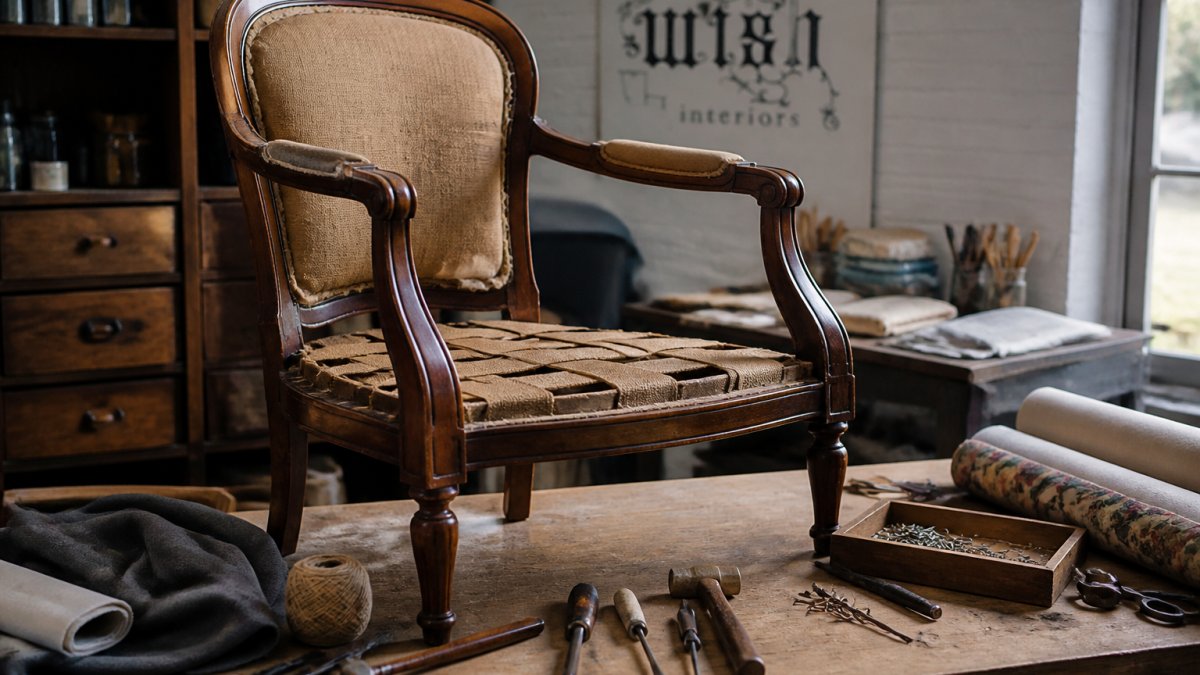
Most buying guides compare a reupholstered antique against a mid-range new chair, when the fair comparison is against a new chair of similar quality.
What You Gain by Keeping the Original Frame
The frame is the whole argument. Hardwood frames in antique chairs were often hand-jointed and are repairable rather than disposable. Reupholstery keeps that structure, refreshes the comfort layers and lets you choose a fabric that suits your interior.
- Original craftsmanship you cannot buy new at the same price
- Fabric and filling chosen to your specification
- A chair that fits period interiors and modern schemes alike
- Less waste sent to landfill, since the frame and often the springs are reused
The Waste and Resources Action Programme guidance on textile waste notes that textiles are among the most resource-intensive materials households discard, which is why extending a chair's lifespan matters.
What Buying New Gets You (and What It Doesn't)
Buying new wins on speed and predictability: you choose from stock, it arrives assembled, and there is no waiting on a workshop. What it rarely gives you is longevity at the lower end, where a modest price often means a softwood frame, stapled joints and foam that loses its shape.
At the higher end, new bespoke seating is excellent. But if you already own an antique with a good frame, replacement means paying twice: once for the new chair, and once in the loss of a piece that was already better made.
| Factor | Reupholstering an Antique | Buying New |
|---|---|---|
| Frame quality | Original hardwood, often hand-jointed | Varies; softwood on budget models |
| Time to receive | Weeks in a workshop | Days to a few weeks |
| Cost control | Labour, fabric and repairs itemised | Fixed retail price |
| Character | Preserved and personalised | Standardised design |
| Environmental impact | Frame and springs reused | New materials throughout |
The Cost to Reupholster an Antique Chair, Itemised
The cost to reupholster an antique chair depends on labour, materials and any frame repairs. A dining chair with a drop-in seat sits at the lower end; a fully sprung armchair with a show frame sits at the higher end. We price each piece after inspection, because a simple-looking chair can hide a tired frame.
Labour, Materials and Frame Repairs Broken Down
- Stripping and inspection: removing old fabric, tacks and filling, then assessing the frame
- Frame repairs: re-gluing joints, replacing broken rails or repairing carved sections
- New fillings: webbing, springs, horsehair or modern foam alternatives
- Fabric: priced per metre, and a patterned fabric needs more to match repeats
- Finishing: re-tacking, trimming, and polishing or waxing the exposed frame
Realistic Cost Ranges and the Assumptions Behind Them
As a working guide, a drop-in dining seat in a mid-range plain weave typically falls in the low hundreds of pounds, while a fully sprung armchair with frame repairs and patterned fabric commonly runs into four figures. Key assumptions:
- Chair type: a drop-in seat needs far less labour than a fully sprung, hand-stuffed armchair
- Frame condition: sound frames need no repair; loose joints, splits or woodworm add labour and materials
- Fabric: a plain wool at a modest price per metre and a wide patterned weave can differ several times over on the same chair, and pattern repeats increase the metres required
- Fillings: replacing horsehair with traditional materials costs more than modern foam alternatives
- Finish: polishing or waxing an exposed show frame is skilled, time-consuming work
- Delivery and collection: distance and the chair's fragility affect transport costs
Ask for the fabric quantity before you commit, and order a sample to view in your own lighting. A quote that itemises labour, materials and repairs separately is easier to compare than a lump sum.
Comparing Like With Like Against a New Chair
The fair comparison is not a reupholstered antique against a budget new chair, but against a new chair of similar quality. A new bespoke chair built to comparable standards typically costs more than reupholstering a sound antique you already own, because you pay for the frame, labour and fabric all over again.
An itemised quote lets you see that trade-off clearly.
How to Choose Upholstery Fabric for an Antique Chair
Learn how to choose upholstery fabric for an antique chair and you protect both its look and its value. Match the fabric's weight and pattern to the chair's era, then match its durability to how the chair will be used. A delicate silk beside a busy hallway door will not last.
- Period-appropriate weaves: damask, wool, linen blends and velvet suit most antique styles
- Weight: heavier weaves hold shape on sprung seats; lighter fabrics suit occasional chairs
- Pattern scale: small repeats suit delicate frames; large florals overwhelm narrow chairs
- Durability: for daily use, look for a rub count suited to domestic seating
- Colour: take a sample home, since workshop and showroom light both flatter fabric
For a mid-Victorian piece, a rich red or deep green wool reads correctly. On a lighter salon chair, a white damask or soft pink keeps the period feel without darkening a small room.
How Long Does Chair Reupholstery Take?
Chair reupholstery typically takes two to six weeks from fabric approval to collection, depending on the chair's complexity and the workshop's queue. A drop-in seat can be quicker; a fully sprung armchair with frame repairs takes longer. Fabric lead times are the variable most people underestimate.
Here is the sequence we follow:
- Inspection and written quote
- Fabric selection and sample approval
- Stripping and frame assessment
- Frame repairs and re-gluing
- Rebuilding fillings, webbing and springs
- Cutting and fitting the new cover
- Finishing, polishing and quality check
If you are furnishing to a deadline, tell us the date at the start. We schedule around renovation timelines rather than the other way round.
Does Reupholstery Affect Antique Furniture Value?
Reupholstery can protect or reduce antique furniture value, depending on the chair. For a sound frame with worn fabric, sympathetic reupholstery usually preserves value, because a usable chair is worth more than a tatty one.
A Victorian mahogany armchair with marked but original upholstery is a candidate for careful conservation. A similar chair with fabric already replaced twice is a candidate for a fresh cover in a period-correct fabric. If unsure which you own, get a specialist opinion first.
Antique Mahogany Armchair / Red Upholstered Chair / Victorian Empire Armchair →

Inspection Checklist: Is Your Antique Chair Worth Reupholstering?
A chair is worth reupholstering when the frame is sound, the joints are tight and the repairs needed are structural rather than decorative. Work through this checklist before you commit.
What to Check Before You Commit
- Press each corner: does the frame move or creak?
- Lift the chair: is the weight even, or does one side feel loose?
- Check joints for old repairs, filler or fresh glue
- Look for woodworm: small round holes and fine dust beneath the chair
- Test the seat: sagging means worn webbing or springs, which is repairable
- Inspect the legs and rails for splits or replaced sections
- Check for maker's marks, labels or stamps that affect value
- Confirm the chair suits your room once restored
If the frame passes, the rest is routine work. If it fails on woodworm or a broken rail, get a repair quote before deciding.
A Decision Framework by Condition and Intended Use
Most antique chairs fall into one of four categories, and each points to a different answer.
Heirloom or museum-grade: original fabric, finish and provenance carry value in their own right.
Sound frame, worn upholstery: the classic candidate for reupholstery. The frame has already survived decades, which says more about its durability than any showroom spec sheet.
Decorative or occasional use: a chair that is looked at more than sat on can take a lighter, more delicate fabric.
Severely damaged or structurally compromised: woodworm, a broken rail or a failed frame changes the maths.
Matching the Chair to How It Will Actually Be Used
Intended use matters as much as condition. A chair beside a busy hallway door needs a durable weave and a firm seat; one in a spare room can carry a delicate silk or pale damask. For daily use, look for a rub count suited to domestic seating; for occasional use, prioritise period-appropriate weaves such as damask, wool, linen blends and velvet.
If you are unsure which category your chair falls into, get it inspected. A written quote separating frame repairs from upholstery work is the clearest way to see whether reupholstery is the better investment.
Antique Chairs Ready to Reupholster or Buy Today
Some buyers want a project; others want a finished piece. Our official guidance on buying and selling second-hand goods is worth a read if you are new to buying antiques, since condition disclosure and honest descriptions protect both sides.
Our Antique Mahogany Armchair is a mid-Victorian bar back show frame scroll armchair with red upholstery and a squab cushion, priced at £322.99.
If you would rather have a pair, our Pair Antique Pink Upholstered Bedroom Armchairs come in intricate white damask with a 44cm seat at £600.99.

| Chair | Price | Best For | Notes |
|---|---|---|---|
| Antique Mahogany Armchair | £322.99 | Reupholstery project | Solid frame, red fabric marked |
| Pair Antique Pink Armchairs | £600.99 | Bedroom or salon seating | White damask, 44cm seat |
| Antique Elm Windsor Armchair | £393.99 | Farmhouse kitchens | Solid elm seat, natural patina |
| Fenton Black Fabric Armchair | £751.99 | Living rooms and lounges | Pine frame, down filling, tufted |
The real challenge is not choosing between old and new, it is finding someone who can assess a frame honestly and then do the work properly.
Frequently Asked Questions
Is it cheaper to reupholster an antique chair or buy a new one?
It depends on the chair and the fabric you choose. Reupholstery costs cover labour, materials and any frame repairs, while a new chair price reflects the whole piece. A solid antique frame is often worth the investment because the timber is already seasoned and the joinery is usually stronger than mass-produced alternatives. If the frame is sound, reupholstery frequently works out cheaper than replacing like-for-like quality.
How much does it cost to reupholster an antique chair?
The cost to reupholster an antique chair varies with the chair's complexity, the fabric you select and whether frame repairs are needed. A simple drop-in seat is the least expensive, while a fully sprung armchair with buttoning costs more. Always ask for an itemised quote covering labour, materials and any structural work so you can compare it fairly against buying new.
Does reupholstering an antique chair affect its value?
Reupholstery can protect value when the original frame is preserved and the work is done sensitively. A chair with a sound frame and quality new upholstery often holds its worth better than one with tired, torn fabric. However, replacing original upholstery on a rare piece can reduce collector interest. For important antiques, keep original materials where possible and seek advice before making changes.
How long does chair reupholstery take?
A straightforward dining chair might take a few days, while a fully sprung armchair with buttoning and frame repairs can take several weeks. Timelines depend on the complexity of the piece, fabric availability and the upholsterer's workload. Ask for an estimated completion date when you request your quote so you can plan around your renovation schedule.
What should you check before choosing a fabric for an antique chair?
Check the frame style and era first, because the fabric should suit the chair's proportions and period. Consider the room's use: a busy family space needs a durable weave, while a bedroom chair can take a lighter fabric. Ask for samples to view in your own lighting, and confirm the fabric's suitability for the chair's construction before committing.
Sample Image Gallery


