





Modern vs Traditional Luxury Home Styles: 2026 Comparison
Table of Contents
- Modern vs Traditional Luxury Home Styles: A Quick Comparison
- Key Architectural Differences: Facade, Proportion, and Scale
- Mixing Modern and Traditional Decor: A Room-by-Room Approach
- The Benefits of Bespoke Handmade Furniture in Both Styles
- Luxury Interior Design Trends for 2026: What's Shaping Homes Now
- Resale Value and Long-Term Costs: Which Style Wins?
- Smart Home Integration and Regional Climate Suitability
- Conclusion
- Frequently Asked Questions
Last Updated: September 23, 2026
Modern vs Traditional Luxury Home Styles: A Quick Comparison
Modern vs traditional luxury home styles comparison comes down to a single tension: clean lines and open space against layered detail and craftsmanship. At Wish Interiors, we have spent over 60 years crafting bespoke, handmade furniture for both camps, and the choice shapes everything from floor plan to resale. Modern luxury favours minimalism, asymmetry and large glazed openings. Traditional luxury favours symmetry, ornamentation and natural materials such as walnut and oak. Below, we break down how each style performs on cost, maintenance and long-term value.
RIBA guidance on architectural styles and heritage buildings
| Factor | Modern Luxury | Traditional Luxury |
|---|---|---|
| Facade | Flat, glazed, asymmetric | Symmetrical, detailed, textured |
| Floor plan | Open concept, spatial flow | Defined rooms, formal circulation |
| Materials | Steel, glass, concrete | Oak, walnut, stone, brass |
| Maintenance | Lower exterior upkeep | Higher, craftsmanship-dependent |
| Resale appeal | Broad, urban buyers | Heritage-driven, niche buyers |
Key Architectural Differences: Facade, Proportion, and Scale
Architectural style is decided by three things: facade treatment, proportion and scale. A modern luxury facade strips ornamentation back to structure, using asymmetry and full-height glazing to blur the line between interior and exterior. Traditional facades rely on symmetry, mouldings and balanced window placement to create curb appeal.
Proportion and scale work differently in each. Modern interiors use interior volume and open concept layouts, so a single room can feel twice its footprint. Traditional homes use defined proportions, higher ceilings in formal rooms, and deliberate sightlines.
- Modern: asymmetry, flat roofs, steel and glass, minimal detailing
- Traditional: symmetry, pitched roofs, brick and stone, layered ornamentation
- Both: structural integrity and attention to detail remain non-negotiable
What most guides miss is that scale, not style, drives comfort. A poorly scaled modern room feels cold; a poorly scaled traditional room feels cluttered.
Mixing Modern and Traditional Decor: A Room-by-Room Approach
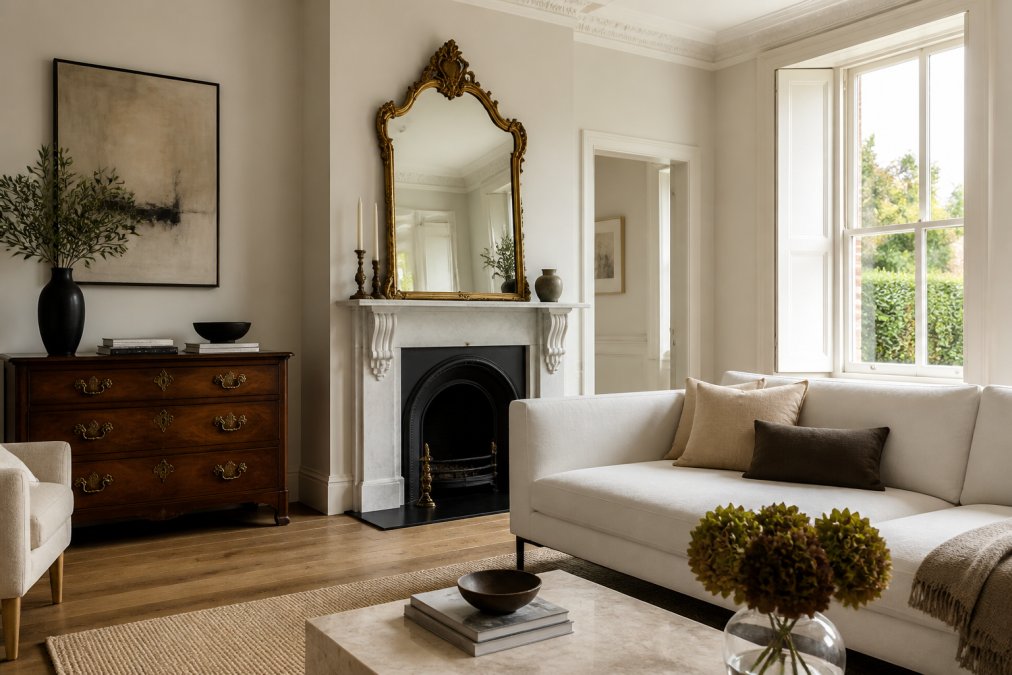
Mixing modern and traditional decor works best when you anchor each room with one dominant style and layer the other in. The trick is proportion: a heavy antique needs breathing room, while a sleek modern piece needs texture to avoid feeling sterile. Get the balance wrong and the room reads as indecisive rather than layered.
The mechanics of a good mix
Three variables decide whether a blended room works: visual weight, texture contrast and sightline. Visual weight is how much a piece dominates a space, a dark walnut chest carries more weight than a pale linen sofa, so it needs more empty space around it. Texture contrast stops a scheme feeling flat: pair smooth modern surfaces with rough or patinated traditional ones. Sightline is what the eye lands on when you enter; give the room one clear focal point rather than two competing ones.
A useful rule of thumb is the 70/30 split, seventy per cent of a room in one style, thirty per cent in the other. Push past 40 per cent of the secondary style and the room starts to look unresolved.
Room by room
Living rooms handle the mix best because they already hold pieces of different weights. Pair a clean-lined sofa with the Antique Solid Walnut Chest of Drawers (£630.99) for warmth, then hang the Marseille Wall Mirror with Gold Ornate Frame (£143.99) above the mantel to bridge old and new. Keep the sofa low and the chest tall so the eye has a clear hierarchy.

Where the mix goes wrong
- Matching wood tones too closely. A modern oak piece next to a traditional oak piece looks like a mistake, not a blend. Contrast the tones deliberately.
- Ignoring lighting temperature. Warm bulbs flatter traditional materials; cool bulbs flatter modern ones. A blended room usually needs a layered lighting scheme with both.
- Forgetting period features. In a traditional property, the cornicing, fireplaces and joinery are already doing traditional work, the furniture can lean more modern than you think.
- Over-accessorising. A blended room needs fewer objects, not more, because each one is doing more stylistic work.
The Benefits of Bespoke Handmade Furniture in Both Styles
Bespoke handmade furniture benefits both styles because it solves the problem mass-market pieces cannot: fit. A custom sofa or chair is built to your room's exact dimensions, which matters in awkward L-shaped layouts and low-ceilinged spaces where standard sizes fail.
- Made to your room's exact measurements
- Built from solid materials, not veneered board
- Repair-friendly, so pieces can be reupholstered rather than replaced
- Limited-edition and artist-collaborated designs add unique character
Luxury Interior Design Trends for 2026: What's Shaping Homes Now
Luxury interior design trends for 2026 lean toward quiet luxury: fewer, better pieces, warmer materials and a deliberate blur between modern and traditional. But the more useful question for anyone renovating now is not what is fashionable, it is what will still look considered in ten years. That is where most trend coverage stops short.
The four shifts that actually matter
Quiet luxury, but with specification behind it. The shift away from logo-driven interiors is real, but it shows up in specification rather than colour. Buyers are choosing solid timber over veneer, natural stone over composite, and wool over synthetic blends, not because of a look, but because these materials age in a way that reads as intentional. Reclaimed timber and low-VOC finishes now appear in both modern and traditional schemes, driven as much by indoor air quality as by aesthetics.
Baillie Rose Gold Wall Clock →
What this means for a modern vs traditional decision
The 2026 direction of travel favours neither style outright. It favours specification quality and adaptability. A modern home with cheap materials will date faster than a traditional home with good ones, and vice versa. The practical test is whether a piece or finish can be repaired, refinished or reupholstered, if it can, it survives the trend cycle.
UK Green Building Council guidance on sustainable homes
Resale Value and Long-Term Costs: Which Style Wins?
Resale value favours modern luxury in most urban markets, where open concept layouts and energy efficiency attract a wider pool of buyers. Traditional luxury holds value differently: heritage features and craftsmanship appeal to a narrower but often more committed buyer group.
| Cost Area | Modern Luxury | Traditional Luxury |
|---|---|---|
| Exterior upkeep | Lower, simpler surfaces | Higher, ongoing restoration |
| Interior refresh | Cosmetic, low cost | Specialist trades needed |
| Resale pool | Broad | Niche but loyal |
| Longevity | Good | Excellent with care |
Smart Home Integration and Regional Climate Suitability
Smart home integration is easier in modern luxury homes, where open layouts and newer wiring support whole-home systems without retrofitting. Traditional homes can be upgraded, but expect to run cabling behind period features carefully to avoid damaging heritage detail.
Energy Saving Trust advice on home energy efficiency
Conclusion
Choosing between modern and traditional luxury is really a question of how you want to live and what you want the property to do over the next twenty years. Modern suits light, space and low maintenance; traditional suits craftsmanship, character and heritage. At Wish Interiors, we build bespoke, handmade furniture for both, backed by over 60 years of craftsmanship, custom upholstery, artist collaborations and Klarna payment options to spread the cost.
Frequently Asked Questions
What are the key differences between modern and traditional luxury interior design?
Modern luxury focuses on clean lines, open concept layouts, and minimal ornamentation, using materials like glass and steel. Traditional luxury emphasises craftsmanship, symmetry, and rich materials such as solid walnut and ornate detailing. The choice often comes down to lifestyle alignment: modern suits those who prefer uncluttered spaces, while traditional appeals to those who value heritage and layered textures.
Can you mix modern and traditional styles in a luxury home?
Yes, mixing modern and traditional decor creates a transitional style that balances comfort and sophistication. Start by choosing a dominant style for the architecture, then layer in contrasting pieces. For example, pair a sleek modern sofa with an antique walnut chest of drawers or a gold ornate mirror. This approach adds depth and personality without feeling disjointed.
Which luxury home style offers better long-term value?
Resale value depends on location and buyer preferences, but traditional styles often appeal to a broader market due to their timeless craftsmanship. Modern homes can attract tech-savvy buyers with smart home integration. However, bespoke handmade furniture benefits both styles by adding unique, high-quality pieces. Consider your local market and long-term maintenance costs before deciding.
How do I choose the right furniture for a modern luxury interior?
For a modern luxury interior, prioritise clean lines, neutral palettes, and high-quality materials. Look for pieces with minimal ornamentation, such as a round oak pedestal dining table or a minimalist wall clock. Bespoke furniture allows you to tailor dimensions and finishes to your space, ensuring functionality and aesthetic cohesion. Avoid clutter and focus on statement pieces that reflect your personal style.
Are bespoke furniture pieces better suited for modern or traditional homes?
Bespoke furniture suits both styles equally. In modern homes, custom pieces can achieve precise proportions and integrate seamlessly with architectural features. In traditional homes, bespoke craftsmanship honours heritage techniques, using materials like solid walnut and hand-finished details. The key is working with a maker who understands your design intent, whether you want a sleek contemporary look or a classic, ornate finish.
Sample Image Gallery


