





Custom Cabinetry Built to the Highest Standards
Table of Contents
- What 'Highest Standards' Actually Means in Custom Cabinetry
- Benefits of Handmade Furniture Over Off-the-Shelf Alternatives
- Materials, Finishes and Sustainable Sourcing for Bespoke Cabinetry
- The Bespoke Cabinetry Design Process: From Brief to Installation
- Bespoke Kitchen Cabinet Costs: Budgeting and What Drives the Price
- Maintenance and Care for Expertly Crafted Custom Cabinetry
- How to Choose a Reputable Bespoke Cabinet Maker
- Conclusion
Last Updated: August 28, 2026
What 'Highest Standards' Actually Means in Custom Cabinetry
Custom cabinetry built to the highest standards is a precise set of measurable decisions made at every stage of production, from timber selection through to the final finish. At Wish Interiors, with over 60 years of bespoke craftsmanship, we have seen how quickly the gap widens between genuinely handcrafted joinery and furniture that merely looks the part on a showroom floor.
The difference starts with construction method. Off-the-shelf cabinets are assembled from pre-cut, pre-drilled components with tolerances designed for speed. Expertly crafted pieces begin with the opposite priority: every joint, panel, and fitting is specified to the exact space and load it will carry.
In-Frame vs Lay-On Construction: Why the Difference Matters
In-frame construction is the defining characteristic of traditional British cabinetry. Cabinet doors sit within a solid timber frame, which carries structural load and creates the precise, shadow-lined aesthetic associated with bespoke kitchens. Tolerances are tight, a gap of more than 2mm between door and frame is considered poor craftsmanship.
Lay-on construction places doors over the face of the carcass rather than within a frame. It is faster to produce and more forgiving of dimensional variation, which is why most factory cabinets use it. For bespoke joinery, lay-on is not inherently inferior; many contemporary designs specify it deliberately for a cleaner aesthetic. What matters is that the choice is made consciously for design and structural reasons, not because one method is cheaper.
Joinery Techniques That Define Quality: Dovetail Joints and CNC Technology
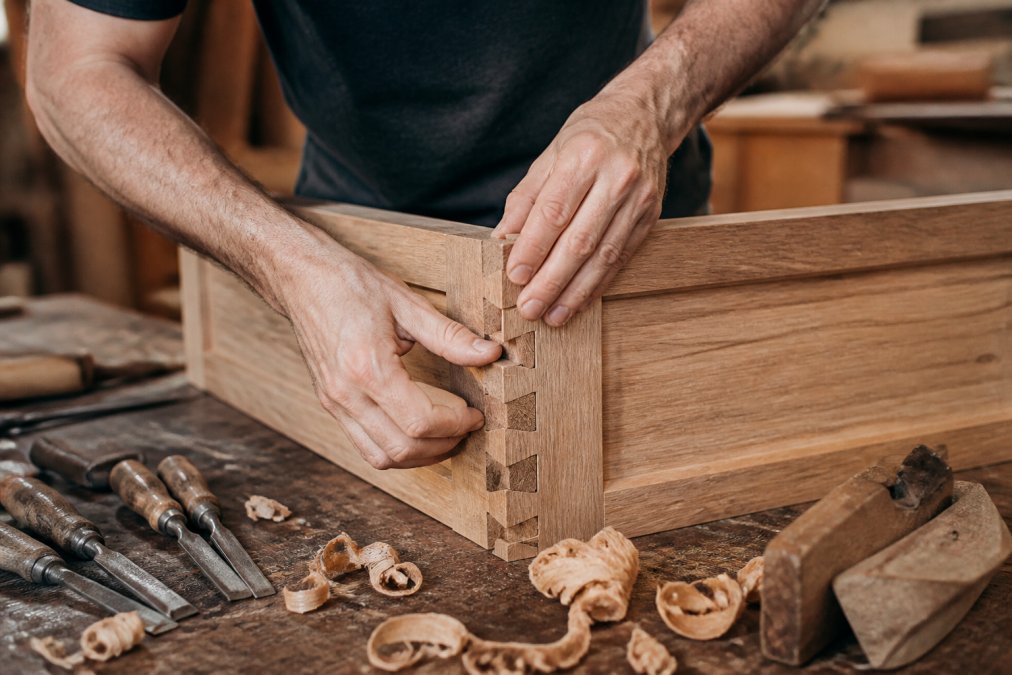
Dovetail joints remain the benchmark for drawer box construction in high-quality cabinetry. The interlocking geometry resists pulling forces without relying on glue or fixings alone, which is why drawers built with hand-cut or machine-cut dovetail joints outlast dowel-and-staple counterparts by decades. According to The Furniture and Interiors Industry Skills Council's craft standards guidance, joinery technique is a primary indicator of furniture quality at professional level.
CNC technology does not replace craftsmanship; it amplifies it. Precision engineering via computer-controlled cutting allows tolerances of less than 0.5mm across large panel runs. The best bespoke cabinet makers combine CNC-cut components with hand-finished details: routed profiles, hand-fitted hinges, and hand-applied finishes that give each piece individual character.
Benefits of Handmade Furniture Over Off-the-Shelf Alternatives
The most common objection to bespoke cabinetry is cost. The most common regret among buyers who chose off-the-shelf alternatives is that they wish they had spent more.
Factory-produced cabinets are built to standard module sizes, typically 300mm, 400mm, 500mm, and 600mm widths, which means every installation involves compromise. Corners are wasted. Alcoves are left unaddressed. Worktops require filler strips. None of this happens with bespoke cabinetry.
Tailored Dimensions for Awkward Spaces
The value of tailored dimensions becomes obvious in spaces that standard modules cannot reach: a low-ceilinged Victorian kitchen, an L-shaped alcove with a structural beam, a bathroom recess measuring 347mm wide. These are precisely the situations where bespoke storage solutions justify the premium.
A cabinet maker working to bespoke specifications takes a full measured survey before any design work begins. Every dimension is confirmed on site, not estimated from a floor plan. The resulting cabinetry fits the room as it actually exists.
This matters particularly for commercial projects. A boutique hotel fitting out 40 rooms requires consistency across identical spaces while accommodating minor dimensional variation that occurs in real buildings. Bespoke manufacturing handles both: the same specification can be replicated across multiple units while still being adjusted room by room.
Durability and Long-Term Value
Solid timber construction, properly jointed and finished, does not delaminate, swell, or lose structural integrity the way MDF-carcassed, foil-wrapped factory cabinets do. A well-made bespoke kitchen should last 30 to 40 years. Most off-the-shelf installations are replaced within 15.

Bespoke cabinetry that lasts twice as long at 1.5 times the upfront cost is the better financial decision over a 30-year horizon.
Materials, Finishes and Sustainable Sourcing for Bespoke Cabinetry
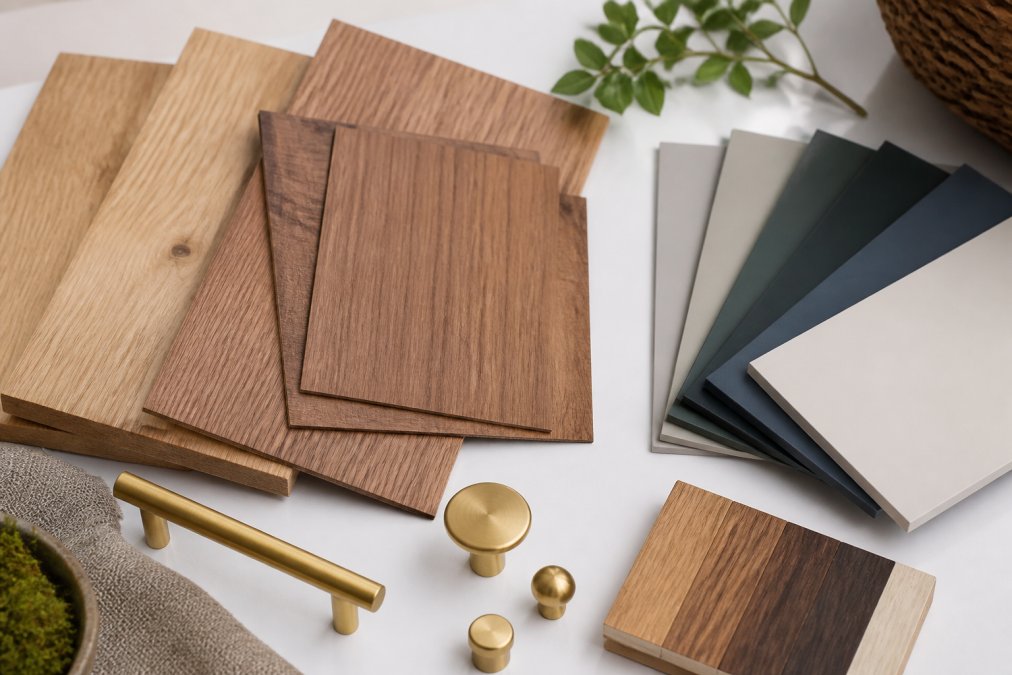
Material selection is where bespoke cabinetry either earns or wastes its premium. The range of options available to a skilled cabinet maker is broad, and the right choice depends on application, aesthetics, and budget.
Solid timber remains the gold standard for structural components: frames, drawer boxes, door rails, and stiles. Oak, walnut, and ash are the most commonly specified hardwoods in British bespoke joinery. Teak, as seen in the Kendari Natural Teak Wood Dining Table from Wish Interiors, demonstrates how teak's natural oil content and interlocked grain make it exceptionally durable in high-use environments.

Wood veneer over a stable substrate (typically MDF or birch-faced ply) is appropriate for large flat panels, cabinet sides, back panels, and shelving. Quality veneer on a stable core performs better than solid timber in these applications because it is less susceptible to seasonal movement.
Finishes divide into hand-painted and stained or oiled categories:
- Hand-painted finishes, applied in multiple coats with sanding between each, produce the smooth, deep colour associated with high-end bespoke kitchens. Water-based paints have largely replaced oil-based formulations.
- Stained and oiled finishes preserve natural timber character while providing protection. They are more maintenance-intensive but preferred where grain is a design feature.
- Lacquered finishes offer the hardest surface for high-traffic applications.
Sustainable sourcing is essential in serious bespoke manufacturing. Timber certified by the Forest Stewardship Council's UK certification scheme provides assurance that wood originates from responsibly managed forests. Any reputable cabinet maker should provide FSC documentation on request.
The Minimalist Mango Wood Logan Narrow Bedside Table from Wish Interiors illustrates how sustainably sourced, kiln-dried timber combines environmental credentials with durability; kiln-drying stabilises moisture content and reduces movement after installation.

The Bespoke Cabinetry Design Process: From Brief to Installation
The bespoke cabinetry design process follows a clear sequence. Cutting corners at the brief stage produces problems that cannot be fixed at installation.
Stage 1, Initial brief and site survey. The client describes the space, function, and aesthetic. A measured survey confirms exact dimensions, services positions, and structural constraints.
Stage 2, Design development. Drawings show elevations, sections, and details. Material and finish samples are presented. In-frame or lay-on construction is agreed. Hardware is specified: hinges, handles, drawer runners, and any integrated lighting or appliance housing.
Stage 3, Client approval. The client signs off on drawings and samples before manufacturing begins. Changes are inexpensive at this stage; changes after manufacturing has started are costly.
Stage 4, Manufacturing. CNC cutting, hand joinery, assembly, finishing. Lead times vary by complexity and workshop capacity.
Stage 5, Installation. Bespoke installation is a skilled trade. Cabinetry is fitted to the space it was designed for, with scribing and trimming on site to achieve precise fit.
| Stage | Key Decision | Typical Duration |
|---|---|---|
| Brief and survey | Scope, budget, site constraints | 1-2 weeks |
| Design development | Construction method, materials, hardware | 2-4 weeks |
| Client approval | Sign-off on drawings and samples | 1 week |
| Manufacturing | Production and finishing | 6-14 weeks |
| Installation | On-site fitting and snagging | 1-5 days |
How Long Does a Bespoke Commission Take?
A bespoke cabinetry commission typically takes 10 to 20 weeks from initial brief to completed installation, depending on complexity and the cabinet maker's order book. Simpler commissions sit at the lower end; a full bespoke kitchen with integrated appliances, hand-painted finishes, and in-frame construction sits at the upper end or beyond.
The most common mistake clients make is starting the design process too late relative to their renovation schedule. Build the cabinetry lead time into the project programme from day one.
:::warning Do not commission bespoke cabinetry without a signed drawing approval stage. Clients who skip this step and proceed on verbal agreement frequently face disputes at installation. Every change after manufacturing begins costs more than getting the design right first.
Bespoke Kitchen Cabinet Costs: Budgeting and What Drives the Price
Bespoke kitchen cabinet costs vary considerably. Understanding what drives the price makes it easier to budget accurately and compare quotes fairly.
The primary cost drivers are:
- Construction method. In-frame construction requires more timber and skilled labour than lay-on.
- Timber species. Solid oak costs more than solid pine; walnut costs more than oak.
- Finish type. Hand-painted finishes involve multiple coats, sanding, and skilled application time.
- Hardware specification. Soft-close drawer runners, concealed hinges, and bespoke hardware add to the bill.
- Complexity and volume. More cabinets, unusual shapes, and integrated details add to manufacturing time and cost.
Installation costs are often overlooked. Bespoke installation requires skilled tradespeople and takes longer than fitting factory units. Include it in any like-for-like comparison.
A genuine bespoke kitchen from a reputable cabinet maker represents a significant investment. Those who understand the cost structure and plan their budget accordingly tend to be most satisfied with the outcome. Klarna payment options, available through Wish Interiors, allow the cost to be spread over time.
Maintenance and Care for Expertly Crafted Custom Cabinetry
Expertly crafted pieces built to the highest standards will last a generation with basic maintenance.
For hand-painted finishes:
- Clean with a soft, damp cloth and mild detergent. Avoid abrasive cloths.
- Address chips and scratches promptly with a touch-up kit from the original paint supplier.
- Avoid prolonged exposure to steam or moisture at joints, particularly around sinks. Silicone sealing at vulnerable junctions is essential.
For oiled or stained timber finishes:
- Re-oil annually, or when the surface begins to look dry or absorb water rather than repel it.
- Use the same oil product as the original finish.
- Remove water marks promptly with a dry cloth.
For all cabinetry:
- Check and tighten hinge screws annually. Loose hinges are the most common cause of door misalignment.
- Adjust drawer runners if drawers begin to stick or bind.
- Keep the interior of cabinets dry. Moisture trapped inside is the primary cause of long-term structural damage.
According to the Furniture Industry Research Association's care guidance, regular maintenance and correct cleaning products are most strongly associated with long furniture lifespan. Gentle cleaning and prompt attention to damage are more effective than any restorative treatment applied later.
How to Choose a Reputable Bespoke Cabinet Maker
The biggest mistake in choosing a cabinet maker is selecting on price alone. A low quote from an inexperienced maker produces results that cost more to fix than commissioning correctly in the first place.
A reputable bespoke cabinet maker will:
- Provide a full measured site survey before quoting, not an estimate from a floor plan
- Present material and finish samples before the design is finalised
- Produce detailed drawings for client sign-off before manufacturing begins
- Explain their construction methods and justify their joinery choices
- Provide references from completed projects of similar scale and complexity
- Carry appropriate public liability insurance and relevant accreditation for commercial projects
At Wish Interiors, collaborations such as the Micaela Sharp bespoke headboard range demonstrate how unique artist partnerships produce genuinely one-off pieces. These are not marketing language: each collaboration produces a specific, documented design not replicated in standard production runs. For clients who want furniture that holds design value over time, this distinction matters.
For interior designers and architects specifying bespoke cabinetry, the relationship with the cabinet maker is as important as the specification itself. A maker who communicates clearly, hits agreed lead times, and flags problems early is worth more than one who quotes lower but delivers uncertainty.
| Factor | What to Look For | Red Flag |
|---|---|---|
| Site survey | Full measured survey included | Quote based on floor plan only |
| Drawings | Detailed elevations for sign-off | Verbal agreement only |
| Construction method | Clear explanation of in-frame vs lay-on | Vague or inconsistent answers |
| Samples | Physical material and finish samples | Digital images only |
| References | Completed projects of similar scale | No verifiable references |
| Lead time | Confirmed programme with milestones | Vague "a few months" estimate |
Custom cabinetry built to genuine standards is one of the most considered purchases a homeowner or developer makes. The gap between a piece that lasts 15 years and one that lasts 40 comes down to construction method, material quality, and the skill of the people making it. Wish Interiors brings over 60 years of bespoke craftsmanship to every commission, combining traditional joinery expertise with contemporary design and unique artist collaborations. To discuss a bespoke commission or explore our furniture range, call 020 46202525.
Frequently Asked Questions
How much does bespoke cabinetry cost compared to standard cabinets?
Bespoke kitchen cabinet costs vary widely depending on timber choice, finish, and complexity of joinery. Handcrafted, in-frame cabinetry made from solid hardwoods costs considerably more than flat-pack alternatives, reflecting the skilled labour, premium materials, and precise engineering involved. Off-the-shelf units may start from a few hundred pounds per run, while fully bespoke kitchen cabinetry can reach several thousand pounds. The investment typically delivers superior durability, a perfect fit, and a timeless design that adds measurable value to a property.
What is the difference between bespoke and standard cabinetry?
Standard cabinets come in fixed sizes and finishes, manufactured in bulk and assembled from engineered boards. Bespoke cabinetry is designed and built to your exact dimensions, timber species, door style, hardware, and finish. A cabinet maker works from your specific brief, accommodating awkward alcoves, low ceilings, or unusual room proportions that standard units cannot address. The result is a piece that integrates seamlessly with the architecture of the space rather than sitting alongside it.
What materials are used for high-end custom cabinetry?
High-end custom cabinetry typically uses solid hardwoods such as oak, walnut, or teak for carcasses and door frames, with wood veneer panels on larger surfaces to balance weight and stability. Dovetail joints replace mechanical fixings in quality drawer construction. Premium finishes include hand-painted lacquers, oil-waxed natural timbers, and specialist stains. Bespoke hardware, from solid brass hinges to hand-forged handles, completes the specification. Sustainably sourced timber certified to FSC or PEFC standards is increasingly standard among reputable bespoke joinery workshops.
Does custom cabinetry increase the value of a property?
Bespoke cabinetry is widely regarded by estate agents and property developers as a value-adding feature, particularly in kitchens and principal bedrooms. Unlike flat-pack units, handcrafted cabinetry signals quality to prospective buyers and photographs well in listings. The precise fit and premium materials also reduce the likelihood of wear-related replacement, meaning the investment holds over a longer ownership period. For high-end residential developments and boutique hospitality projects, bespoke joinery is often a key differentiator in the final valuation.
How do I choose a reputable bespoke cabinet maker?
Start by asking to see completed projects in similar materials and scales to your own. A credible cabinet maker will provide detailed technical drawings before production begins and offer clear timelines. Ask specifically about their joinery methods: dovetail joints, solid wood carcasses, and CNC-precision cutting are indicators of genuine craft standards. Check whether they carry professional indemnity and public liability insurance, and confirm whether their timber is sustainably sourced. References from previous residential or commercial clients are the most reliable signal of consistent quality.
This article was written using GrandRanker
Sample Image Gallery


