





Is Commercial Grade Furniture Worth the Cost?
Table of Contents
- What Defines Commercial Grade Furniture
- Durability and Lifespan: What You Actually Get
- Commercial Furniture Durability Testing Standards
- UK Fire Safety Regulations and Compliance
- Total Cost of Ownership: The Real Investment Picture
- When Commercial Grade Makes Financial Sense
- Environmental Impact and Sustainability Considerations
- Frequently Asked Questions
Last Updated: September 3, 2026
What Defines Commercial Grade Furniture
Commercial-grade furniture is engineered to withstand constant use in high-traffic environments where durability is non-negotiable. Unlike domestic furniture designed for occasional home use, commercial-grade pieces feature reinforced frames, industrial-grade materials, and construction methods prioritising longevity.
Commercial furniture undergoes rigorous testing to handle heavy daily use, whilst residential furniture is designed for moderate, occasional use. The distinction reflects two fundamentally different product categories built for entirely different use cases.
Key differences in material quality and construction
Commercial-grade furniture uses substantially heavier materials throughout. Frames are made from hardwood or reinforced steel rather than particleboard or softwood. Joinery employs mortise-and-tenon joints or double-doweled connections instead of simple butt joints. Upholstery uses higher-grade fabrics with superior rub counts, measuring how much friction a fabric withstands before showing wear.
At Wish Interiors, our family-run upholstery business has spent over 60 years perfecting construction methods, ensuring every bespoke piece meets commercial-grade standards whether destined for residential homes or hospitality venues.
Commercial furniture uses staples, glue, and mechanical fasteners; domestic furniture relies primarily on staples and glue. Cushion cores use high-density foam (1.8 density or higher) rather than standard foam. Springs are individually pocketed rather than connected in a continuous system. These differences directly determine how long a piece lasts under daily stress.
How commercial-grade differs from domestic furniture
Domestic furniture prioritises affordability and aesthetics for households where perhaps 4-6 people use it daily. Commercial furniture is engineered for 20-40 people using the same piece daily, plus constant repositioning and deep cleaning.
Commercial-grade pieces have significantly higher load-bearing capacity and structural integrity. A commercial task chair supports 150 kg continuously versus 100 kg for domestic chairs (BIFMA standards for furniture). Commercial sofas use reinforced corner blocks and multiple support systems; domestic sofas use single support structures. A commercial-grade piece lasts 10-15 years of heavy use compared to 5-8 years for domestic furniture under light to moderate use.
Durability and Lifespan: What You Actually Get
Commercial-grade furniture typically lasts 10-15 years in high-traffic environments, compared to 5-8 years for domestic furniture in residential settings. This longevity reflects construction designed to absorb and distribute stress over time.
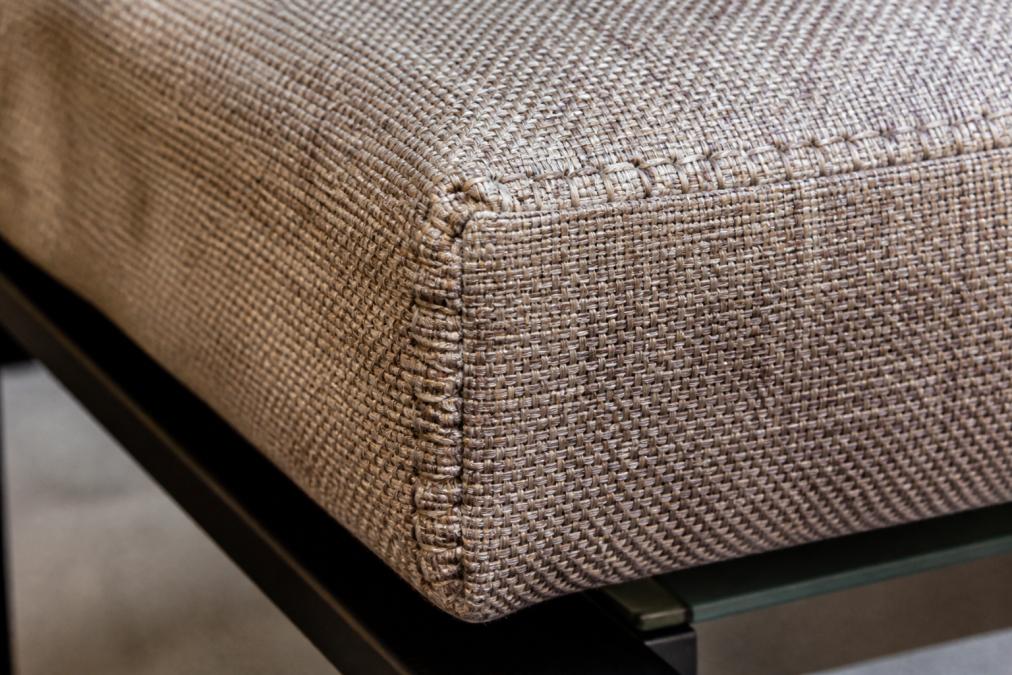
Upholstery durability is measurable through rub count, the number of times fabric withstands standardised rubbing before showing wear. Commercial fabrics achieve 50,000+ rub count; domestic fabrics typically reach 15,000-25,000. A commercial-grade sofa in a hotel lobby shows minimal wear after three years; a domestic sofa in the same environment would look threadbare.
Structural integrity compounds over time. Commercial frames don't sag, twist, or develop squeaks. Reinforced construction maintains shape and support year after year. Domestic furniture often develops visible sag within 3-4 years because the frame wasn't engineered for that stress level.
High-traffic environments and wear resistance
High-traffic spaces expose furniture to stresses residential settings never approach. People shift weight differently, collapse into seating without care, and furniture endures constant repositioning and cleaning.
Commercial-grade furniture withstands this punishment. Reinforced joinery prevents loosening over thousands of sits. Fabric resists pilling, fading, and staining. Seams are stitched multiple times with heavy-duty thread. Cushion cores resist compression set, the tendency of foam to lose shape after repeated compression.
In residential settings with children and pets, commercial-grade furniture maintains appearance and comfort far longer than domestic alternatives.
Upholstery durability and structural integrity
Upholstery durability depends on multiple factors working together. The fabric is only one element. Underneath, the suspension system, springs, webbing, or sinuous wire, must support the fabric without sagging. Commercial-grade furniture uses individually pocketed springs or high-quality sinuous wire systems distributing weight evenly.
High-density foam (1.8 kg per cubic metre or higher) resists compression set far better than standard foam. Commercial-grade pieces use multiple filling layers: a high-density core with softer comfort layers on top, creating durability without sacrificing comfort.
Hardwood frames don't warp or twist like softwood. Joinery handles shear stress. Corner blocks reinforce stress-concentration joints. The result is a piece that doesn't develop the creaks and movement characterising domestic furniture as it ages.
Commercial Furniture Durability Testing Standards
Commercial-grade furniture must meet rigorous testing standards that domestic furniture never encounters. These standards exist because commercial furniture operates in liability-heavy environments where failure can cause injury or business disruption.
Testing protocols evaluate frame strength, cushion durability, fabric resistance, and joint integrity through repeated stress cycles, compression tests, abrasion tests, and load-bearing tests simulating years of use in weeks.
Testing ensures consistency. Every commercial-grade piece from reputable manufacturers meets the same performance standards. This is why commercial-grade furniture carries genuine warranties; manufacturers know the piece will perform as specified because it's been tested to prove it.
UK Fire Safety Regulations and Compliance
In the United Kingdom, commercial furniture must comply with strict fire safety regulations. The Furniture and Furnishings (Fire) (Safety) Regulations 1988 establish minimum flammability standards (legislation.gov.uk). Commercial-grade furniture must meet these standards, and many commercial spaces require furniture to exceed them.
Regulations specify that upholstery filling materials must meet ignitability standards. Fabrics must resist ignition and limit flame spread. Commercial-grade manufacturers use fire-resistant foams, fabrics, and barrier materials that domestic furniture often omits.
Compliance adds cost to commercial-grade furniture through more expensive materials and manufacturing processes including testing and certification. But this cost is non-negotiable in commercial settings. Fire-safe furniture is both a legal requirement and basic risk management.
Total Cost of Ownership: The Real Investment Picture
When evaluating whether commercial-grade furniture is worth the cost, upfront price is only the beginning. Total cost of ownership includes purchase price, maintenance, replacement cycles, and hidden costs of furniture failure.
A domestic sofa costing £800 lasting 5 years costs £160 annually. A commercial-grade sofa costing £2,400 lasting 12 years costs £200 annually. But this ignores maintenance, replacement disruption, and quality decline during final years.
Upfront cost versus long-term value
Commercial-grade furniture typically costs 2-4 times more than comparable domestic pieces. A domestic loveseat from Wish Interiors costs from £123.81, whilst bespoke commercial-grade pieces start significantly higher. This sticker shock often stops evaluation before total cost of ownership is calculated.
But upfront cost is misleading for pieces used a decade or more. A £2,000 commercial-grade sofa used 12 years costs £167 per year. A £600 domestic sofa replaced every 4 years costs £150 per year, but ignores replacement disruption and waste.
Hidden costs of cheap furniture compound. Each replacement requires downtime, removing old pieces, installing new ones, potentially repairing walls or floors. In commercial settings, this disruption has real costs. A hotel removing worn seating loses room revenue that day. A restaurant replacing damaged seating loses table availability.
Maintenance cycles and warranty coverage
Commercial-grade furniture requires less maintenance because it resists damage. Domestic furniture requires more frequent cleaning, stain treatment, and repairs. Over time, these maintenance costs accumulate.
Commercial-grade pieces often carry 5-10 year warranties reflecting manufacturer confidence in durability. Domestic furniture typically carries 1-2 year warranties because manufacturers expect quality decline after that period.
Warranty coverage shifts repair costs. A commercial-grade sofa with a 7-year warranty covers frame failure, spring breaks, or seam splits. Domestic furniture with a 1-year warranty means you pay for repairs after year one. In commercial settings with heavy use, this difference is substantial.
Resale value and asset depreciation
Commercial-grade furniture depreciates more slowly than domestic furniture. A well-made bespoke piece from Wish Interiors might retain 40-50% of its value after 5 years. Domestic furniture typically retains 10-20% in the same timeframe.
This matters for businesses and property developers. Commercial-grade pieces can be refurbished and resold. Domestic furniture often ends up discarded because repair costs exceed remaining value.
For residential renovations, resale value becomes relevant when selling property. Buyers notice quality furniture. Homes furnished with commercial-grade pieces appear more valuable and better-maintained.
| Cost Factor | Domestic Furniture | Commercial-Grade Furniture |
|---|---|---|
| Upfront cost | £600-£1,200 | £1,800-£4,000 |
| Expected lifespan | 5-8 years | 10-15 years |
| Annual cost | £75-£240 | £120-£400 |
| Warranty period | 1-2 years | 5-10 years |
| Maintenance cost (annual) | £50-£150 | £20-£50 |
| Resale value (after 5 years) | 10-20% | 40-50% |
| Replacement disruption | High (frequent) | Low (infrequent) |
When Commercial Grade Makes Financial Sense
Commercial-grade furniture is worth the cost in specific scenarios where heavy use, durability requirements, or long-term planning justify the investment.
Hospitality and commercial spaces
Hotels, restaurants, and hospitality venues purchase furniture knowing it will endure constant guest use, frequent cleaning, and commercial wear. A boutique hotel furnishing 40 rooms with seating needs commercial-grade pieces. Budgeting £40,000 across all rooms, commercial-grade furniture lasting 12 years costs £3,333 per year. Domestic furniture lasting 5 years requires replacement twice in that period, costing roughly £4,800 per year when replacement disruption is factored in. The commercial-grade investment is financially superior.
Restaurants face similar economics. Seating endures constant use and spills. Commercial-grade upholstery resists staining and cleans more easily, maintaining appearance through years of service. Domestic furniture shows visible wear within months, damaging aesthetic and requiring early replacement.
Residential renovations and heavy daily use
For residential settings, commercial-grade furniture is worth the cost when homes see heavy use or owners prioritise durability and quality. Families with children and pets are ideal candidates. Commercial-grade pieces built for that punishment maintain appearance and comfort whilst domestic alternatives deteriorate.
Luxury renovations justify commercial-grade investment. When homeowners invest £50,000+ in interior redesign, furniture should match overall quality. Cheap domestic furniture undermines the aesthetic. Commercial-grade bespoke pieces from Wish Interiors ensure the finished space reflects investment and vision.
Properties designed for rental or short-term letting benefit significantly from commercial-grade furniture. Rental guests treat furniture differently than owners. Commercial-grade pieces withstand this use pattern without deteriorating, maintaining property appeal and rental value.
Environmental Impact and Sustainability Considerations
Commercial-grade furniture's longer lifespan provides environmental benefits that upfront cost analysis often misses. A piece lasting 12 years instead of 5 years means less furniture in landfills. Manufacturing is resource-intensive; using a piece longer reduces manufacturing impact per year of use.
Quality craftsmanship enables repair and refurbishment. Commercial-grade pieces can be reupholstered, reframed, or restored. Domestic furniture is often discarded because repair costs exceed replacement costs. Extending a piece's life through repair is both economically and environmentally superior.
Bespoke, handmade furniture like Wish Interiors produces carries additional sustainability advantages. Custom pieces are made to order, eliminating overproduction and waste. Traditional craftsmanship often uses sustainable materials and finishes. Limited-edition designs create pieces valued for uniqueness, reducing impulse replacement.
The sustainability case for commercial-grade furniture is straightforward: fewer replacements, less waste, and longer asset life. This appeals to environmentally conscious buyers and businesses committed to sustainable practices.
Evaluating whether commercial-grade furniture is worth the cost requires looking beyond the price tag. Commercial-grade pieces cost more upfront but deliver measurable value through durability, reduced maintenance, lower replacement frequency, and superior performance in demanding environments. For hospitality businesses, commercial spaces, and residential settings with heavy use, the investment is financially sound. For Wish Interiors clients seeking bespoke, handmade furniture built to last, the commercial-grade standard ensures every piece delivers value for years to come. Get started with Wish Interiors' custom furniture solutions by calling 020 46202525 to discuss your specific needs.
Frequently Asked Questions
What are the key differences between commercial grade furniture and residential furniture?
Commercial grade furniture uses industrial-grade materials, reinforced frames, and heavy-duty upholstery designed to withstand high-traffic environments. Residential furniture prioritises comfort and aesthetics for lower-use settings. Commercial pieces feature higher rub counts (fabric durability testing), superior structural integrity, and compliance with stricter fire safety standards. The construction methods differ too: commercial furniture typically uses hardwood frames, and commercial-grade fabrics rated for heavy use, compared to residential pieces that may use particle board and lower-durability textiles.
Is commercial grade furniture worth the extra cost for home use?
It depends on your usage patterns and timeline. For households with children, pets, or heavy daily use, commercial grade furniture offers better value over 10-15 years due to superior durability and lower replacement costs. The upfront investment is often higher, but total cost of ownership, including repairs, reupholstering, and replacement cycles, often favours commercial-grade pieces. For light-use spaces or if you redecorate frequently, standard residential furniture may be more practical. Consider your renovation timeline and whether you plan to keep pieces long-term.
Does commercial furniture meet UK fire safety regulations?
Yes, commercial grade furniture must meet stringent UK fire safety standards, particularly the Furniture and Furnishings (Fire) (Safety) Regulations 1988. Commercial pieces are tested for resistance to ignition from cigarettes and open flames, with stricter requirements than residential furniture. This makes commercial-grade furniture safer for hospitality venues, offices, and homes where fire safety is a priority. Residential furniture meets lower thresholds. Always verify compliance certificates when purchasing commercial-grade pieces; reputable manufacturers provide documentation proving adherence to current regulations.
How long does commercial grade furniture typically last compared to residential?
Commercial grade furniture often lasts longer with proper maintenance, whilst residential furniture typically lasts 5-10 years. This longevity stems from superior materials, construction methods, and durability testing. Commercial pieces use hardwood frames, high-quality springs, and fabrics rated for heavy use. When factoring in maintenance costs, repairs, and replacement frequency, commercial furniture can deliver better return on investment over a decade or more, particularly in high-traffic settings or homes where furniture endures daily wear and tear.
This article was written using GrandRanker
Sample Image Gallery


