





Custom Upholstery for Boutique Hotels: A 2026 Guide
Table of Contents
- Why Custom Upholstery Sets Boutique Hotels Apart
- Hotel Upholstery Fabrics: Choosing for Comfort and Character
- Commercial Upholstery Fabric: Performance You Can Specify
- Room-by-Room Specification for Guest Rooms and Lounges
- Hotel Furniture Reupholstery: Extending Life and Cutting Cost
- Budgeting, Procurement and Project Workflow
- Hotel Upholstery Maintenance: Cleaning, Repair and Refurbishment
- Conclusion
- Frequently Asked Questions
Last Updated: October 20, 2026
Why Custom Upholstery Sets Boutique Hotels Apart
Custom upholstery for boutique hotels is the practice of specifying seating and soft furnishings made to a property's own dimensions, palette and brand story rather than buying from a standard catalogue.
At Wish Interiors, we have learned that the design story only works if the performance underneath it holds up.
Most guides stop at mood boards. The real work starts with the specification sheet.
Hotel Upholstery Fabrics: Choosing for Comfort and Character
Hotel upholstery fabrics sit at the intersection of touch and traffic.
Wool and wool-blend weaves remain the safest commercial choice: they resist pilling, hold colour and recover shape. Dense velvets bring the boutique mood but need a tight pile and a stain treatment to survive a lounge.
Order fabric samples and live with them for a week. Check them under the room's actual lighting, because a warm lamp changes a grey dramatically.
Commercial Upholstery Fabric: Performance You Can Specify
Commercial upholstery fabric is cloth tested and rated for contract use rather than domestic seating. The difference is not marketing language: it is a set of documented test results that let you compare two cloths on the same terms before either is cut.
Specify in writing. Your schedule should list, for every fabric: composition, abrasion rating, colourfastness results, fire performance documentation, cleaning code and a retained sample reference. Ask the maker to confirm each line before cutting.
What the ratings actually mean
Abrasion resistance is the first number buyers ask for, and it is the one most often misread. The common contract test is the Martindale method, which rubs a fabric against a standard abradant under a fixed load and records the number of cycles before the cloth shows visible wear. Results are quoted in thousands of rubs. As a working rule of thumb used across the contract trade:
- Domestic seating: roughly 20,000 rubs is often considered adequate.
- General contract and guest-room occasional seating: look for around 25,000-30,000 rubs as a floor.
- Heavy contract, lounges, bars and reception: specify 40,000 rubs or more, and treat 50,000+ as the target for the hardest-worked pieces.
A high Martindale figure is not a guarantee on its own. A loosely woven cloth can score well and still snag on keys or luggage, so pair the number with a tight weave and a sensible pile.
Colourfastness is the second specification line that separates contract cloth from domestic. Two tests matter: fastness to light (how much a fabric fades under sustained daylight or bright interior lighting) and fastness to rubbing (whether colour transfers onto clothing or adjacent surfaces).
Fire performance
Fire performance deserves particular attention in guest rooms, corridors and means of escape. In the UK, furniture and furnishing fire safety is governed by the Furniture and Furnishings (Fire) (Safety) Regulations 1988 (as amended), and the relevant British Standard test methods, including BS 5852 for ignition resistance of upholstered furniture composites and BS 7176 for specification by hazard category, are the language your supplier and your enforcing authority will use.
Cleaning compatibility
Cleaning code is the specification line housekeeping will live or die by. Record the manufacturer's approved method for every fabric and cross-check it against the chemicals your housekeeping team actually uses. A code that calls for dry cleaning only is a poor fit for a piece that will meet spilled drinks nightly. Where the design allows, specify removable covers on loose cushions and seat pads so deep cleaning is possible without replacing the piece.
| Specification Item | What to Ask For | Why It Matters |
|---|---|---|
| Composition | Exact fibre percentages | Predicts wear, cleaning and feel |
| Abrasion rating | Martindale figure in thousands of rubs, with test method stated | Shows suitability for contract use |
| Colourfastness | Light and rubbing results in writing | Predicts fading and colour transfer |
| Fire performance | Certificate to the relevant British Standard and hazard category | Required for compliance sign-off |
| Cleaning code | Manufacturer's approved method | Prevents damage during housekeeping |
| Sample reference | Physical retained sample | Settles colour and texture disputes |
Room-by-Room Specification for Guest Rooms and Lounges
Guest rooms and public areas need different answers to the same question. A bedroom armchair is sat in briefly and gently; a lounge chair is used all evening by guests in wet coats.
Guest rooms
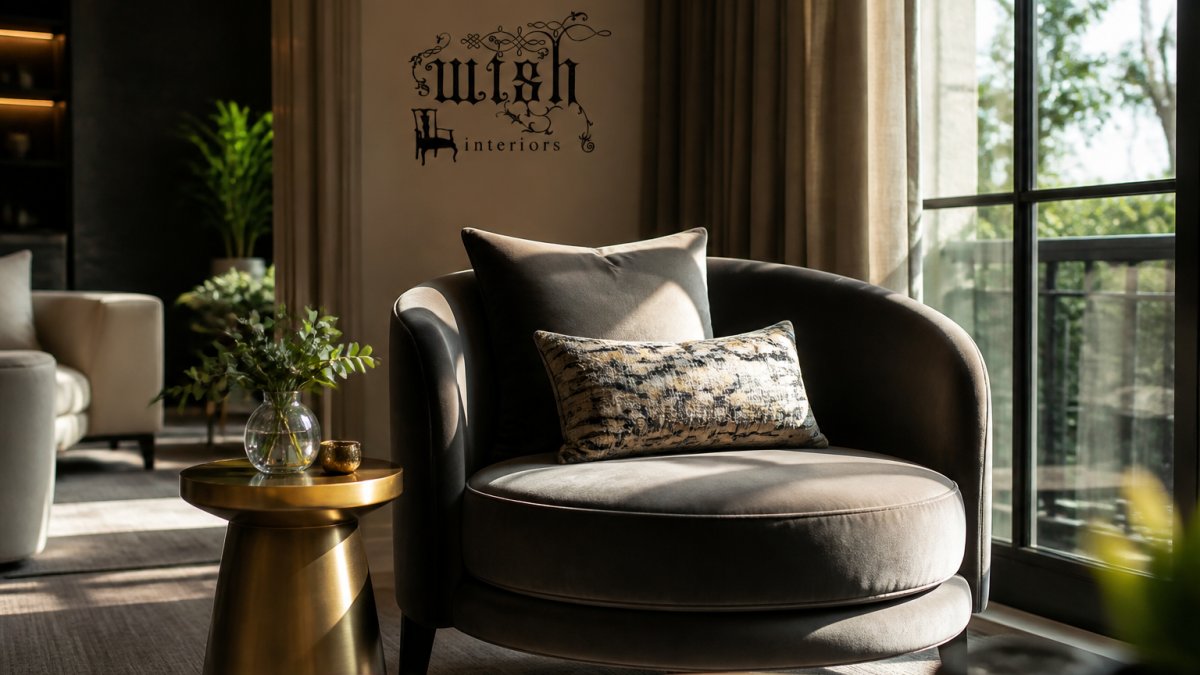
Prioritise compact proportions, tight weaves and cleanable surfaces. Headboards carry the design weight, so put the character there and keep the occasional chair practical. Specify a seat height that suits a range of guests, a firm-enough cushion that does not collapse after a season, and a tight weave that resists snagging from luggage and keys. Bedroom chairs are lightly used but frequently cleaned, so confirm the cleaning code against housekeeping practice.
Reception and lobby
This is the first impression and the hardest-working seating in the building. Specify deeper seats, denser foam and removable covers, and choose fabrics rated for heavy contract use. Reception chairs are sat in briefly but constantly, often by guests in outdoor clothing, so a tight weave and a wipeable finish earn their keep. Consider a mix of perch-height seating for short waits and a small number of deeper lounge chairs for longer ones.
Lounges and bars
Lounge and bar seating meets spilled drinks, cleaning chemicals and constant reconfiguration. Specify heavy-contract abrasion ratings, stain-treated cloth and removable covers on loose cushions. Banquettes and booth seating need a firm base and a wipeable finish, and the seat depth should suit both a quick coffee and a long evening. A modular approach helps: armless sections can be recombined as the space evolves, and a damaged unit can be swapped rather than replaced.
Restaurants and breakfast rooms
Dining seating is judged on comfort over a meal and on how it survives a service. Specify a seat height that works with the table height, a firm seat that does not sag between courses, and a fabric that tolerates food and drink spills. Where banquettes run along a wall, confirm the fixing detail and the cleaning access behind and beneath the seating.
Corridors and waiting areas
Corridor and waiting seating is often overlooked and then heavily used. Keep the specification simple and durable: tight weaves, dark or mid-tone colours that hide marks, and frames that tolerate being moved. These pieces are rarely the design centrepiece, so spend the budget on performance rather than pattern.
Accessibility and inclusive design
Style-led guides rarely mention it, but inclusive design belongs in the room-by-room brief. Specify a proportion of seating with arm supports to aid sitting and standing, seat heights that suit a range of guests, and firmness that supports transfer rather than swallowing the sitter. Leave clear transfer space beside key seats and avoid deep, low lounge chairs as the only option in a public area.
A practical specification habit
Build a room-by-room schedule before you shortlist fabrics: list each space, the piece, the expected traffic, the cleaning method and the performance rating required. That single document turns a mood board into a brief a maker can price and a housekeeping team can maintain.
Hotel Furniture Reupholstery: Extending Life and Cutting Cost
Hotel furniture reupholstery is the strip-and-rebuild of existing frames with new covers, foam and fillings.
A tired wingback with a sound frame does not need replacing. It needs stripping, new foam, new webbing and a fresh cover. Our reupholstery service handles exactly this work for commercial seating.

The judgement call is structural. If the frame is sound and the shape still suits the room, reupholster.
Budgeting, Procurement and Project Workflow
Budget the whole lifecycle, not the invoice. A cheap chair replaced every three years costs more than a well-made piece reupholstered once. Build three lines into your budget: making, installation, and a maintenance reserve for cleaning and repairs.
Procurement runs best in a fixed sequence:
- Write the design brief with room-by-room schedules and quantities.
- Shortlist fabrics and request samples for physical approval.
- Agree specification, lead times and payment terms in writing.
- Approve a pre-production sample before full production.
- Schedule phased delivery around room closures.
- Sign off on site, then set a maintenance calendar.
Phasing matters for live properties. Refurbish floor by floor so revenue continues, and confirm lead times early, because bespoke work takes longer than catalogue orders and hotel opening dates do not move.
Hotel Upholstery Maintenance: Cleaning, Repair and Refurbishment
Hotel upholstery maintenance is a scheduled routine, not a reaction to stains.
Train housekeeping on the cleaning codes in your specification. The wrong product on a velvet pile can flatten it permanently, and that damage is not recoverable.
Plan refurbishment in cycles. Public areas typically need attention far sooner than guest rooms, so budget for lounge seating refreshment on a shorter rotation than bedroom chairs.
Conclusion
The challenge with custom upholstery for boutique hotels is holding design ambition and commercial reality in the same brief. Get the fabric schedule, frame quality and maintenance plan right, and the room still looks considered five years after opening.
Wish Interiors brings over 60 years of bespoke craftsmanship, handmade British production and artist collaborations to hotel projects, alongside a full reupholstery service for existing seating.
Frequently Asked Questions
What upholstery fabrics are best for boutique hotels?
The best hotel upholstery fabrics balance look and wear. Tight-weave wools, wool blends and high-performance velvets resist pilling and hold colour well in high-traffic lounges. For guest rooms, softer textures such as boucle and linen blends add character where wear is lighter. Always check the fabric's abrasion rating and cleaning code before specifying, and request samples so you can judge colour and texture under the room's actual lighting.
How do you choose durable upholstery for hotel furniture?
Start with the abrasion rating and match it to the space: seating in busy bars and lobbies needs a higher rating than occasional chairs in bedrooms. Look at the weave tightness, the backing, and whether the fabric is treated for stain resistance. Foam density matters as much as the cover; a firm, high-density foam keeps its shape and stops upholstery sagging. Ask for commercial-grade samples and test them against your cleaning regime before committing to a full order.
Can existing hotel furniture be reupholstered?
Yes. Well-made frames from sofas, armchairs, headboards and dining chairs can be stripped, repacked and recovered, often at a lower cost than buying new. Hotel furniture reupholstery also keeps pieces out of landfill and lets you refresh a scheme without changing the room layout. A specialist will assess the frame and foam first, then template the old covers so the new ones fit precisely. It suits refurbishments where the furniture is sound but the fabric has dated or worn.
What should a hotel include in an upholstery specification?
A clear specification covers fabric name, composition, abrasion rating and cleaning code, plus foam type and density, frame construction and any fire-retardancy requirements. Add stitch and seam details, piping or studding, and the exact dimensions of each piece. Note the room or zone each item belongs to so the scheme stays consistent. Include a maintenance plan and a spare fabric allowance for future repairs, then sign off samples before production begins.
How do you balance luxury and durability in hotel upholstery?
Put the luxury where guests touch and the durability where they wear. A rich velvet or boucle on a bedroom headboard feels indulgent because it sees little abrasion, while lobby and bar seating can use a tighter, harder-wearing weave in a similar tone. Choosing coordinated fabrics across zones keeps the design language consistent without compromising performance. Dense foam and sound frames also protect the look over years of use.
How should hotel upholstery be cleaned and maintained?
Vacuum upholstery weekly to lift dust and grit that abrades fibres, and treat spills immediately with the method your fabric's cleaning code allows. Rotate cushions and plump them to spread wear, and check seams and piping for early signs of strain. Book professional deep cleans annually, and keep a small stock of matching fabric for repairs. A written hotel upholstery maintenance schedule, logged per room, makes refurbishment planning far easier.
Sample Image Gallery


