





Modern Luxury Furniture Alternatives to Custom Upholstery
Table of Contents
- Why Modern Luxury Furniture Alternatives Are Reshaping Interior Design
- High-End Ready-to-Ship Furniture: The New Standard for Fast Luxury
- Bespoke vs Ready-Made Furniture: A Practical Comparison
- Luxury Furniture Sourcing Strategies for Designers and Homeowners
- Material Integrity and Frame Construction: What Separates Luxury from Fast Furniture
- Lifecycle Cost Analysis: Investment Pieces vs Mass-Market Alternatives
- Sustainable Interior Design and the Ethical Case for Ready-Made Luxury
- Frequently Asked Questions
Last Updated: September 18, 2026
Why Modern Luxury Furniture Alternatives Are Reshaping Interior Design
The shift toward modern luxury furniture alternatives to custom upholstery is the biggest change in high-end interiors this decade. Sixteen-week lead times now feel unacceptable to buyers who want rooms finished this season.
High-End Ready-to-Ship Furniture: The New Standard for Fast Luxury
High-end ready-to-ship furniture is finished, stocked and dispatched quickly, giving buyers designer-level pieces without the bespoke production window, and you see the silhouette, fabric and finish before you commit.
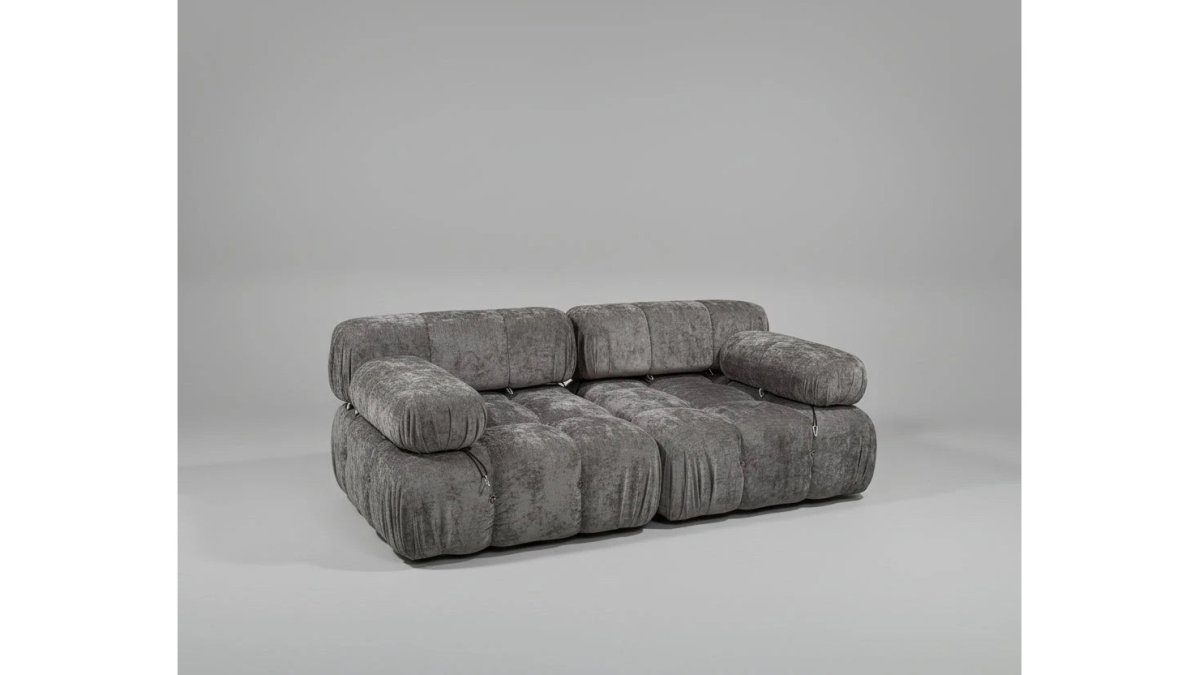
How Ready-to-Ship Pieces Deliver Designer Aesthetics Without the Wait
Most buyers underestimate how much of a bespoke timeline goes on decisions rather than construction. Fabric approval, frame specification and sampling add weeks before a single stitch is sewn.

Bespoke vs Ready-Made Furniture: A Practical Comparison
Bespoke wins on fit and personalisation; ready-made wins on speed and predictability. Neither wins on quality by default.
Cost, Lead Time and Customisation Trade-Offs
Bespoke furniture is made to your dimensions, fabric and finish, essential for awkward layouts, but you carry the risk of a piece that does not match the approved sample.
| Factor | Bespoke Upholstery | Ready-to-Ship Luxury |
|---|---|---|
| Lead time | Typically several weeks to months | Days to a few weeks |
| Fit to awkward layouts | Made to your measurements | Modular pieces adapt on site |
| Customisation | Full fabric, frame and size choice | Fixed finishes, configurable layout |
| Risk | Sample-to-delivery variation | Seen before purchase |
| Best for | Period properties, unusual spaces | Renovations on a schedule |
Luxury Furniture Sourcing Strategies for Designers and Homeowners
Good sourcing starts with the room, not the catalogue. Measure the space, note the light direction and decide which piece anchors the scheme before opening a product page.
A practical sequence that works:
- Measure the full room, including door swings and radiator positions
- Identify the anchor piece and its maximum footprint
- Choose a palette of two neutrals and one accent
- Confirm lead times against your renovation schedule
- Check foam density, frame material and cover removability
- Order modular pieces you can reconfigure if the layout changes
Material Integrity and Frame Construction: What Separates Luxury from Fast Furniture
Material integrity is the clearest dividing line between a piece that lasts a decade and one that sags within two years, yet it is the hardest thing to judge from a photograph.
Frame Construction: The Skeleton Decides Everything
A sofa frame carries every load the piece will ever see. Three materials dominate.
- Hardwood (beech, ash, larch). Dense, takes screws and dowels well, and resists the flexing that loosens joints. Heavier and more expensive. The reference point for a long-life frame.
- Plywood. Engineered from layered veneers, dimensionally stable and strong in the directions that matter for a sofa rail. Often used in combination with hardwood, which is a sensible build rather than a compromise.
- MDF and particleboard. Cheap, uniform and easy to machine, but poor at holding fixings under repeated load. Common in fast furniture and the main reason those frames fail at the joints rather than the rails.
Foam Density and the Science of Seat Comfort
Foam is where most sofas fail first, and density predicts it. Measured in kilograms per cubic metre (kg/m³), density describes how much material is packed into the foam, not how firm it feels. A high-density soft foam and a low-density firm foam can feel similar on day one and behave completely differently by year three.
- Below 25kg/m³. Typical fast-furniture seat foam. Compresses and loses recovery quickly under daily use.
- 25-30kg/m³. Mid-market. Acceptable for occasional seating, marginal for a main family sofa.
- Above 30kg/m³. The practical baseline for a seat cushion expected to hold its shape over years of daily use.
Textile Quality: Weave, Rub Count and Performance Finishes
Fabric quality is about weave structure and abrasion resistance, not just showroom feel.
- Rub count measures how many abrasion cycles a fabric withstands before showing wear. Higher counts suit high-traffic seating; lower counts suit occasional-use pieces.
- Weave structure determines how the fabric behaves under load. Tight, dense weaves resist pilling and distortion; loose weaves feel luxurious but mark and stretch more readily.
- Performance finishes add stain and spill resistance at the fibre or finish stage. They are genuinely useful in households with children or pets, and they do not automatically mean a synthetic feel.
- Natural fibres such as wool, linen and cotton offer breathability and ageing character, but usually need more care and are more vulnerable to staining without a protective finish.
Cover Removability: The Single Highest-Value Feature
Removable covers change the economics of ownership. If they come off, they can be washed, cleaned or replaced and the frame stays in service. If they do not, the piece is effectively disposable once the fabric is marked.
Cloud Luxe Sofa Sectional | Modular →
How to Interrogate a Specification Before You Buy
Ask for four things in writing: frame material and joinery method, foam density in kg/m³, fabric rub count and composition, and whether covers are removable. A supplier who answers all four is selling a specification; one who answers only in adjectives is selling a photograph. The Camaleonda Modular Sectional Sofa at £856.99 and the Aura Modular Lounge Modular Sofa at £654.99 both illustrate the modular principle: individual modules can be cleaned, re-covered or replaced without retiring the whole piece.

Lifecycle Cost Analysis: Investment Pieces vs Mass-Market Alternatives
Lifecycle cost is the total you spend owning a piece, not the price on the tag, a model you can run on any sofa before you buy.
How to Build a Cost-Per-Year Figure That Actually Holds Up
The formula is simple: purchase price plus delivery, cleaning, repair and any re-covering, divided by the years the piece stays in service. The hard part is the last number, where construction quality does the work.
| Route | Upfront cost | Expected service life | Cost per year |
|---|---|---|---|
| Mass-market sofa, replaced on failure | Lower | Short | Higher, and resets each time |
| Ready-to-ship luxury, kept and maintained | Mid to high | Long | Lowest of the three in most cases |
| Bespoke upholstery, kept and re-covered | Highest | Longest | Competitive only if you re-cover rather than replace |
The Hidden Line Items Buyers Forget
Four costs sit outside the sticker price and they change the ranking.
- Delivery and access. Upper-floor flats, narrow stairwells and period doorways can add a handling surcharge or rule out a large single-piece sofa entirely. Modular pieces usually avoid this.
- Cleaning. Removable, washable covers turn a professional clean into a domestic task. Fixed covers push you toward specialist cleaning at a recurring cost.
- Repair and re-covering. A frame that is glued and screwed can be reupholstered. A stapled frame often cannot be economically repaired, which forces replacement.
- Resale and disposal. Quality pieces hold residual value and can be sold on. Fast furniture typically has none, and bulky waste collection is a real cost at the end of its life.
Where Each Route Genuinely Wins
Ready-to-ship luxury wins on lifecycle cost for most households: a mid-to-high upfront price, long service life and no bespoke lead-time risk. Bespoke wins when the room is genuinely irregular, because a made-to-measure piece that fits will be kept far longer than a standard one that never quite worked. Mass-market wins only for temporary pieces, a rental, a spare room, a stage set.
A Quick Decision Rule
If you expect to keep the piece more than five years, buy on construction and cover removability, not ticket price. If less than two, buy on price and accept the disposal cost. The mistake is paying mid-market prices for a short-life specification, the only route that loses on every measure.
Sustainable Interior Design and the Ethical Case for Ready-Made Luxury
Sustainable interior design and ready-made luxury are more compatible than most buyers assume. The environmental argument against bespoke is not craftsmanship but waste.
Frequently Asked Questions
What are the benefits of choosing ready-to-ship luxury furniture over custom upholstery?
Ready-to-ship luxury furniture offers immediate availability, transparent pricing and the ability to see the finished piece before purchase. Unlike custom upholstery, which can take six weeks or longer, ready-to-ship pieces arrive within days. They also eliminate the risk of sample-to-delivery mismatches and let you assess material integrity, upholstery durability and frame construction firsthand. For renovations on tight timelines, luxury furniture alternatives provide a practical route to a high-end aesthetic without the lead time.
How can you achieve a high-end look without commissioning bespoke furniture?
Focus on material integrity, silhouette and aesthetic consistency. Choose pieces with quality joinery techniques, performance fabric and thoughtful proportions. Modular designs let you reconfigure seating to suit awkward layouts, while curated collections ensure colour and texture cohesion. Adding investment pieces like a tufted velvet footstool or a sculptural ottoman elevates the overall scheme. The key is prioritising tactile quality and design longevity over one-off customisation.
Is it better to invest in reupholstery or buy new modern luxury furniture?
It depends on the frame. If your existing piece has solid frame construction and quality joinery techniques, reupholstery can extend its life and preserve its design provenance. However, if the frame is compromised or the silhouette no longer suits your spatial planning, a new modern luxury alternative often costs less than comprehensive restoration. Lifecycle cost analysis usually favours new ready-to-ship pieces when the original requires structural repair alongside new upholstery.
How do you mix ready-made luxury pieces with existing bespoke items?
Anchor the room with a consistent colour palette and vary texture instead. Pair a bespoke armchair with a modular sofa in a complementary tone, or place a ready-to-ship ottoman beside a custom piece. Use lighting, rugs and artwork to bridge the two. The goal is aesthetic consistency, not uniformity. Ready-made luxury furniture often mirrors bespoke proportions closely enough that the difference reads as intentional layering rather than mismatch.
What should you look for when buying luxury furniture online?
Check frame construction details, upholstery material specifications and whether covers are removable for cleaning. Look for clear dimensions, weight limits and warranty terms. Review the returns policy carefully, especially for large items. Confirm delivery timescales and whether assembly is required. For upholstered pieces, ask about textile quality and whether performance fabric options are available. Transparent product listings that specify materials and construction give you the confidence to buy without seeing the piece in person.
Sample Image Gallery


