





Best Ergonomic Seating: Bespoke Interior Solutions
Table of Contents
- Why Ergonomic Seating Is a Smart Investment for Homes and Businesses
- Quick Comparison: Ergonomic Seating Options for Every Space
- Bespoke Ergonomic Office Chairs UK: What to Look For
- Custom Upholstery for Commercial Seating: Durability Meets Design
- Ergonomic Furniture Design Standards: What Buyers Should Know
- Accent Chairs and Benches: Personalised Comfort Beyond the Desk
- How to Choose the Right Ergonomic Seating for Your Space
- Frequently Asked Questions
Last Updated: September 19, 2026
Why Ergonomic Seating Is a Smart Investment for Homes and Businesses
Ergonomic seating is furniture designed to support the natural curves of the spine and reduce strain during long periods of sitting. For anyone weighing up the best personalized interior solutions for residential and commercial spaces for ergonomic seating solutions, the case is straightforward: good seating protects musculoskeletal health, and poor seating quietly erodes it.
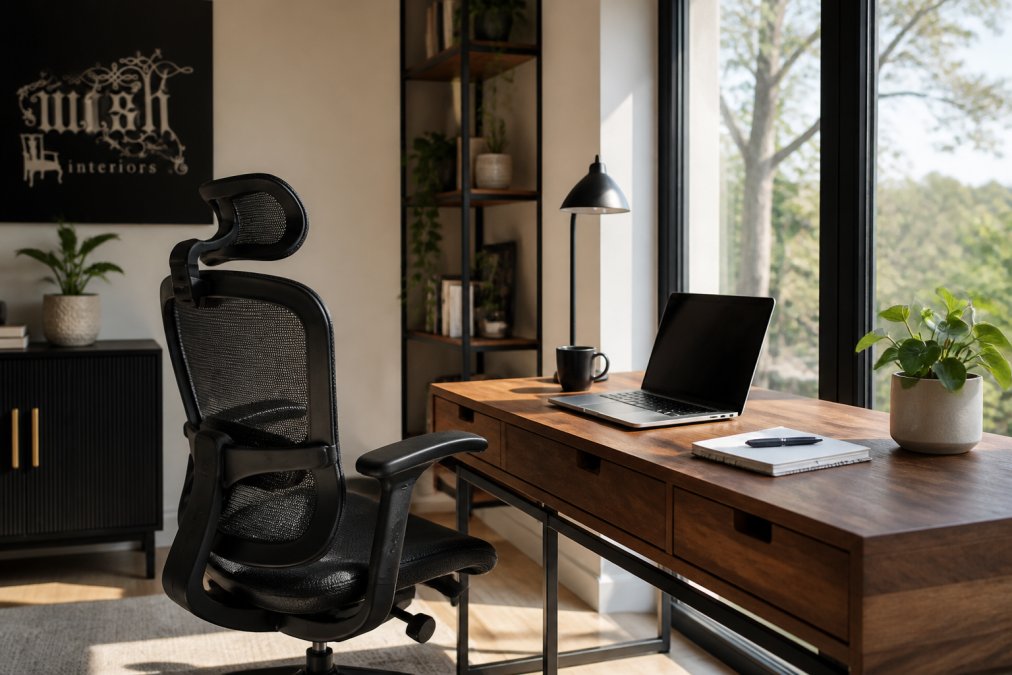
At Wish Interiors, we have spent over 60 years crafting bespoke upholstery, and the questions we hear most often are about fit, durability and whether a considered piece is worth the outlay.
Quick Comparison: Ergonomic Seating Options for Every Space
The right choice depends on where the piece will live and how long people will sit in it. The table below summarises the options covered in this guide.
| Piece | Price | Best For | Standout Feature |
|---|---|---|---|
| HOMCOM Ergonomic Office Chair | £90.99 | Compact home offices | Foldable backrest, flip-up arms |
| Fredrick Blue Home Office Chair | £70.99 | Home office and study corners | Adjustable tilt tension and position lock |
| Brass Bar Adjustable Stool | £100.99 | Kitchen islands, bars, hospitality | Screw-lift height adjustment, 77-90 cm |
| Gaku Bar Stool | £676.99 | Modern homes and venues | Solid wood, supportive backrest |
| Bilani Cream Linen Effect Curved Chair | £467.99 | Apartments, bay windows, reading nooks | Curved back, compact footprint |
| Cloud Comfort Bouclé Armchair | £352.99 | Lounges and reading corners | Channel tufting, deep curved seat |
| Harbour Brown Leather Bench | £554.99 | Hallways, entryways, living rooms | Leather upholstery, mango wood frame |
| Mocha Faux Fur Fabric Bench | £191.99 | Bedrooms, entryways | Low profile, faux fur upholstery |
Bespoke Ergonomic Office Chairs UK: What to Look For
Bespoke ergonomic office chairs should be specified around four adjustments: seat height, seat depth, armrest position and backrest angle. A chair that offers all four can be tuned to almost any body type, while one that offers only height will suit a narrow band of users.

- Seat depth adjustment. The seat pan should leave two to three fingers of space behind your knees. Too deep and it presses into the back of the legs; too shallow and your thighs take the load.
- Lumbar support. The curve of the lower back needs contact, not a gap. Adjustable lumbar support is worth paying for if more than one person will use the chair.
- Armrest configuration. Armrests should sit level with your desk surface so your shoulders stay relaxed.
- Mesh backrest. A breathable mesh back keeps air moving and holds the spine in a natural curve.
HOMCOM Ergonomic Office Chair: Space-Saving Support
The HOMCOM chair solves a specific problem: small rooms that still need proper support. The foldable backrest and flip-up arms let it tuck away when the workday ends, which matters in flats where the desk doubles as a dining table.
HSE guidance on display screen equipment
Fredrick Blue Home Office Chair: Adjustable Comfort
Fredrick takes a different route. Instead of folding away, it adapts: adjustable tilt tension and a position lock let you switch between movement for creative work and a fixed, stable posture for video calls.
Custom Upholstery for Commercial Seating: Durability Meets Design
Custom upholstery for commercial seating has to survive far more than a home chair ever will. Hospitality venues, restaurants and hotels put seating through continuous use, spillages and constant reconfiguration, so the specification conversation changes.
Three things drive commercial durability:
- Frame construction. Solid timber and steel frames hold their shape; particleboard and stapled joints do not.
- Fabric choice. Tight weaves and leather resist abrasion better than loose, textured fabrics in high-traffic areas.
- Serviceability. Pieces that can be reupholstered rather than replaced are cheaper across their life.
Brass Bar Adjustable Stool: Industrial Style for Hospitality
The Brass Bar Adjustable Stool is built for exactly this kind of commercial setting. The screw-lift height mechanism adjusts between 77 cm and 90 cm, so one specification works across breakfast bars, kitchen islands and standing-height counters.
Gaku Bar Stool: Minimalist Wood for Modern Venues
The Gaku Bar Stool takes the opposite approach: quiet, organic and made from high-quality wood. The ergonomically designed seat and supportive backrest make it comfortable for extended seating, which is unusual in a bar stool. Such attention to physical alignment proves that comfort remains essential even in demanding environments, where selecting the right ergonomic gear options can significantly reduce long-term strain.
Ergonomic Furniture Design Standards: What Buyers Should Know
Ergonomic furniture design standards give buyers a shared language for judging whether a piece will actually support the body. In practice, that means looking for published dimensions, stated load limits and adjustment ranges rather than marketing claims.
HOMCOM Ergonomic Office Chair with →
- Published adjustment ranges. A chair that states its seat height range lets you check it against your own measurements.
- Stated maximum load. This signals frame and gas-lift quality.
- Fire-retardant materials. Essential in commercial interiors and worth confirming for any contract project.
- Certification and testing. Ask what the piece has been tested against before you specify it in volume.
Accent Chairs and Benches: Personalised Comfort Beyond the Desk
Accent chairs and benches carry ergonomic value well beyond the desk. A curved accent chair supports the lower back during reading and conversation, and a well-placed bench gives guests somewhere to sit properly rather than perching on an arm.
Bilani Cream Linen Effect Curved Chair: Compact Elegance
The Bilani chair is the piece to choose when floor space is tight but you still want proper support. The smooth curved back wraps around the body, and the linen-effect upholstery in black and cream gives it a tailored finish.
Cloud Comfort Bouclé Armchair: Sink-In Relaxation
Cloud Comfort does the opposite of the Bilani: it invites you to sink in. The channel tufting runs along the back, arms and base, and the chair is built without hard internal frames, so it moulds to your body as one continuous cushion.
Harbour Brown Leather Bench and Mocha Faux Fur Bench: Versatile Seating
Both benches measure 45 cm high by 120 cm wide, and both seat two to three people. What separates them is material and mood.
How to Choose the Right Ergonomic Seating for Your Space
Choosing the right ergonomic seating comes down to matching three variables: how long people sit, who will use the piece, and how much traffic it has to survive.
Work through this checklist before you commit:
- Measure your seated elbow height and knee height, then compare against the chair's published dimensions
- Confirm the seat depth leaves two to three fingers of clearance behind the knees
- Check the maximum load rating if the piece will be shared
- Decide whether the room needs one user's setup or multi-user adjustability
- Match the fabric to the traffic: tight weaves and leather for commercial, softer textures for bedrooms
- Confirm fire-retardant materials if the piece is for a commercial interior
- Check whether the frame is solid timber or steel if the piece must last a decade
- Plan for reupholstery rather than replacement on high-use pieces
Frequently Asked Questions
What are the health benefits of investing in personalised ergonomic seating?
Ergonomic seating supports spinal alignment and reduces pressure on the lower back during long periods of sitting. A chair with adjustable seat height, tilt tension and lumbar support helps maintain natural posture, which can ease discomfort in the shoulders, neck and hips. For anyone spending hours at a desk, whether working from home or in a commercial office, the right ergonomic seating makes a measurable difference to daily comfort and focus.
What should I look for when choosing bespoke ergonomic office chairs UK buyers can trust?
Focus on adjustability first: seat height, armrest configuration and tilt tension should all be adjustable to suit your body. Check the maximum load rating and material durability, especially for commercial use. A mesh backrest improves breathability, while high-density foam retains its shape over time. Bespoke options let you specify upholstery, dimensions and finishes so the chair fits both your posture needs and your interior scheme.
How does custom upholstery for commercial seating improve longevity?
Commercial environments place heavy demands on seating. Custom upholstery allows you to choose fabrics and leathers rated for high-traffic use, which resist fading, staining and abrasion better than standard covers. Reinforced stitching and quality foam also extend the chair's working life. For hotels, restaurants and offices, specifying the right upholstery from the start reduces replacement costs and keeps seating looking presentable for years.
Are there specific ergonomic furniture design standards in the UK?
Yes. The British Standards Institution publishes BS EN 1335, which covers dimensions and safety requirements for office chairs. BS 5459-2 addresses strength and durability testing for office seating. These standards set benchmarks for seat height ranges, backrest dimensions and stability. When specifying ergonomic seating for a commercial project, asking suppliers whether their products meet these standards is a straightforward way to verify quality.
Can personalised seating solutions accommodate specific physical health requirements?
Bespoke seating can be tailored with specific seat depths, backrest contours and cushion densities to support individual needs. For people with back conditions or mobility considerations, adjustable features such as tilt lock, headrest height and armrest positioning make a significant difference. Working with a specialist upholsterer means you can discuss your requirements directly and have the piece built to suit your body rather than adapting to a standard size.
Sample Image Gallery


