





Bespoke Furniture Quality Guarantee Explained
Table of Contents
- What a Bespoke Furniture Quality Guarantee Actually Covers
- Furniture Guarantee Exclusions: Defects, Wear and Accidental Damage
- How to Assess Sofa Quality Before You Commission
- The Bespoke Furniture Ordering Process: From Brief to Delivery
- How to Make a Claim and What Evidence to Keep
- Guarantees vs Statutory Consumer Rights: What the Law Adds
- Care, Maintenance and How Use Affects Your Guarantee
- Conclusion
- Frequently Asked Questions
Last Updated: October 21, 2026
What a Bespoke Furniture Quality Guarantee Actually Covers
A bespoke furniture quality guarantee explained in plain terms is a written promise from the maker that your commissioned piece will be free from manufacturing faults for a defined period, and that they will repair or replace it if it is not.
Most guides treat the guarantee as a footnote. It deserves better. The document defines what happens when a joint fails, a spring rail gives way, or a timber panel splits months after delivery.
Component-by-Component Coverage for Bespoke Pieces
Coverage is rarely blanket. A well-drafted guarantee separates the piece into its parts, because a hardwood frame and a foam cushion age at very different rates.
| Component | Typically Covered | Typical Exclusions |
|---|---|---|
| Frame and joints | Loose joints, timber breakage, structural failure | Damage from dragging or misuse |
| Suspension | Spring rails and webbing failure | Normal softening over time |
| Upholstery | Stitching failure, seam separation | Fabric wear, fading, soiling |
| Fillings and foam | Premature collapse | Expected compression in daily use |
| Finish | Defects in application | Scratches, heat marks, sunlight fade |
Ask any maker to confirm which line each component sits on before you sign. The difference between "covered" and "not covered" is often one word.
Furniture Guarantee Exclusions: Defects, Wear and Accidental Damage
The single biggest source of disputes is the gap between a defect and wear. A manufacturing fault is a failure present from build, or caused by the making process. Wear is the gradual change that comes from honest use.
Guarantees generally cover the first and exclude the other two. That is reasonable, but the line is not always obvious, which is why furniture guarantee exclusions deserve scrutiny.
Telling defects, wear and damage apart
A defect is a failure in materials or workmanship that was there from the start, even if it only shows later.
Wear is the expected change from normal use. Fabric may pill or fade slightly, foam may soften where you sit most, and timber may darken or develop a patina.
Accidental damage is a single event: a spilled drink that stains, a tear from a sharp object, a knock that chips a corner, or damage from a pet.
Common exclusions in plain English
Most bespoke furniture guarantees exclude the following. Check each line against the maker's schedule before you sign.
- Fabric fading, pilling or soiling from normal use
- Foam softening that is consistent with daily sitting
- Damage from pets, sharp objects, heat or sunlight
How care and use affect coverage
Care instructions are part of the contract, not a suggestion. If a guarantee requires professional cleaning every twelve months and you cannot show it was done, a claim for a stain or a fabric failure may be refused.
Normal domestic use is the default assumption. If you run a pub, restaurant or hotel, confirm whether the guarantee covers contract use. Many do not, or they apply a shorter term.
How to compare guarantee terms across makers
Compare on four things, not one. Length is the headline, but the detail decides the outcome.
- Duration by component - frames usually carry longer terms than upholstery
- Remedy hierarchy - repair first, replacement second, refund last is standard
- Who pays for collection and return - this is where costs hide
- Claim window and process - how many days to report, and to whom
A ten-year frame guarantee with a two-year upholstery term is not a ten-year guarantee. Read the schedule, not the badge.
How to Assess Sofa Quality Before You Commission
Quality shows in the details you can see and touch before the piece is even built. A common mistake is judging a sofa by its fabric alone.
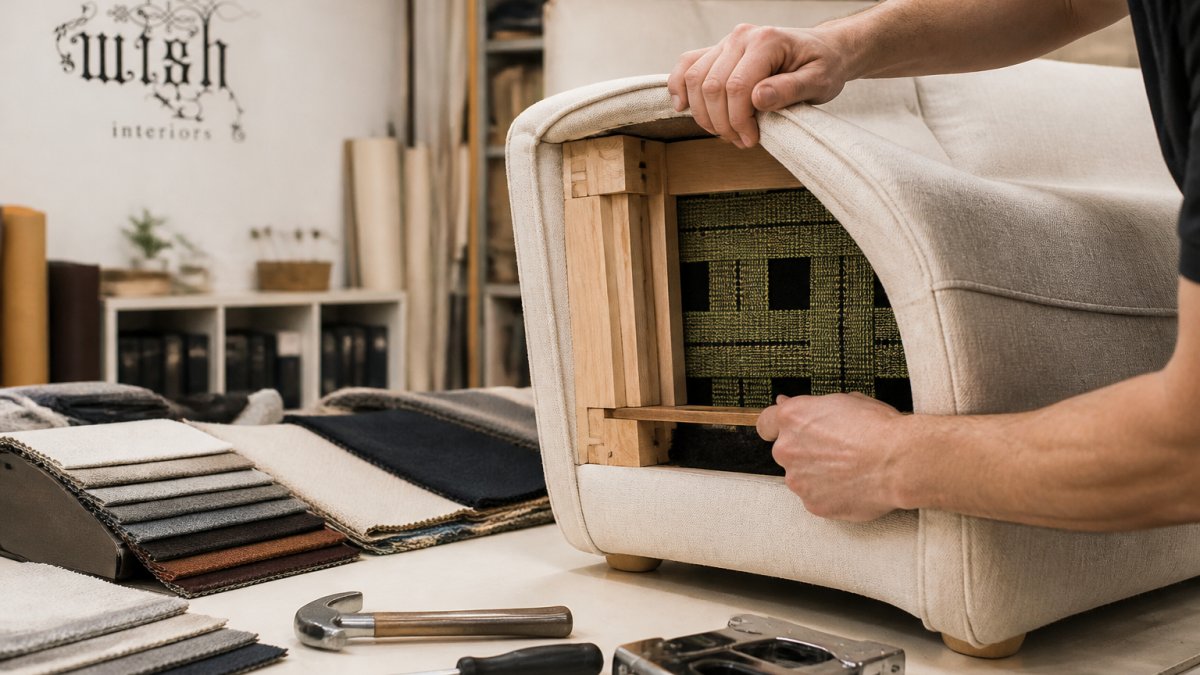
Check these before you commit:
- Frame joints - ask whether they are glued, screwed or dowelled, and how corners are reinforced
- Suspension - sprung seats generally outlast webbing
- Cushion fillings - ask what the foam density is and whether it is wrapped
Our own made-to-order pieces, from the Bespoke Work From Home Desk & Stool at £388.29 to the Bespoke Wooden Blanket Box at £311.29, are built to a specification you approve in advance.


The Bespoke Furniture Ordering Process: From Brief to Delivery
The bespoke furniture ordering process runs in clear stages, and each one generates paperwork that supports your guarantee later. Expect a brief and concept discussion, a feasibility check against your measurements, a detailed specification and quote, a deposit, production, then delivery or installation.
A practical order of events:
Corner TV & Display Stand - Handmade Bespoke Wooden Unit →
- Brief and concept: style, intended use, room layout
- Feasibility: measurements, access, ceiling height, awkward shapes
- Detailed specification: materials, timber, wood finish, upholstery, dimensions
- Quote and deposit
- Production and progress updates
- Delivery, installation and sign-off
Lead time and production time vary with complexity, so confirm both in writing. Ask what happens if the delivery date slips.
How to Make a Claim and What Evidence to Keep
A claim succeeds or fails on evidence. Report the fault as soon as you notice it, in writing, with photographs and your order reference. Describe what failed and when it first appeared.
Step-by-step claim process
- Check the guarantee document first. Confirm the fault falls within the covered components and the claim window. Note the deadline for reporting.
- Gather your evidence. You will need the signed specification, the guarantee document, the order confirmation, dated photographs and a short written timeline.
- Notify the maker in writing. Use email or a contact form so you have a record. State the order number, the fault, the date you first noticed it, and what remedy you are seeking.
- Allow an assessment. The maker should arrange a damage assessment, either in person or from your photographs, and confirm the outcome in writing. Ask what their response time is; a reasonable service level is a response within a set number of working days.
- Agree the remedy in writing. Confirm whether the remedy is repair, replacement or refund, who arranges collection and return, and the expected timeline.
- Keep the piece available. Do not dispose of the item or attempt a repair yourself before the maker has assessed it, as this can invalidate the claim.
What evidence to keep from day one
Keep this file from the moment you commission the piece:
- The signed specification and fabric approval
- The guarantee document and its date
- Your order confirmation and receipt
If the maker is unresponsive
If the maker does not respond within a reasonable time, send a formal letter before action setting out the fault, the remedy you want, and a deadline for reply. Keep a copy. If the guarantee is silent or the maker will not engage, your statutory rights under the Consumer Rights Act 2015 may give you a route to repair, replacement or a price reduction. The Competition and Markets Authority guidance on the Consumer Rights Act explains the remedies, and the Citizens Advice guide to the Consumer Rights Act offers plain-English steps.
Guarantees vs Statutory Consumer Rights: What the Law Adds
A guarantee sits on top of your statutory rights, it does not replace them. Under the Consumer Rights Act 2015, goods must be of satisfactory quality, fit for purpose and as described.
The Competition and Markets Authority guidance on the Consumer Rights Act sets out the 30-day short-term right to reject, the right to repair or replacement, and the right to a price reduction or final rejection. For clarity on how the Act applies to services and goods together, the Citizens Advice guide to the Consumer Rights Act is a useful plain-English reference.
Where the two overlap, the guarantee is usually the faster route: a defined process, a known contact and a repair-first remedy. Statutory rights are the backstop when the guarantee is silent or the maker is unresponsive.
Care, Maintenance and How Use Affects Your Guarantee
Care and maintenance is the part of the guarantee most people ignore until a claim is refused. Guarantees assume normal domestic or commercial use, and they expect you to follow the care instructions supplied with the piece.
What that means in practice:
- Keep upholstery out of direct sunlight to limit fading
- Vacuum and rotate cushions regularly to spread wear evenly
- Wipe spills promptly and never use harsh solvents on a wood finish
- Keep timber away from radiators and damp, which cause movement and splitting
For commercial settings, such as a pub, restaurant or hotel, confirm whether the guarantee distinguishes domestic from contract use. Many do, and the terms differ.
Conclusion
The real test of a bespoke furniture quality guarantee explained well is not the length of the term but whether it covers the parts that actually fail, and whether the maker stands behind it when they do.
At Wish Interiors, our family-run workshop brings over 60 years of craftsmanship to every commissioned piece, from custom upholstery and reupholstery to handmade furniture for homes and commercial interiors.
Frequently Asked Questions
How does a furniture guarantee work?
A furniture guarantee is a promise from the maker to repair, replace or refund a piece if it develops a manufacturing fault within a set period. It sits on top of your statutory rights under the Consumer Rights Act 2015, which apply from the day of delivery. Most guarantees run for one to ten years depending on the component, and you usually need proof of purchase and photographs of the fault to make a claim.
What should a guarantee for bespoke furniture cover?
A fair bespoke furniture guarantee covers manufacturing faults: loose joints, timber breakage, failed spring rails, faulty stitching and frame defects. It should state the cover period for each component, the repair and replacement options, and the claims process. Ask whether it covers both labour and materials, and whether it transfers if you sell the piece. Anything beyond manufacturing faults, such as wear or accidental damage, is normally excluded.
What is the difference between a furniture guarantee and a warranty?
In practice the two terms are used interchangeably in retail. A guarantee is usually the maker's voluntary promise, while a warranty is often an insurance-backed product sold separately. Your statutory rights under the Consumer Rights Act 2015 exist regardless of either. A guarantee cannot reduce those rights, so if a piece is faulty, you can claim under the Act even if the maker's guarantee has expired.
How can you tell if a sofa is good quality?
Check the frame, the joints and the filling. A hardwood frame with glued and screwed or dowelled joints will outlast stapled softwood. Ask what the seat cushions are filled with and how firm they are. Look at the stitching density, whether the pattern is matched across seams, and whether the upholstery is tight and even. A maker who can explain these details and show you samples is usually a safer bet.
What should I do if bespoke furniture develops a fault?
Stop using the piece, photograph the fault from several angles, and find your order confirmation and guarantee document. Report it to the maker in writing as soon as you notice it, describing what happened and when. Keep any packaging and do not attempt a repair yourself, as this can void cover. The maker should arrange an assessment, then repair, replace or refund depending on the severity.
Which parts of a bespoke sofa are usually covered by a guarantee?
Frames, joints, spring rails and suspension are the core of most guarantees, often for five to ten years. Cushions and upholstery are usually covered for a shorter period, typically one to three years, because they wear with use. Leather and fabric finishes may have separate terms. Always read the schedule, because a long headline period often applies only to the frame.
Sample Image Gallery


