





Is It Worth Reupholstering a 20 Year Old Sofa?
Table of Contents
- How to Check Sofa Frame Quality Before You Commit
- The Real Cost of Reupholstering a Sofa UK Homeowners Face
- Traditional vs Modern Upholstery Techniques: Which Lasts Longer?
- Fabric Durability Metrics: What Double Rub Count Really Tells You
- Signs Your 20 Year Old Sofa Is Worth Saving (and When It Isn't)
- Reupholstery vs Buying New: A Decision Framework
- Conclusion
- Frequently Asked Questions
Last Updated: September 25, 2026
How to Check Sofa Frame Quality Before You Commit
Is it worth reupholstering a 20 year old sofa? The answer is not the fabric, the colour, or even the sentimental history. It is the frame. A hardwood frame in good condition can justify a full rebuild; a stapled particleboard frame cannot, no matter how much you love the cushions. At Wish Interiors, six decades of workshop experience have taught us that the frame decides everything.

The Knock Test and What It Reveals
Lift one end of the sofa a few centimetres off the floor and set it down. A well-built frame feels dense and rigid; a failing one twists and shudders. Then knock firmly along the front rail and the back rail with your knuckles. A dull, solid thud suggests kiln-dried hardwood, which is what you want. A hollow rattle suggests a composite or softwood frame that may not survive another decade of use.
Joint Types: Dowelled, Screwed, and Stapled Frames
Joint construction separates a frame worth saving from one that is not. Dowelled and screwed joints, often reinforced with corner blocks, can be tightened and repaired. Stapled frames, common in fast furniture, rarely justify the labour. Check underneath the dust cover if it lifts, and look for webbing or coil springs sagging away from the frame. Loose webbing and tired spring tension are fixable; a cracked rail usually is not.
The Real Cost of Reupholstering a Sofa UK Homeowners Face
A full reupholstery quote typically splits into three parts: labour, materials, and frame work. Upholstery labour is the largest line, because stripping, re-padding, and re-covering a three-seater takes many hours of skilled handwork. Fabric is priced per metre, and the fabric grade you choose moves the total more than most people expect. Frame repairs, new cushion cores, and spring replacement sit on top.
The Hidden Cost Breakdown Nobody Mentions
When a workshop strips a 20-year-old sofa back to the frame, it almost always finds more than the customer expected. The following items are the ones that routinely appear on a final invoice but rarely on the initial estimate:
- Webbing and spring replacement. Jute or elastic webbing perishes with age, and coil springs lose tension or snap. Re-webbing a three-seater and replacing tired springs is a distinct job from re-covering, and it is charged separately.
- Foam density upgrades. Original foam is often low-density and has collapsed. Replacing it with high-density foam, or a foam-and-fibre wrap, raises both comfort and cost. Density is measured in kilograms per cubic metre, and the jump from a basic block to a durable grade is one of the biggest single swings in the quote.
- Frame repair and re-gluing. Loose joints need to be opened, cleaned, re-glued, and clamped. Cracked rails may need splicing or replacement. This is skilled joinery time, not upholstery time.
- Piping, tacking, and trim. Piping (welting) is charged per metre and a large sofa can use a surprising amount. Decorative tacks, braid, and nailhead trim are all added labour.
- Tufting. If the original design was buttoned or diamond-tufted, re-creating it by hand is slow work and is priced accordingly.
- Collection and delivery. Two-man collection and return, plus any access issues such as narrow stairwells or upper floors, is frequently a separate charge.
- Fabric wastage. Patterned or directional fabrics need more metres than plain ones because the pattern must be matched across seams and cushions. Always ask how many metres your specific design requires.
What Drives Each Line
| Cost Element | What Drives It | Ask Before You Commit |
|---|---|---|
| Upholstery labour | Hours of skilled handwork; complexity of the design | Is the quote fixed or estimated? |
| Fabric | Grade, fibre, pattern repeat, and metres required | How many metres does my design need? |
| Frame repair | Joints, rails, frame stability | What happens if you find cracks? |
| Cushion cores | Foam density, count, and wrap | Is high-density foam included? |
| Webbing and springs | Condition of webbing and coil springs | Are these replaced or reused? |
| Piping and trim | Metres of piping, tacks, braid | Is trim priced per metre? |
| Collection and delivery | Distance, access, number of items | Is this charged separately? |
The 85% Rule, Used Properly
The 85% rule is only meaningful once you have a like-for-like comparison. A hand-built hardwood sofa with traditional springs is not comparable to a mass-market stapled frame, so comparing a reupholstery quote against the cheapest new sofa on the high street will always make reupholstery look expensive. Compare instead against a new piece of equivalent frame construction and fabric grade.
Traditional vs Modern Upholstery Techniques: Which Lasts Longer?
Traditional methods win on longevity, modern methods win on speed. Hand-tied coil springs, stitched webbing, and hand-cut high-density foam take longer but hold their shape for decades. Modern stapled construction and glued foam are faster and cheaper, which is why they dominate mass production. For a piece you intend to keep, traditional custom upholstery is the better investment. It also makes the next reupholstery, twenty years from now, far simpler.
Fabric Durability Metrics: What Double Rub Count Really Tells You
Double rub count is the standard measure of textile durability: the number of back-and-forth rubs a fabric withstands before showing wear. Higher counts suit heavy daily use; lower counts suit occasional seating. For a family sofa, look for a durable grade; for a formal room, a lighter weave is fine. Fabric choice matters as much as frame quality because it determines how long the finished piece looks good.
Signs Your 20 Year Old Sofa Is Worth Saving (and When It Isn't)
Save the sofa when the frame is solid hardwood, the joints are dowelled or screwed, and the shape suits your room. Replace it when the frame is stapled, cracked, or flexing, or when the repair bill approaches the price of a new piece. Furniture lifespan varies enormously by construction quality, and twenty years is a strong sign you bought well the first time.
Sentimental Value vs Functional Utility
Sentimental value is real, but it should not disguise a bad frame. If a piece carries family history, a rebuild preserves it. If it is simply old, a cost-benefit analysis is the honest approach.
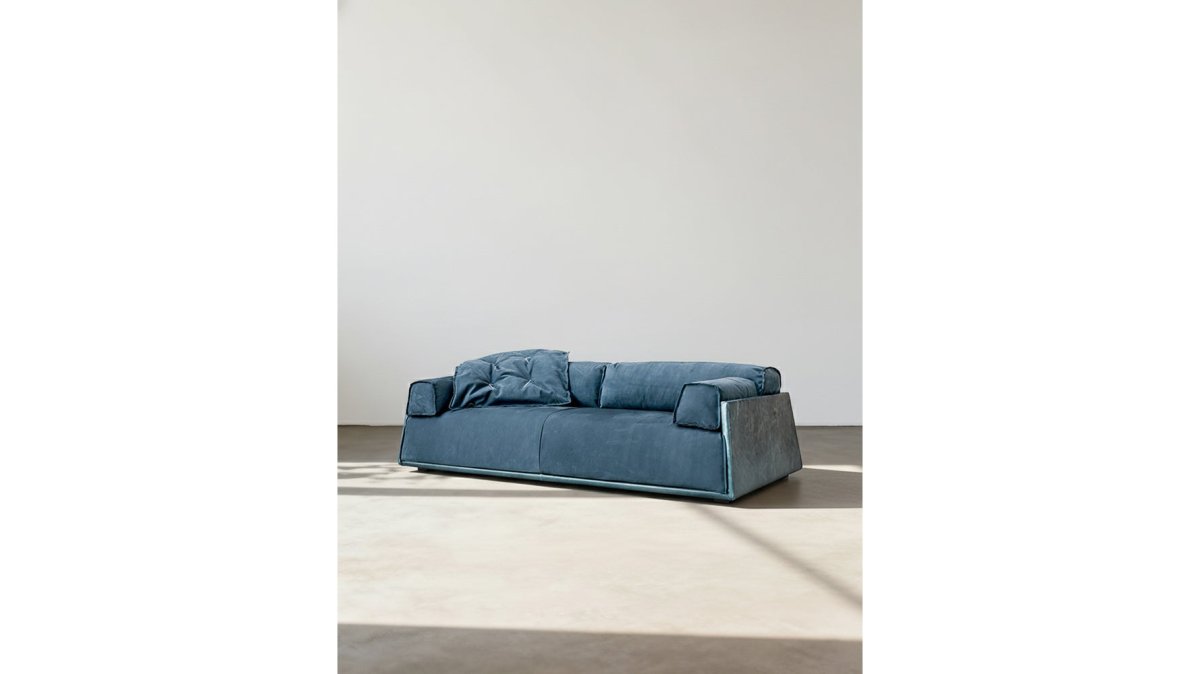
Kovacs Three Seater Sofa, Vintage Sofa →
Reupholstery vs Buying New: A Decision Framework
A checklist is a good start, but a tick-count treats every item as equally important. In practice, frame construction and joint type matter far more than whether you still like the colour. The framework below weights the criteria so the decision reflects what actually determines whether a rebuild will last.
Step 1: Score the Frame (the deciding factor)
- Kiln-dried hardwood frame, dowelled or screwed joints, corner blocks: strong candidate for reupholstery.
- Softwood or composite frame, stapled joints: weak candidate; labour is unlikely to be recovered.
- Cracked or flexing rails: usually a replacement, unless the piece has exceptional sentimental or antique value.
If the frame fails this step, stop here. No fabric choice or foam upgrade will compensate for a frame that cannot hold a staple or a screw.
Step 2: Score the Suspension and Cushions
- Hand-tied coil springs or intact webbing: repairable and worth rebuilding.
- Sagging webbing or tired springs: fixable, but budget for it as a separate line.
- Collapsed foam: expected on a 20-year-old sofa; plan for high-density foam replacement.
Step 3: Score the Economics
Compare the full, itemised reupholstery quote against the cost of a new sofa of equivalent frame construction and fabric grade, not against the cheapest new sofa you can find. If the quote is comfortably below that like-for-like figure, reupholstery wins on value. If it approaches or exceeds it, replacement is the more rational spend.
Step 4: Score the Intangibles
- Sentimental value: real, but it should not override a failed frame.
- Fit with your room: a silhouette you love and that fits your space is worth preserving.
- Sustainability: keeping a solid frame out of consumer waste is a genuine environmental benefit, and reupholstery avoids the embodied carbon of a new piece.
The Decision Matrix
| Frame | Suspension | Economics | Verdict |
|---|---|---|---|
| Hardwood, dowelled | Springs intact or repairable | Quote below like-for-like new | Reupholster |
| Hardwood, dowelled | Springs tired | Quote near like-for-like new | Reupholster if sentimental; otherwise weigh carefully |
| Softwood or composite | Any | Any | Replace |
| Cracked or flexing | Any | Any | Replace |
A Note on Modern vs Vintage Construction
A 20-year-old sofa often predates the widespread shift to stapled particleboard and glued foam. Many pieces from that era use kiln-dried hardwood frames and traditional spring systems that are genuinely worth rebuilding. That is the strongest argument for taking a 20-year-old sofa seriously rather than assuming it is past its useful life. Furniture lifespan varies enormously by construction quality, and twenty years is often a sign you bought well the first time.
Conclusion
Deciding whether to restore or replace is a judgement call, and it deserves a proper assessment rather than guesswork. Wish Interiors has spent over 60 years building bespoke, handmade furniture for homes and commercial interiors, and we can craft a replacement or restoration to match. Our custom upholstery, artist collaborations, and made-to-order pieces are built to the highest standards. Call 020 46202525 to discuss your sofa.
Frequently Asked Questions
What is the average cost of reupholstering a sofa in the UK?
The cost of reupholstering a sofa in the UK depends on size, fabric choice, and whether the frame or springs need repair. A two-seater typically costs less than a four-seater, and fabric grade pushes the price up significantly. Labour is the largest single cost, often accounting for more than half the total. Always get a written quote that itemises upholstery labour, materials, and any frame repair separately so you can compare like for like.
How do I check if my sofa frame is worth reupholstering?
Start by lifting the sofa and listening for creaks or rattles, which suggest loose joints. Press down firmly on each corner and check for movement where the arm meets the seat. Look underneath: kiln-dried hardwood frames with screwed or dowelled joints are worth saving. Particleboard or stapled frames are not. If the frame is solid and only the fabric and foam are worn, reupholstering is usually the better financial decision.
Is it cheaper to buy a new sofa or recover an old one?
Recovering an existing sofa is often cheaper than buying a comparable new one, especially if the frame is solid. A well-built sofa with kiln-dried hardwood and coil springs would cost far more to replace at the same quality level than it would to reupholster. However, if the frame is damaged or the springs have collapsed, replacement may be more cost-effective. Run a cost-benefit analysis comparing the reupholstery quote against a new piece of similar construction.
What are the benefits of traditional upholstery techniques for older furniture?
Traditional techniques use hand-tied coil springs, horsehair or natural fibre padding, and hand-stitched webbing. These methods distribute weight more evenly than modern foam-and-webbing construction, which means the seat holds its shape longer. For a 20 year old sofa with a solid frame, traditional re-padding and spring replacement can extend its lifespan by another 15 to 20 years. Modern techniques are faster and cheaper, but traditional work is what makes an investment piece last.
Sample Image Gallery


