





10 Luxury Home Renovation Checklist Items for 2026
Table of Contents
- Why a Luxury Renovation Needs a Different Checklist
- 1. Define Your Aesthetic Vision Before You Spend
- 2. Luxury Home Renovation Budget Planning: The 20% Rule
- 3. Structural Integrity: Surveys, Permitted Development and Building Regulations
- 4. Working With Interior Designers for Furniture and Finishes
- 5. Bespoke Furniture Design Trends 2026: Commission Early
- 6. Lighting Design: The Layer That Makes or Breaks the Scheme
- 7. Hidden Infrastructure: Electrical, Plumbing and Smart Home Systems
- Post-Renovation Maintenance Planning
- Frequently Asked Questions
Last Updated: September 7, 2026
A luxury home renovation is not the same project as a standard refurbishment, and it demands a different kind of planning. When you are investing in bespoke pieces, high-end finishes, and a coherent interior design scheme, the margin for error narrows considerably. This guide breaks down the 10 luxury home renovation checklist items for 2026 that separate a truly refined result from a costly compromise. Below, we will show you exactly how to sequence your project so that your budget, your trades, and your custom furniture arrive in the right order.
TL;DR:
- Define a clear aesthetic vision before any budget is committed
- Protect a contingency fund of around 20% of your total budget
- Commission bespoke furniture early, as lead times often exceed three months
- Treat lighting and hidden infrastructure as design elements, not afterthoughts
Why a Luxury Renovation Needs a Different Checklist
Most renovation guides focus on the basics: choosing paint colours, picking tiles, and managing the builder. A luxury renovation operates on another level entirely, where the architectural blueprints, the interior design scheme, and the bespoke joinery must be resolved together before a single wall is opened. The difference comes down to integration. In a standard project, you renovate the shell and then furnish it. In a luxury project, the furniture, the lighting design, and the smart home automation are specified as part of the same process, because they physically depend on one another.
The stakes are higher too. A luxury home renovation typically involves significant capital, and the decisions you make at the planning stage determine whether the finished property delivers both personal enjoyment and a strong property valuation. Rushing the vision stage is the single most expensive mistake you can make.
1. Define Your Aesthetic Vision Before You Spend
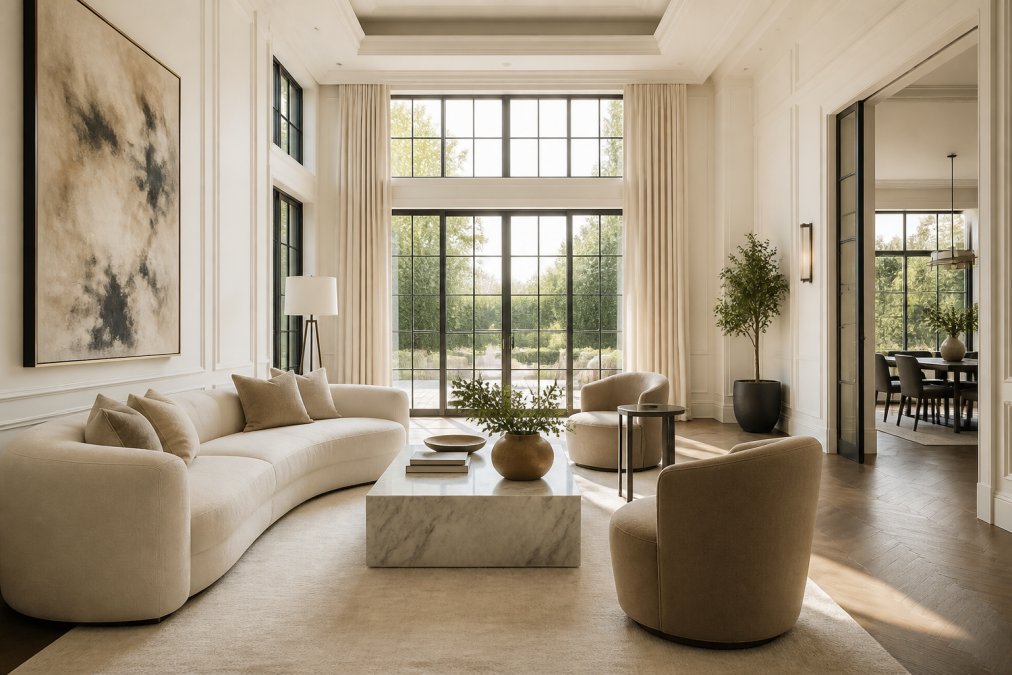
Your aesthetic vision is the reference point every other decision hangs on. Before you engage contractors or order materials, you need a clear interior design scheme that covers your colour palette, material preferences, and the mood you want each room to evoke. This is not about picking a style label like "modern" or "traditional." It is about documenting the specific textures, proportions, and finishes that will guide your choices.

A common mistake is to begin with individual purchases, a sofa here, a rug there, and then try to make them cohere. In practice, this produces a disjointed result. Instead, build a detailed brief that includes architectural blueprints, fabric samples, and references for your bespoke storage and furniture. When you brief an interior designer or a maker with this level of detail, you get accurate quotes and realistic timelines.
2. Luxury Home Renovation Budget Planning: The 20% Rule
Luxury home renovation budget planning starts with a realistic number and a disciplined contingency. The 20% rule is simple: whatever your total budget, set aside an additional 20% as a contingency fund before you allocate a penny to finishes or furniture (nahb.org). Renovations of this scale regularly uncover issues, from damp proofing problems to outdated plumbing infrastructure, and the contingency is what prevents those discoveries from halting your project or forcing compromises on the pieces that matter.
When you plan the budget, itemise every element: structural work, wiring, plastering, and then the decorative layer of lighting, rugs, and furniture. Many homeowners underestimate the cost of high-quality finishes and bespoke pieces. If you are commissioning custom upholstery or a limited edition chair, that cost is fixed at the point of order, and it does not flex with your builder's overruns.

3. Structural Integrity: Surveys, Permitted Development and Building Regulations
Before any aesthetic work begins, the structure must be sound. A full structural survey identifies issues with the property's integrity, including damp, subsidence, and the condition of existing electrical wiring and plumbing. This is non-negotiable for older homes, where hidden problems are the norm rather than the exception.
You must also establish whether your planned works fall under permitted development or require formal planning permission. Extensions, loft conversions, and changes to the building's exterior usually need approval, and any structural alterations must comply with building regulations covering insulation standards and fire safety. The UK Government guidance on planning permission and building regulations explains which projects require approval. Skipping this step can lead to enforcement action and serious difficulty when you come to sell.
The contractor vetting process belongs here too. For a project of this scale, you want a project manager with a track record of delivering high-end work, plus specialist trades for the HVAC systems, electrical wiring, and bespoke joinery. Check their insurance, ask for references, and confirm they understand the specification before you sign.
4. Working With Interior Designers for Furniture and Finishes
Working with interior designers for furniture and finishes is often the difference between a house that looks decorated and a home that feels designed. A good designer brings a trained eye to proportion, materiality, and lighting, and they have established relationships with makers and suppliers. They also manage the procurement schedule, which matters when pieces have lead times of several weeks or months.
Designers are not just for the wealthy. Even a single consultation can help resolve a difficult layout or choose a finish palette with confidence. If you are working with a designer, they will typically brief the maker directly, which ensures the bespoke pieces align with the wider scheme. If you are managing the project yourself, you can still work with specialists directly. At Wish Interiors, we regularly collaborate with interior designers and architects, and we also support homeowners who come to us with their own finished designs. The key is to know your level of expertise and to bring in professional help where the decisions exceed it.
5. Bespoke Furniture Design Trends 2026: Commission Early
Bespoke furniture design trends 2026 point toward sculptural forms, sustainable materials, and pieces that carry a sense of permanence. Homeowners are moving away from disposable flat-pack furniture and investing in handmade, heirloom-quality items that reflect their personal taste. This is where a luxury renovation truly differentiates itself, through the bespoke joinery, the custom upholstery, and the artist collaborations that make a house unique. renovation pricing guide.
The critical planning factor is lead time. A genuinely bespoke piece, handcrafted to your specification, takes time to make. A custom sofa or headboard can take several months from design approval to delivery, and that is before you account for the fabric selection and any artist collaboration. You cannot order this furniture after the builders finish. You must commission it at the start of the project so it arrives when the room is ready.
6. Lighting Design: The Layer That Makes or Breaks the Scheme
Lighting design is the most underrated element in a luxury renovation. A room can have perfect furniture and a flawless colour palette, but if the lighting is flat, the whole scheme can fall flat. The goal is layered lighting: ambient light for overall illumination, task light for specific activities, and accent light to highlight architectural features or artworks. Each layer serves a different purpose, and together they give the room depth and flexibility.
In 2026, the trends favour sculptural statement pieces. A crystal chandelier over a stairwell or in a dining room does more than illuminate; it anchors the space and provides a focal point. For a grand entrance or double-height hallway, the Large Villa Crystal Chandelier at £1,479.99 brings a waterfall of refracted light that suits ceilings of three metres or more. For a more contemporary scheme, a branch-inspired LED chandelier adds an artistic touch. The practical detail is to plan the electrical wiring for these fixtures at the first-fix stage, so the ceiling is ready to take the weight and the power supply is in the right place.

7. Hidden Infrastructure: Electrical, Plumbing and Smart Home Systems
The infrastructure behind your walls determines how well your luxury renovation functions for decades. This covers the electrical wiring, plumbing infrastructure, and increasingly, the cabling for smart home automation. Upgrading these systems while walls are open is far more cost-effective than doing it later, and it is the one area where spending early delivers the clearest return.
Modern smart home automation goes beyond a smart thermostat. It integrates lighting scenes, security, audio, and window coverings into a single system you control from one interface. The planning implication is that you must specify your smart home requirements before the first fix, because the system relies on cabling that needs to be routed through the walls. This is also the point to consider guidance on smart home security and data protection, since a connected home is only as secure as its network infrastructure.
Consider the finishes in these hidden areas as well. The quality of your drywall installation, the insulation standards, and the attention to detail in the plasterwork all contribute to the final result. A luxury renovation can be judged as much by the quality of the unseen work as by the visible finishes.
| Checklist Item | Key Action | Planning Lead Time | Typical Pitfall |
|---|---|---|---|
| Aesthetic Vision | Document palette, materials, and mood | 4-6 weeks | Buying pieces before the scheme is set |
| Budget Planning | Add a 20% contingency fund | Before any work starts | Spending contingency on upgrades |
| Structural Integrity | Full survey and permission checks | 8-12 weeks | Skipping building regulations approval |
| Designer Collaboration | Brief an interior designer or specialist | Early in the process | DIY design on complex layouts |
| Bespoke Furniture | Commission pieces at project start | 8-16 weeks | Ordering furniture after builders finish |
| Lighting Design | Specify layers and statement fixtures | First-fix stage | Flat, single-source lighting |
| Smart Home & Infrastructure | Plan cabling and system integration | First-fix stage | Retrofitting smart systems later |
Post-Renovation Maintenance Planning
A luxury renovation is an investment that needs protecting. Post-renovation maintenance planning is the item most guides miss, yet it determines how your home ages. Natural stone surfaces need sealing, bespoke upholstery benefits from professional cleaning, and smart home systems require software updates. Build a maintenance schedule into your plan from the start, and budget for the ongoing care of your high-quality finishes.
This is also the moment to think about resale value versus personal enjoyment. A truly bespoke scheme, with custom furniture and unique artist collaborations, may not appeal to every future buyer, but it creates a home that reflects you. The balance is to invest in quality where it matters, in the structure, the infrastructure, and the pieces you will live with every day, and to be more flexible where trends will date quickly. Your renovation is a personal project first, and a financial asset second.
A luxury renovation succeeds when the vision, the budget, and the timeline are aligned from the first day. The planning is everything. At Wish Interiors, we help homeowners and designers bring these schemes to life with bespoke, handmade furniture crafted in the UK, from custom upholstery to limited edition chairs, backed by over 60 years of dedicated craftsmanship. We work with interior designers and individual clients alike, and we offer Klarna payment plans to help you spread the cost of your investment pieces. Call 020 46202525 to discuss your project and get started with Wish Interiors.
Frequently Asked Questions
What is the most expensive part of a luxury house renovation?
Structural work typically consumes the largest share of a luxury renovation budget. This includes removing walls, underpinning, roof replacement and damp proofing. In a high-end project, hidden infrastructure such as electrical rewiring, plumbing infrastructure and HVAC systems also commands significant spend. Budget 20% of your total as a contingency fund, because structural surprises are common once walls open. Prioritise a thorough structural inspection before committing to cosmetic finishes.
In what order should you plan a luxury home renovation?
Start with your aesthetic vision and a realistic luxury home renovation budget plan. Then commission a structural survey and secure necessary approvals under permitted development or full planning permission. Engage professionals early, especially when working with interior designers for furniture, because bespoke pieces have long lead times. Sequence work as: structural changes, then electrical and plumbing, then plastering and drywall installation, followed by joinery, lighting design and finally furniture and styling.
What are the biggest luxury home renovation mistakes to avoid?
The most common mistake is ordering bespoke furniture too late. Bespoke furniture design trends 2026 favour made-to-order pieces, which can take 8-12 weeks or longer. Another frequent error is underspending on lighting design and smart home infrastructure, which are difficult to retrofit. Avoid choosing fixtures before confirming they comply with current building regulations. Finally, do not exhaust your budget on finishes before allocating funds for project management and post-renovation snagging.
How do you balance bespoke furniture with structural renovations?
Treat structural work and bespoke furniture as one integrated timeline, not two separate projects. Commission your furniture early, ideally at the same time you finalise your interior design scheme. A custom sofa or upholstered headboard takes weeks to craft, so ordering after plastering finishes adds months to your schedule. Share your architectural blueprints with your furniture maker so they can design pieces that fit your exact dimensions, including awkward layouts and high ceilings.
How can you incorporate sustainable luxury into a home renovation?
Sustainable luxury means choosing durable materials that age well rather than disposable trends. Specify sustainable materials such as FSC-certified timber, natural stone and low-VOC paints. Prioritise energy efficiency through improved insulation standards, double glazing and smart home automation that reduces heating waste. Commission bespoke furniture built to last decades rather than buying mass-produced pieces. These choices reduce environmental impact while maintaining the high-quality finishes expected in a luxury renovation.
Sample Image Gallery


