





10 Durable Restaurant Seating Ideas for Small Businesses
Table of Contents
- Why Restaurant Seating Needs to Work Harder Than Home Furniture
- Quick Comparison: 10 Durable Restaurant Seating Options
- 1. Stackable Metal Chairs: The Space-Saving Workhorse
- 2. Bar Stools with Solid Wood or Stone Seats: Style That Takes a Beating
- 3. Folding Chairs: Flexible Seating for Multi-Use Floors
- 4. Woven Rattan Chairs: Unexpected Durability for Indoor Cafes
- 5. What Makes Commercial Grade Restaurant Chairs Different
- 6. Fire Safety Standards for Contract Furniture: What You Must Check
- Frequently Asked Questions
Last Updated: September 8, 2026
Restaurant seating takes more punishment in a single lunch service than most home dining chairs see in a decade. Spilled drinks, dragged legs, heavy diners, and daily cleaning cycles all take their toll, which is why choosing durable restaurant seating ideas for small businesses is a financial decision, not just a styling one. At Wish Interiors, we have spent over 60 years crafting upholstery and furniture for commercial interiors, and we know that a cheap chair fails within months.
The real challenge for small business owners is balancing longevity with a tight floor plan. You need seating that survives high-traffic use, meets fire safety standards for contract furniture, and still fits the aesthetic you have built. Below, we break down ten specific options with honest notes on where each one shines and where it falls short.
Why Restaurant Seating Needs to Work Harder Than Home Furniture
Commercial furniture operates under a completely different set of pressures than residential pieces. A dining chair in a busy cafe might be sat on dozens of times per day, moved constantly, and cleaned with industrial chemicals that strip finishes. This is why commercial grade restaurant chairs are built with heavier frames, denser upholstery, and tougher surface treatments.
The cost difference reflects genuine material upgrades: powder-coated frames instead of painted ones, stainless steel fixings instead of mild steel, and upholstery rated for abrasion cycles that would wear through standard fabric. When you calculate the lifespan of a commercial-grade chair against a residential one, the upfront saving often disappears within two years.
Quick Comparison: 10 Durable Restaurant Seating Options
| Seating Option | Best For | Key Durability Feature | Approximate Price Point |
|---|---|---|---|
| Stackable Metal Chairs | Flexible dining floors | Powder-coated steel frames | From £89.99 |
| Stone-Seat Bar Stools | Bars and counters | Marble or stone seats | From £118.99 |
| Folding Chairs | Multi-use spaces | Reinforced folding joints | From £187.99 |
| Woven Rattan Chairs | Indoor cafes | Handwoven natural fibre | From £89.99 |
| Velvet Bar Stools | Boutique bars | Stainless steel frames | From £197.99 |
| Leather-Effect Bar Chairs | High-traffic counters | Easy-clean upholstery | From £339.99 |
| Swivel Factory Stools | Breakfast bars | Adjustable steel build | From £59.99 |
| Elm Wood Bar Stools | Warm, classic interiors | Solid timber seats | From £49.99 |
| Black Woven Chairs | Lounge areas | Webbed, breathable seats | From £89.99 |
| Rattan Armchairs | Conservatory seating | Mixed rattan and iron | From £89.99 |
1. Stackable Metal Chairs: The Space-Saving Workhorse
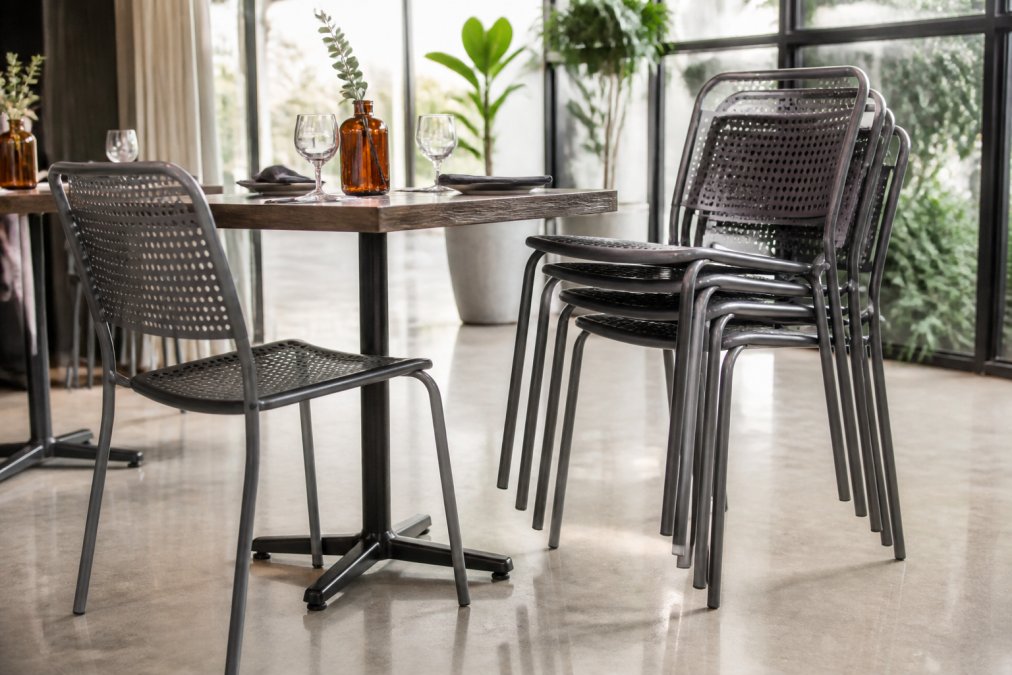
The Grange Grey Metal Chair is our top pick for restaurant seating in tight spaces, and it costs just £89.99 from Wish Interiors. Its perforated seat and backrest allow airflow and add a retro industrial note, while the cross-bracing under the seat boosts structural strength for daily commercial use. The matte grey finish is scratch-resistant and wipes clean with minimal effort.

Stackability is the defining feature here. When lunch service ends and you need to open the floor for events or cleaning, these chairs stack neatly without taking up valuable storage space. They are lightweight enough to move between rooms, yet the steel frame handles constant rearrangement without loosening.
2. Bar Stools with Solid Wood or Stone Seats: Style That Takes a Beating
For counter and bar seating, the Vasco Black and Green Finish Bar Stool at £118.99 pairs a genuine circular green marble seat with a curved black iron frame. Stone seats resist scratches, stains, and heat far better than upholstered options. The encircling footrest adds comfort for diners while reinforcing the frame's stability.

If you prefer timber, the District Barstool with Silver Metal Legs at £49.99 uses a shaped elm seat that develops character with age. Solid wood seats are easy to sand and refinish when they eventually show wear. The hairpin-style legs keep the visual weight light, helping smaller dining areas feel more open.
3. Folding Chairs: Flexible Seating for Multi-Use Floors
The Cebu Grey and Black Elm Wood Folding Chair at £187.99 solves the problem of spaces that serve multiple functions throughout the day. A cafe that hosts evening events, a restaurant with a private dining room, or a coffee shop that runs classes all benefit from seating that disappears when it is not needed.
The black elm wood frame features an ergonomic curve through the back for comfortable support, while the grey fabric seat adds warmth. Slightly angled legs improve stability, which is often the weak point of cheaper folding designs.
4. Woven Rattan Chairs: Unexpected Durability for Indoor Cafes
Rattan is not the first material that comes to mind for restaurant seating, but handwoven natural fibre performs better than many owners expect in indoor settings. The Manado Natural Rattan and Metal Chair at £129.99 combines two tones of woven rattan over a sturdy black iron base. The lattice weaving creates airflow, so the seat stays comfortable through long sittings.
What makes rattan work commercially is the iron frame taking the structural load while the woven seat flexes under weight. This combination absorbs impact better than rigid materials, reducing the risk of cracking. For a boho or Nordic interior concept, the Java Natural Rattan with Black Metal Armchair at £89.99 offers a similar balance.
5. What Makes Commercial Grade Restaurant Chairs Different
Commercial grade restaurant chairs differ from residential pieces in three measurable ways: frame construction, surface finish, and upholstery rating. Contract furniture uses heavier gauge steel or kiln-dried hardwoods, powder-coated finishes that resist chipping, and fabrics tested for hundreds of thousands of abrasion cycles. These specifications are the difference between a chair that lasts five years and one that fails in six months.
The British Standards Institution guidance on furniture durability testing outlines the abrasion and load tests that contract furniture should pass. When you compare a commercial-grade chair against a residential one side by side, the weight difference alone tells the story. Heavier frames, reinforced joints, and thicker seat bases cost more to produce, which is why commercial pricing sits above domestic ranges.
The Lifecycle Cost Argument: Why Cheap Seating Costs More
Most seating guides focus on the initial purchase price, but for a small business, the real metric is cost per service or cost per year of useful life. A residential chair at £40 might last six months under daily commercial use before the joints loosen or the finish fails. A commercial-grade chair at £120 might last five years or more. That is a cost of roughly £0.22 per week for the commercial chair versus £1.54 per week for the residential one, before factoring in the labour cost of dealing with broken furniture or the safety risk of a structural failure under a guest.
A common pattern in hospitality procurement is the "false economy trap": buying a cheaper batch of chairs, then replacing half of them within 18 months, and ultimately spending more than the cost of the quality option from the start. When you calculate the total cost of ownership, the commercial-grade option almost always wins by year two.
What to Check Before You Commit to a Supplier
Beyond the frame and fabric, look for these specific indicators of commercial durability:
- Joint construction: Mortise-and-tenon or welded steel joints outperform dowelled or screwed joints under lateral stress. A chair that rocks when a diner leans back will fail at the joint long before the material itself gives out.
- Finish type: Powder coating is baked on and resists chipping; wet-painted finishes chip easily when chairs are dragged across floors. For timber, look for hardwax oil or conversion varnish rather than standard lacquer.
- Weight capacity rating: Reputable commercial suppliers publish a static load rating. A chair rated for 150 kg will handle a wider range of guests without stress fractures than one rated for 110 kg.
- Replaceable parts: Chairs with replaceable glides, castors, or seat pads are cheaper to maintain over time. A chair that must be entirely replaced because a single glide has worn down is a design flaw, not a durability feature.
The Hidden Cost of Downtime
For a small business, every broken chair is not just a replacement cost, it is a lost revenue opportunity. If a table of four becomes a table of three because a chair is out of service, you lose the average spend of that fourth guest for that sitting. Choosing commercial-grade seating is an operational decision that protects your revenue stream.
6. Fire Safety Standards for Contract Furniture: What You Must Check
Fire safety standards for contract furniture are a legal requirement for UK hospitality businesses, not an optional extra. All upholstered seating supplied for commercial use must meet the relevant ignition resistance requirements set out in UK regulations. Before you buy any seating for a restaurant, cafe, or bar, request evidence of compliance from your supplier and keep it on file.
The UK Government guidance on fire safety for furniture and furnishings explains the specific requirements for contract furniture, including cigarette and match flame resistance tests. Fabric choices matter here: wool and certain treated synthetics perform better than untreated cottons, while leather-effect upholstery such as the Gilden Blue Leather Effect Bar Chair at £339.99 offers both easy-clean surfaces and strong fire performance.

Beyond Compliance: How Your Seating Choice Affects the Dining Experience
Fire safety is the non-negotiable baseline, but once you have confirmed compliance, two other factors should shape your seating decisions in a small space: acoustic performance and legal accessibility requirements.
The Acoustic Impact of Furniture in Small Dining Rooms
Small restaurants and cafes have a persistent problem: noise. Hard surfaces, concrete floors, exposed brick, metal furniture, reflect sound, and a room full of diners quickly becomes a wall of noise that makes conversation difficult.
Upholstered chairs and banquettes absorb sound, while metal, wood, and rattan reflect it. A room furnished entirely with metal stackable chairs will have a noticeably higher noise floor than one with fabric-upholstered seating. This is not just a comfort issue; it affects how long guests stay, how much they spend, and whether they return. If your floor is hard and your walls are bare, you need upholstered seating to absorb the mid-range frequencies of conversation and clattering cutlery.
For small businesses that want the durability of metal frames but need acoustic absorption, consider chairs with padded or fabric seat inserts, or add banquette seating along one wall. Even a small change, swapping four metal chairs for upholstered versions at a central table, can noticeably reduce reverberation in a compact room.
Legal Accessibility: Making Your Layout Work for Every Guest
While fire safety is the most discussed legal requirement, accessibility is equally important. Under the Equality Act 2010, you have a legal duty to make reasonable adjustments for disabled customers, which includes ensuring your seating layout does not create barriers. This is about practical choices that avoid excluding guests.
Key considerations for small restaurant layouts:
- Clear circulation paths: Leave at least 900 mm between tables for wheelchair users and guests with mobility aids. A chair that is too wide or a table arrangement that blocks a route can turn a simple visit into an impossible one.
- Seat height and accessibility: A mix of seating heights, standard dining chairs, slightly higher stools, and lower lounge seating, accommodates guests with different mobility needs. Fixed or heavy chairs that cannot be moved easily create barriers for guests who need to transfer from a wheelchair.
- Armrests as support: Chairs with armrests provide crucial support for guests with limited mobility when sitting down or standing up. If your primary seating is armless, consider keeping a few armchair options available for guests who need them.
Balancing Durability, Acoustics, and Access
The best seating plan for a small business balances three factors: durability for daily use, acoustic absorption for guest comfort, and accessibility for legal compliance. A metal-framed chair with a fabric seat insert offers the structural strength of steel with the sound-absorbing benefit of upholstery. A banquette along one wall provides acoustic absorption, space efficiency, and a stable seat that does not need to be moved. A mix of chair styles ensures you can accommodate guests with different needs without compromising your design vision.
Frequently Asked Questions
What restaurant seating material is most durable for high-traffic areas?
Powder-coated metal and molded plastic frames offer the best resistance to wear and tear in high-traffic settings. The Grange Grey Metal Chair, for example, uses a matte grey powder-coated finish that resists scratches and wipes clean easily. Solid wood with a robust lacquer also performs well, but metal and molded plastic tend to outlast timber in daily commercial use. For upholstered pieces, choose commercial-grade vinyl or leather-effect materials that clean up quickly and hold up to constant use.
What are the fire safety regulations for commercial restaurant furniture in the UK?
Contract furniture sold for commercial use in the UK must meet the Furniture and Furnishings (Fire) (Safety) Regulations 1988. This requires upholstered items to pass cigarette and match flame tests, with specific schedules for covers and fillings. When you buy from a specialist supplier, ask for evidence of compliance before ordering. Fire safety standards for contract furniture are not optional, and your local authority or insurer will expect to see that your seating meets these requirements during inspections.
How can bespoke upholstery extend the lifespan of restaurant seating?
Bespoke restaurant upholstery services let you specify commercial-grade fabrics, higher-density foam and reinforced stitching that standard pieces often lack. A specialist can also reupholster existing frames, which costs less than replacing the whole chair. Choosing a fabric with a high rub count and stain-resistant finish keeps chairs presentable for years, reducing your long-term replacement costs.
How do I choose space-saving seating for a small restaurant layout?
Look for stackable chairs, folding designs or banquette seating against walls. Stackable metal chairs store neatly when you need to clear the floor for events, while folding chairs tuck into cupboards between services. Measure your floor plan carefully and ensure adequate aisle clearance between tables for accessibility. Fixed banquettes along one wall maximise seating capacity without adding visual bulk, and they remove the need for chairs on that side entirely.
Sample Image Gallery


