





Sustainable Luxury Furniture Alternatives for 2026
Table of Contents
- Why Sustainable Luxury Furniture Alternatives Are Reshaping 2026 Interiors
- What Makes Furniture Truly Sustainable? A Materials Guide
- The Case for Bespoke Handmade Furniture UK Buyers Can Trust
- How to Source Sustainable Office Furniture for Commercial Projects
- Affordable Sustainable Luxury: Investment Pieces Without the Premium
- Carbon Footprint Transparency and Third-Party Certifications to Look For
- End-of-Life Circularity: Recycling, Upcycling, and Heirloom Longevity
- Frequently Asked Questions
Last Updated: September 28, 2026
Why Sustainable Luxury Furniture Alternatives Are Reshaping 2026 Interiors
Sustainable luxury furniture is high-end, handcrafted furniture made from responsibly sourced materials, built to last decades rather than seasons. It is the opposite of fast furniture. This guide from Wish Interiors examines the alternatives reshaping interiors in 2026, from reclaimed wood to bio-based textiles. Investing in these enduring pieces requires a nuanced understanding of craftsmanship and material provenance, which remains the central focus of our sustainable luxury buyer's guide.
What Makes Furniture Truly Sustainable? A Materials Guide
True sustainability rests on three pillars: responsibly sourced materials, ethical manufacturing, and longevity. A piece that lasts thirty years offsets its production impact many times over.
Eco-Friendly Wood and Natural Materials
Solid wood remains the benchmark. Kiln-dried timber resists warping and holds its structure for decades, unlike veneered chipboard that swells and delaminates. Look for FSC-certified or reclaimed wood, and ask whether the finish is water-based and non-toxic rather than solvent-heavy.
Bio-Based Textiles and Non-Toxic Finishes
Organic wool, linen, and other bio-based textiles avoid the petrochemical load of synthetic upholstery.
The Case for Bespoke Handmade Furniture UK Buyers Can Trust
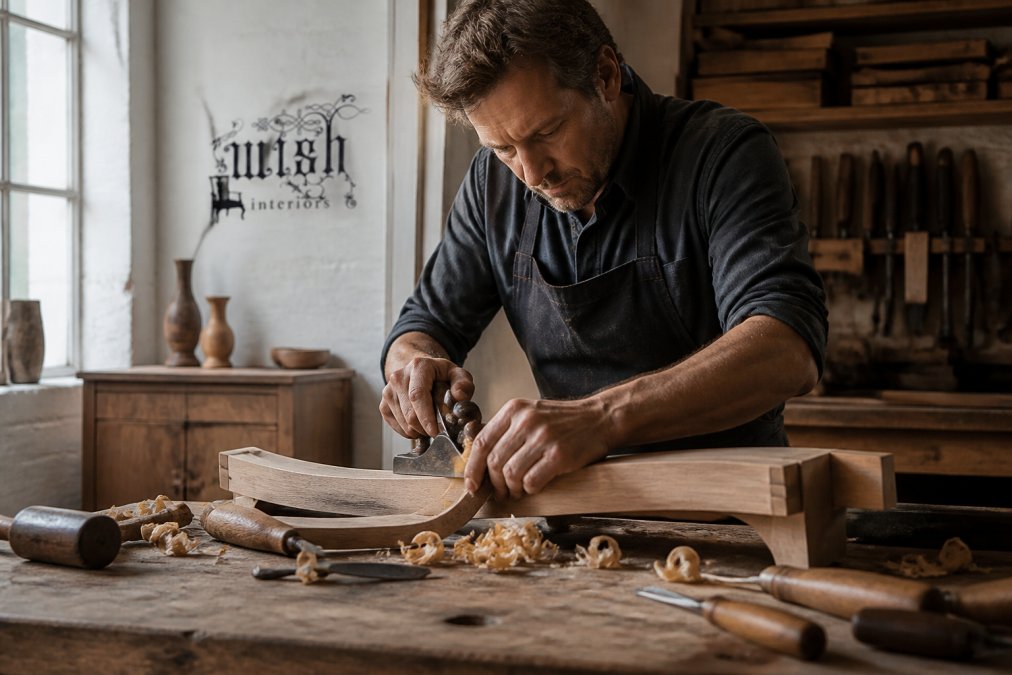
Bespoke handmade furniture is made to your exact dimensions and specification, not adapted from a standard mould. That difference matters most in awkward rooms where off-the-shelf pieces simply do not fit.
How to Source Sustainable Office Furniture for Commercial Projects
Sourcing sustainable office furniture starts with durability data and a written specification, not a catalogue browse.
Affordable Sustainable Luxury: Investment Pieces Without the Premium
Sustainable luxury does not require a five-figure budget.
| Piece | Price | Material | Best For |
|---|---|---|---|
| Minimalist Mango Wood Oslo Bedside Table | £118.99 | Kiln-dried mango wood | Small bedrooms |
| Minimalist Mango Wood Logan Narrow Bedside Table | £119.99 | Kiln-dried mango wood | Tight 30cm gaps |
| Norway Walnut Bedside Table | £120.99 | Solid white cedar | Mid-century interiors |
| Reiek Wooden Carved Pedestal Side Table | £140.99 | Sustainable mango wood | Living room accents |
| Wright Oak Bedside Table | £159.99 | Solid oak core | Durability-focused buyers |
| Wright Walnut Bedside Table | £199.99 | Solid walnut core | Warm, dark interiors |
| Preston Mango Wood Coffee Table | £262.99 | Sustainably sourced mango | Living room centrepieces |
| Scandinavian Walnut Oslo Console | £279.99 | Solid kiln-dried wood | Multi-use dressing tables |
| Scandinavian Light Oak Oslo Console | £283.99 | Sustainable mango wood | Ethically audited production |
| Preston Mango Wood Round Coffee Table | £302.99 | Sustainably sourced mango | Round living room layouts |
The Minimalist Mango Wood Oslo Bedside Table at £118.99 is a strong entry point: solid, kiln-dried mango wood with a water-based topcoat and free mainland delivery. The Preston Mango Wood Coffee Table at £262.99 shows what heirloom quality looks like at a mid-range price.


Carbon Footprint Transparency and Third-Party Certifications to Look For
Most articles tell you to "look for certifications" and stop there. That is useless at the point of purchase, because a logo on a product page tells you nothing about what was actually audited. This section is the part the brand listicles skip: what each scheme verifies, how to check it is real, and how to compare the carbon footprint of two pieces of furniture without a consultant.
What the main certifications actually verify
Forest Stewardship Council (FSC), covers timber and wood-based materials. FSC 100% means all wood fibre is from certified forests; FSC Mix allows a blend of certified, recycled and controlled wood; FSC Recycled covers reclaimed fibre. The chain-of-custody certificate number (formatted like FSC-C######) can be checked against the public FSC database, so you can confirm the maker's claim rather than trust the badge.
Minimalist Mango Wood Oslo Bedside Table →
How to verify a claim in two minutes
- Ask for the certificate number, not the logo.
- Check the number against the issuing body's public database (FSC and PEFC both publish searchable registers).
- Confirm the certificate covers the specific material and the specific factory, a valid certificate held by a supplier does not automatically cover the finished piece.
- Cross-check the marketing language against the CMA guidance on environmental claims, which sets out what businesses may and may not say about sustainability. Vague terms such as "eco-friendly", "green" and "natural" without qualification are exactly the kind of unsubstantiated claim the guidance targets.
A practical framework for comparing carbon footprints
- Material type and mass. Solid timber stores biogenic carbon while it is in use; virgin aluminium and virgin plastics are far more emissions-intensive per kilogram. Reclaimed or recycled material avoids the primary production impact entirely.
- Transport distance and mode. Sea freight is far less emissions-intensive per tonne-kilometre than air freight. A piece shipped by road within the UK will generally carry a lower transport footprint than one flown in.
- Manufacturing energy. A workshop running on a renewable tariff, or using hand tools and low-energy finishing, carries a lower process footprint than an energy-heavy factory.
- Longevity.
A simple way to apply this: compare two bedside tables of similar size. One is solid, kiln-dried mango wood from a certified, audited supply chain, finished with a water-based topcoat and shipped by road. The other is a veneered composite with a solvent finish and an unknown origin.
End-of-Life Circularity: Recycling, Upcycling, and Heirloom Longevity
Every competitor article stops at the point of purchase. Almost none explain what happens to a luxury piece after you no longer want it, which is where the real sustainability difference is decided. Circularity is not a slogan; it is a set of design and service choices you can check before you buy.
Design for disassembly: the feature that makes everything else possible
A piece can only be repaired, reupholstered or recycled if it can be taken apart. Look for:
- Screwed or bolted joints rather than glued-and-stapled construction, so frames can be tightened, repaired or separated.
- Removable covers, zipped or velcroed upholstery that can be taken off, cleaned, replaced or swapped without destroying the frame.
- Replaceable components, cushions, feet, castors and slats that can be reordered individually rather than forcing a whole-piece replacement.
- Single-material or clearly separable layers, solid wood that can be sanded and refinished, rather than veneer bonded to chipboard that cannot be separated.
Repair and refurbishment routes
- Reupholstery. A solid hardwood frame will typically outlast three or four sets of covers. Reupholstering keeps the frame's embodied carbon in service.
- Refinishing. Solid timber can be sanded back and re-oiled or re-waxed. This is impossible on veneered or foil-wrapped surfaces, where sanding breaks through the surface layer.
- Component replacement. Ask the maker whether they stock replacement covers, feet and fixings, and for how long after purchase. A maker who can supply parts at year ten is designing for circularity in practice.
- Specialist repair. Upholsterers, French polishers and furniture restorers operate across the UK.
Resale, trade-in and take-back
Circularity also means the piece keeps its value when it leaves your home. Three routes matter:
- Resale. Auction houses, specialist dealers and online marketplaces all handle quality second-hand furniture.
- Trade-in and take-back schemes. Some makers and retailers will collect a piece when you buy a replacement, then refurbish and resell it. Ask directly, this is far more common in commercial fit-out contracts than in retail, but it is increasingly offered to consumers.
- Donation and reuse. Charity furniture retailers and reuse networks accept good-quality pieces, extending service life and diverting material from landfill.
What happens at true end of life
When a piece genuinely cannot be repaired or resold, the material still matters:
- Solid timber can be reused, re-milled or chipped for board products.
- Metal frames and fixings are widely recycled.
- Natural fibre textiles such as wool and linen can be recycled or composted in some schemes.
- Composite panels, bonded foam and mixed plastics are the problem category, difficult to separate and frequently landfilled or incinerated.
Frequently Asked Questions
What are the key sustainable luxury furniture trends for 2026?
In 2026, sustainable luxury furniture is defined by traceable materials, bespoke craftsmanship, and circular design. Expect to see more pieces made from reclaimed wood and responsibly sourced solid timber, bio-based textiles such as organic wool, and non-toxic water-based finishes. Brands are also offering carbon footprint transparency and end-of-life recycling programs, making it easier to choose investment pieces that align with a conscious home.
How can I identify truly sustainable luxury furniture brands?
Look for brands that provide supply chain transparency, use third-party certifications like FSC or Sedex ethical audits, and can detail the origin of their materials. A genuine sustainable luxury brand will openly discuss its manufacturing processes, offer repair or take-back schemes, and prioritise longevity over seasonal trends. Visiting a workshop or speaking directly to the maker can also reveal whether claims are backed by real practice.
Are bespoke handmade pieces more sustainable than mass-produced luxury items?
Often, yes. Bespoke handmade furniture tends to use solid, responsibly sourced wood and traditional joinery, which avoids the glues and veneers common in mass production. Making pieces to order also reduces waste from unsold stock. Plus, a handcrafted piece is easier to repair and refinish, extending its life for decades. That said, the sustainability of any item depends on the specific materials and finishes used, so always ask for details.
Is it possible to find sustainable luxury furniture on a budget?
Yes. You can find well-made, eco-friendly pieces at accessible price points by choosing solid wood designs from smaller makers or looking for clearance and returned items. For example, the Minimalist Mango Wood Oslo Bedside Table is £118.99 and made from sustainably sourced, kiln-dried mango wood with a water-based topcoat. Payment plans like Klarna can also spread the cost, making sustainable choices more manageable.
How does upholstery craftsmanship contribute to furniture longevity?
Skilled upholstery uses techniques like hand-stitched seams, traditional webbing, and natural fillings that hold their shape far longer than foam or glued alternatives. A well-upholstered piece can be re-covered rather than replaced, keeping it out of landfill and preserving the frame for generations. This is why heirloom quality sofas and chairs from artisan workshops often outlast mass-market equivalents by decades.
The challenge in 2026 is not finding sustainable luxury furniture, it is telling genuine craftsmanship apart from greenwashed marketing. Wish Interiors answers that with over 60 years of family-run bespoke upholstery, handmade pieces for homes and commercial spaces, and unique artist collaborations. Browse the collection or call 020 46202525 to discuss a custom commission.
Sample Image Gallery


