





Alternatives to Standard Home Renovation Timelines
Table of Contents
- Why Standard Home Renovation Timelines Fail Most Homeowners
- A Phased Home Renovation Plan as a Practical Alternative
- Living On-Site vs. Moving Out During Renovation
- Supply Chain Contingency Planning for Home Renovation Timelines
- Renovation Project Management Tools That Replace Guesswork
- Hiring Interior Designers for Furniture Procurement and Scheduling
- Renovation Fatigue: Protecting Your Mental Health Through a Long Project
- Conclusion
Last Updated: August 30, 2026
Standard home renovation timelines fail most homeowners because they treat schedules as fixed commitments rather than working documents. Structural surprises, long lead-time items, and subcontractor availability routinely break linear schedules. At Wish Interiors, we work with homeowners and designers who have experienced this frustration firsthand. Below, we show you how to rethink your approach to home renovation timelines, including phased planning alternatives, supply chain contingency strategies, and the mental health considerations most renovation guides ignore.
Why Standard Home Renovation Timelines Fail Most Homeowners
The core problem is sequencing. Plastering cannot begin until first fix is complete. Second fix electrical work cannot happen until plaster has dried. Flooring cannot be laid until the heating system is commissioned. Each delay cascades forward, and a two-week slip in one phase can push final completion back by six weeks or more.
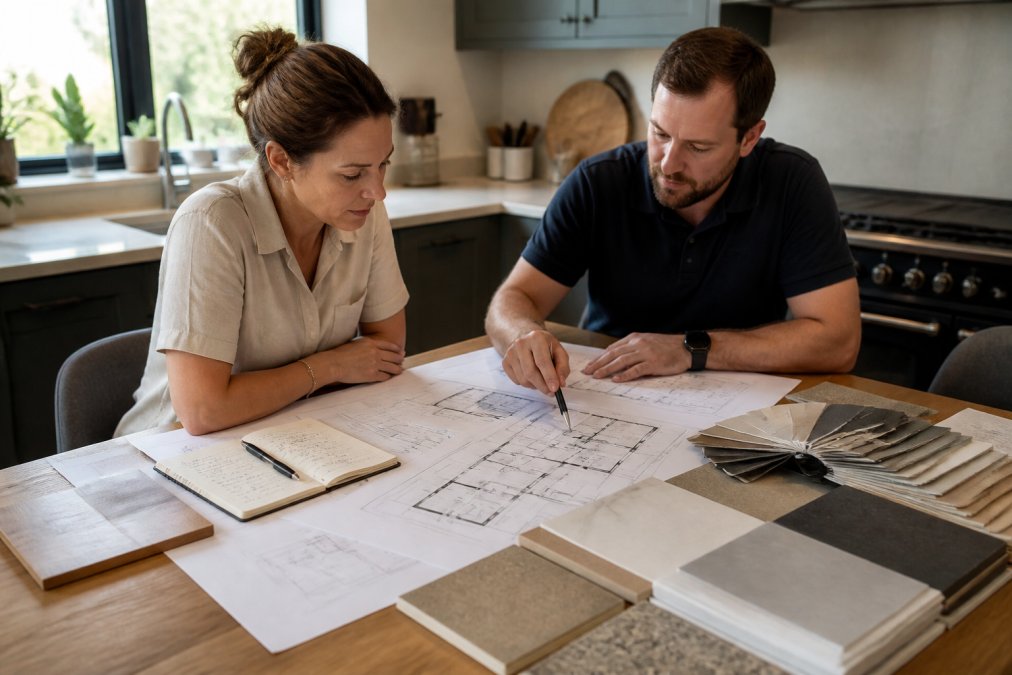
Structural vs. Cosmetic Renovations: Why the Sequence Matters
A light refurbishment operates on a fundamentally different timeline to a full-house remodel involving structural repair, rewiring, and replumbing. Conflating the two is where most budget and schedule problems begin.
Structural vs. Cosmetic Renovation: At a Glance
| Renovation Type | Typical Scope | Key Risks | Planning Lead Time |
|---|---|---|---|
| Light refurbishment | Decoration, flooring, fixtures | Supplier delays | 4-8 weeks |
| Internal refurbishment | Kitchen, bathroom, internal layout | Trade sequencing | 3-6 months |
| Full-house remodel | Structural, rewiring, replumbing | Building regulations, structural surveys | 6-18 months |
| Extension or conversion | New build elements, planning permission | Planning delays, structural engineering | 12-24 months |
Cosmetic work can often proceed room by room without affecting the rest of the property. Structural work affects the critical path of the entire project. If you are removing load-bearing walls or underpinning foundations, every subsequent trade depends on that structural repair being signed off by building control.
The Hidden Cost of Long Lead-Time Items
Bespoke joinery, made-to-measure windows, custom furniture, and specialist tiles carry lead times of eight to twenty weeks. Order them late and your project sits idle. According to the Chartered Institute of Procurement and Supply's guidance on supply chain risk, managing long lead items requires early identification and parallel ordering at the design stage, before groundwork begins, rather than waiting until the relevant phase approaches.
A Phased Home Renovation Plan as a Practical Alternative
A phased home renovation plan breaks the project into discrete, manageable stages with defined milestones, contingency buffers, and clear decision points between each phase. The advantage is control: each phase has a defined scope, realistic budget, and an exit point where you can pause and reassess before committing to the next stage.

Phase 1: Structural Repair, Weathertight Works, and Building Regulations
Phase one covers everything that makes the building structurally sound and weathertight before internal work begins: structural repair, roof works, window replacement, damp proofing, and underpinning. It also covers planning permission and building regulations submissions. As noted in the Planning Portal's guidance on building regulations, full plans applications typically take five weeks for local authority assessment, with queries potentially extending that considerably. Factor this into your schedule from day one.
Phase one also includes site preparation: welfare facilities, material storage, and skip permits. These logistics are critical to avoid friction in subsequent phases.
Phase 2: First Fix, Rewiring, Replumbing, and Mechanical Rough-In
First fix covers rewiring, replumbing, underfloor heating pipe runs, ventilation ductwork, and mechanical rough-in before plastering begins. An experienced project manager will coordinate electricians, plumbers, and heating engineers to work simultaneously, dramatically compressing this phase.
First fix is the point where you must finalise kitchen layout, bathroom positions, and built-in furniture locations. Moving a socket or soil pipe after plastering is expensive; moving it during first fix costs almost nothing.
Phase 3: Second Fix, Plastering, and Internal Refurbishment
Second fix follows once plaster has dried, a process requiring four to six weeks depending on thickness and ventilation. Second fix covers installation of sockets, switches, sanitaryware, kitchen units, doors, and internal finishes. Your long lead-time items must be ready at this stage.
With over 60 years of bespoke craftsmanship, Wish Interiors can specify pieces like artist-collaborated headboards and custom upholstery early, delivering them to fit your project schedule precisely rather than as a last-minute afterthought.
Living On-Site vs. Moving Out During Renovation
Living on-site during a full-house remodel slows the programme. Trades cannot work in occupied rooms, dust and noise management adds complexity, and the psychological toll accumulates quickly. Moving out removes these constraints entirely: trades work across the whole property simultaneously, the critical path shortens, and projects often complete faster and cheaper. kitchen renovation timelines.
The cost of renting temporary accommodation is frequently offset by reduced programme length and avoided premiums for working around occupants. For structural work, rewiring, or replumbing, a room-by-room approach rarely works.
Supply Chain Contingency Planning for Home Renovation Timelines
Supply chain disruption is now a structural feature of renovation projects. Lead times for materials, appliances, and bespoke items have lengthened, and a single delayed item can hold up an entire phase.
Identify long lead items at the design stage, order them before the project starts, and build buffer into your schedule around delivery dates. A practical contingency framework:
- Identify critical path items at design stage: anything with lead time over six weeks goes on a separate tracking list
- Order bespoke items immediately after specification is agreed, not when the relevant phase approaches
- Build a four-week buffer into your schedule after every major delivery date
- Identify substitute specifications for high-risk items
- Confirm subcontractor availability at each phase transition
According to the Federation of Master Builders' guidance on managing renovation projects, homeowners who engage contractors in detailed pre-project planning consistently experience fewer delays and cost overruns.
Renovation Project Management Tools That Replace Guesswork
Renovation project management tools give homeowners and teams a shared view of schedule, budget, and critical path. Tools that support task dependencies, document sharing, and budget tracking are most useful. Many homeowners find a simple Gantt-style schedule in a shared spreadsheet more effective than sophisticated tools they never fully adopt.
What matters most: establish a weekly project review rhythm from day one. Review progress against schedule, flag emerging delays, and update the contingency plan accordingly.
Hiring Interior Designers for Furniture Procurement and Scheduling
Bespoke and custom furniture has lead times rivalling structural trades. A handmade sofa or made-to-measure dining table can take twelve to twenty weeks. Waiting until second fix is complete to specify furniture means living in an empty house for months after builders leave.
Interior designers specialising in furniture procurement manage this on your behalf, specifying pieces at design stage and coordinating delivery with project schedules. The Wish Interiors team works directly with designers and homeowners to align bespoke furniture production with renovation programmes. Call us on 020 46202525 to discuss lead times and specification options.
For final phases, practical storage solutions matter as much as statement pieces. The Loretta Mink Velvet Ottoman Storage Bench at £136.95 offers plush tufted velvet, hidden storage, and gold-finished legs. The HOMCOM 2-Door Clothes Wardrobe at £129.35 provides clean, functional storage for bedrooms during and after renovation.


Renovation Fatigue: Protecting Your Mental Health Through a Long Project
Renovation fatigue is real and common. A full-house remodel lasting six to eighteen months places sustained pressure on relationships, finances, and daily routines. Early phases carry excitement; middle phases (first fix and plastering) are visually unrewarding and feel endless. Progress is invisible, and the finished vision feels distant. This is when homeowners most likely make impulsive decisions or abandon carefully considered specifications.
As the Mental Health Foundation's guidance on stress and major life events notes, prolonged exposure to disrupted living environments and financial uncertainty significantly contribute to stress and anxiety.
Practical strategies that help:
- Define a "no-decision zone" each week: set aside at least two evenings where renovation is off the agenda
- Celebrate phase completions, not just the final finish
- Maintain one room as a sanctuary: keep one space clean and renovation-free
- Set decision deadlines for each specification: close them off and move forward
- Brief your main contractor on your limits: a good contractor tells you when decisions need making and gives adequate notice
The phased approach also helps here. Defined milestones and phase boundaries give the project rhythm, and completing each phase provides genuine psychological reset.
Long renovations demand more than a builder's schedule and contingency budget. They require structured phasing, supply chain management, and attention to your wellbeing. Wish Interiors supports homeowners and interior designers through every furnishing stage, from early specification of bespoke upholstery through to practical storage solutions. With over 60 years of craftsmanship and Klarna payment options, we make it straightforward to furnish your renovation properly. Call us on 020 46202525 to get started.
Frequently Asked Questions
In what order should house renovations be done?
The accepted renovation sequence starts with structural repair and making the building weathertight, followed by first fix works, rewiring, replumbing, and any mechanical rough-in. Plastering and drywall come next, then second fix electrics and plumbing, then finishes such as flooring and decorating. Furniture and soft furnishings are ordered during earlier phases to avoid delays at the end. Following this sequence prevents costly rework and keeps subcontractors from getting in each other's way.
What are the benefits of a phased home renovation plan?
A phased home renovation plan spreads costs across a defined project schedule, reduces the financial pressure of funding an entire full-house remodel at once, and lets you maintain a liveable space in part of the property while work continues elsewhere. It also gives you clearer project milestones to manage subcontractors against, and allows time to source long lead items, including bespoke furniture, without holding up the critical path of the build.
Can you renovate a house in 2 weeks?
A light refurbishment, redecorating, replacing flooring, and updating fixtures, can realistically be completed in two weeks for a small property, provided all materials are on-site before work starts and no planning permission or building regulations approval is required. Any scope of works involving rewiring, replumbing, structural engineering, or building control sign-off will take considerably longer. Attempting to compress those timelines typically results in defects and additional cost.
How can I speed up my home renovation project?
The most effective way to accelerate a renovation is to define the full scope of works before any contractor starts, order long lead items such as bespoke furniture, windows, and sanitaryware at the point of architectural design sign-off rather than after. Use renovation project management tools to track the critical path and hold subcontractors to agreed project milestones. A contingency budget of 15-20% also prevents financial delays from stalling progress mid-project.
Is £50,000 enough to renovate a house in the UK?
£50,000 is sufficient for a thorough internal refurbishment of a smaller property, covering replumbing, rewiring, a new kitchen, bathroom, plastering, and decorating, provided there are no structural repairs required. A full-house remodel of a larger or older property, particularly one needing structural engineering work or planning permission, will typically exceed that figure. Building in a contingency budget from the outset is essential, as unforeseen structural issues are common in older stock.
This article was written using GrandRanker
Sample Image Gallery


