





Custom vs Bespoke Furniture: Key Differences
Table of Contents
- Custom vs Bespoke Furniture: Quick Comparison
- Defining Custom Furniture
- Defining Bespoke Furniture
- Key Differences in the Bespoke Furniture Design Process
- Cost Implications and Value
- Benefits of Bespoke Furniture vs Custom Options
- Bespoke Sofas and Tailored Upholstery Solutions
- Durability, Maintenance and Longevity
- Sustainability and Lifecycle Analysis
- The 'Hybrid' Market: Made-to-Order with Templates
- Frequently Asked Questions
Last Updated: September 1, 2026
Custom vs Bespoke Furniture: Quick Comparison
Custom furniture means selecting from existing designs and modifying them to fit your space, adjusting dimensions, fabric, or finish. Bespoke furniture is designed from scratch specifically for you, starting with your exact measurements, room constraints, and aesthetic vision. This distinction shapes everything from timeline to cost to the final quality of what arrives in your home.
| Aspect | Custom Furniture | Bespoke Furniture |
|---|---|---|
| Design Starting Point | Existing design, modified | Created from scratch for you |
| Design Input | Your specifications applied to template | Collaborative design process |
| Measurements | Adapted to fit your space | Integral to the entire design |
| Timeline | Typically 8-12 weeks | 12-20+ weeks |
| Flexibility | Limited to design template options | Unlimited creative possibilities |
| Cost Range | Moderate to high | High to premium |
| Best For | Standard rooms, defined aesthetic | Unique spaces, specific vision |
Defining Custom Furniture
Custom furniture starts with an existing design that a maker then adapts to your requirements. You're working within an established template, a sofa silhouette, a table base, a cabinet structure, and modifying it to suit your needs. The designer has already solved the core design problems: proportions, structural integrity, joinery details. Your role is specifying dimensions, fabric choice, leg finish, or other variations.
The timeline for custom furniture is typically 8-12 weeks from order to delivery. Since the fundamental design already exists, production can begin relatively quickly. Cost is moderate to high, usually lower than fully bespoke work because the design labour is already amortised across multiple variations.
Custom furniture works best when your space is relatively standard and your aesthetic preferences align with established design templates. If your room has awkward proportions, unusual architectural features, or you need something that doesn't fit existing categories, custom often leaves gaps.
Defining Bespoke Furniture
Bespoke furniture is designed entirely for you, starting with your exact measurements, room layout, and vision. A bespoke maker works with you to understand your space, your lifestyle, and your aesthetic, then designs the piece specifically for those parameters. They're considering your ceiling height, the light coming through your windows, the adjacent furniture, and the traffic flow through your room.
The bespoke process typically takes 12-20+ weeks, reflecting genuine design work happening upfront.
Bespoke furniture costs more because you're paying for design expertise, problem-solving, and the maker's undivided attention to your specific requirements. Each piece is one-of-a-kind. The value is that the finished piece solves your actual problem rather than approximating a solution.
Key Differences in the Bespoke Furniture Design Process
The design process separates custom and bespoke work most clearly. With custom furniture, design happens once, at the template level. With bespoke furniture, design happens collaboratively with you, for your specific situation.
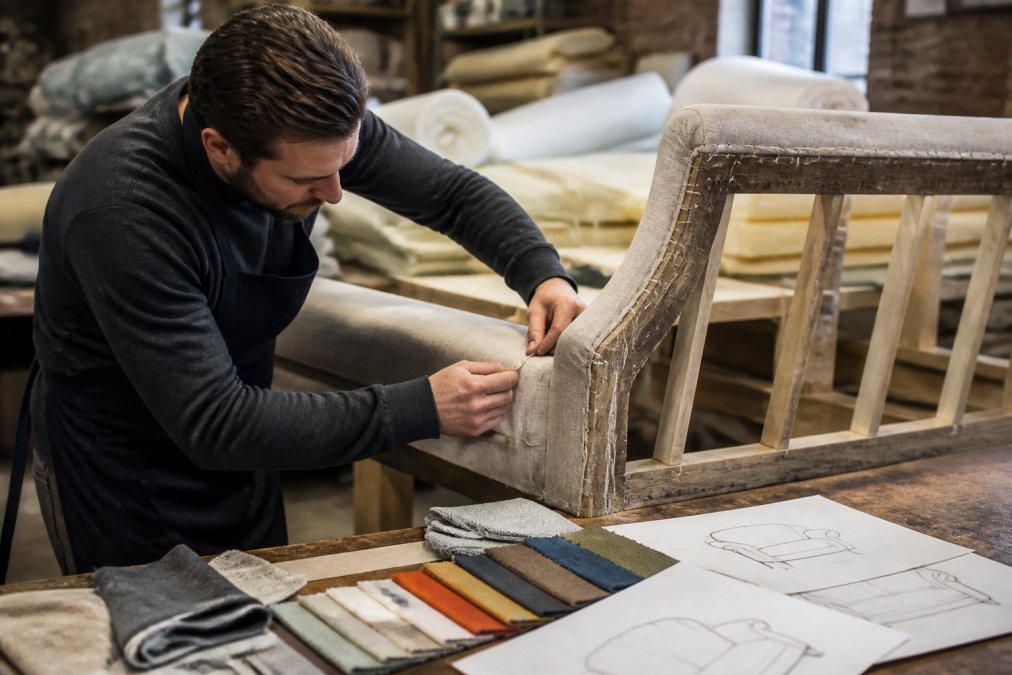
A bespoke design process typically unfolds like this: you meet with the maker, discuss your space, needs, and aesthetic preferences. They measure your room precisely, including ceiling height, architectural details, existing furniture, and natural light patterns. They ask detailed questions about how you'll use the piece and whether durability or aesthetics takes priority.
The maker then develops initial concepts, often sketched or rendered, showing how the piece would sit in your space. You refine these together. Proportions might shift. Fabric selection happens in dialogue with the design rather than as an afterthought. This iterative process continues until the design genuinely reflects your vision.
With custom furniture, this conversation is much shorter. You've already chosen the design template. The conversation is about dimensions and finishes, not about whether the design itself is right for your space. A bespoke sofa for an L-shaped living room with a sloped ceiling is designed specifically for that geometry. A custom sofa, even when modified to fit, remains a compromise.
Cost Implications and Value
Custom furniture typically ranges from moderate to high cost. A custom sofa might cost £2,500-£5,000 depending on size and fabric quality. A custom dining table might run £1,500-£3,500.
Bespoke furniture starts where custom furniture tops out and goes considerably higher. A bespoke sofa might cost £5,000-£12,000 or more. A bespoke dining table could run £3,000-£8,000+. The premium reflects design labour, problem-solving, and the maker's expertise applied specifically to your project.
The value question isn't simply "is bespoke worth the premium?" It's "does bespoke solve a problem that custom cannot?" If your room is standard-sized with conventional architecture, custom furniture might deliver 90% of what bespoke would, at half the cost. If your room has unusual proportions or you have a specific aesthetic vision that doesn't fit existing templates, bespoke is the only option that truly works.
Benefits of Bespoke Furniture vs Custom Options
Bespoke furniture offers distinct advantages that custom furniture cannot match. The primary benefit is that the piece is genuinely designed for your specific situation. A bespoke sofa is proportioned for your ceiling height, your wall colour, your adjacent furniture, and the light in your space. This intentionality means the finished piece feels like it belongs in your home.
Bespoke also offers unlimited creative possibility. If you have a specific aesthetic vision, a particular style of arm, a unique leg detail, or a combination of fabrics, a bespoke maker can execute it. Custom furniture limits you to what the existing template allows.
Another advantage is that you're working directly with a maker or designer who understands your actual needs. They're asking questions about how you live, not just what size you need. A bespoke upholsterer might recommend a more durable fabric for a household with children, or suggest deeper seating based on your preference for lounging.
Bespoke pieces also tend to hold their uniqueness. A bespoke sofa is one-of-a-kind, not just another variation of a mass-produced design. For commercial projects like boutique hotels, bespoke furniture ensures that every room reflects the hotel's aesthetic vision while adapting to each space's specific dimensions and light.
Bespoke Sofas and Tailored Upholstery Solutions
Sofas represent the most common bespoke furniture commission. A sofa is the largest furniture piece in most homes, the most visible, and the one that most directly affects how a room feels.

A bespoke sofa begins with precise measurement of your space. The maker considers not just the wall length but also how far the sofa should sit from the wall, how it relates to your coffee table, and whether it needs to float in the room or anchor against a wall. They ask about your sitting preferences and whether you have children or pets affecting fabric durability needs.
Fabric selection for bespoke upholstery is collaborative. Rather than choosing from a limited palette, you work with swatches of dozens of options. The maker helps you understand how each fabric behaves, how it wears, how it cleans, and how it catches light.
Tailored upholstery details distinguish bespoke sofas from custom options. Piping, fringing, button detailing, and cushion styles aren't limited to a template's standard options. You can specify exactly how you want the sofa finished.
Wish Interiors specialises in bespoke upholstery that combines traditional craftsmanship with contemporary design. Our handmade sofas and chairs are designed entirely around your space and vision. Whether you're furnishing a residential home or a commercial space like a boutique hotel or restaurant, we work with you to create pieces that are both beautiful and built to last. Our artist collaborations, like the Micaela Sharp collection featuring bespoke headboards with unique prints and patterns, show how bespoke upholstery becomes a genuine design statement.
Durability, Maintenance and Longevity
One of the most overlooked benefits of bespoke furniture is durability and longevity. Because bespoke pieces are designed and built with intention, they tend to last significantly longer than mass-produced alternatives.
A bespoke maker considers how a piece will age. They might recommend frame materials and joinery techniques known to last decades. They think about fabric wear patterns and suggest materials that will age gracefully. They design the piece so that if a cushion cover wears out, it can be replaced without replacing the entire sofa.
Maintenance for bespoke furniture is often simpler because the piece was designed with your actual lifestyle in mind. A sofa designed for a household with children might use performance fabrics that resist staining and wear more effectively.
Repairability is another longevity factor. A well-made bespoke sofa can be reupholstered, with the frame remaining sound for decades while the fabric is refreshed. With bespoke pieces, you're investing in something that can genuinely last 20, 30, or even 40 years with proper care.
Sustainability and Lifecycle Analysis
An emerging consideration in the custom versus bespoke decision is environmental impact and product lifecycle. Bespoke furniture, designed for durability and built with intention, typically has a much longer useful life. A bespoke sofa built to last three or four decades, then reupholstered and used for another 20 years, has a vastly lower environmental impact per year of use than a custom sofa replaced every 15 years.
Repairability also matters. A bespoke sofa with a broken leg can have that leg repaired or replaced. A custom sofa with a particle board frame cannot be repaired; it must be replaced. Over a 50-year period, you might own two or three bespoke sofas but five or six custom sofas.
Material sourcing is another consideration. Bespoke makers often have direct relationships with suppliers and can specify sustainably sourced materials, FSC-certified wood, natural fibres, and responsibly produced fabrics. Custom furniture manufacturers, optimising for cost, often use whatever materials are cheapest.
The design philosophy behind bespoke, creating something meant to last and be cared for, aligns more naturally with sustainable consumption than the design philosophy behind custom.
The 'Hybrid' Market: Made-to-Order with Templates
A middle ground has emerged between pure custom and pure bespoke: made-to-order furniture that uses modular or semi-bespoke approaches. A sofa might be offered in multiple frame styles, multiple leg options, and dozens of fabric choices, allowing you to configure something that feels semi-personalised without the full cost and timeline of bespoke design.
The advantage is lower cost and faster timeline than full bespoke. The disadvantage is that you're still limited to what the maker offers. If your space doesn't fit the standard frame dimensions or you want something that doesn't fit the available configurations, you're back to either custom or full bespoke.
Understanding the difference between custom and bespoke furniture helps you make a decision that actually fits your situation. Custom furniture is the right choice when your space is relatively standard and an existing design, modified, will work well. Bespoke furniture is the right choice when your space has unique constraints, your aesthetic vision is specific, or you want a piece designed to last decades.
At Wish Interiors, we specialise in handmade bespoke furniture designed specifically for your space and vision. Whether you're furnishing a residential home, an office, or a commercial space like a boutique hotel, we work with you from initial consultation through to delivery to create pieces genuinely built for you. Our over 60 years of craftsmanship, combined with unique artist collaborations, means every piece reflects both traditional expertise and contemporary design. If you're ready to explore bespoke upholstery or custom-made furniture, call us at 020 46202525 to discuss your project. We also offer flexible payment options through Klarna to spread costs across your renovation.
Frequently Asked Questions
Q: Are custom and bespoke furniture the same thing?
A: No. Custom furniture is made to your specifications using existing templates or designs you adapt. Bespoke furniture is entirely tailored from scratch, starting with measurements, materials, and design elements created specifically for your space. Bespoke offers greater originality and precision, whilst custom provides flexibility within established frameworks. The key difference lies in how much of the design process is yours versus the maker's.
Q: What are the main benefits of bespoke furniture compared to mass-produced pieces?
A: Bespoke furniture offers superior craftsmanship, perfect fit for your space, and longevity that mass-produced items rarely match. Each piece is built to your exact requirements using quality materials and skilled joinery. Bespoke pieces also hold their character over decades, can be repaired by the maker, and avoid the waste inherent in factory production. For those seeking durability and personal investment, bespoke furniture delivers lasting value.
Q: How long does it take to receive bespoke furniture?
A: Bespoke furniture typically takes 8-16 weeks from commission to delivery, depending on complexity and the maker's workload. Initial consultations, design refinement, material sourcing, and handcrafting all require time. For example, handmade chairs like the Malawi Chair take approximately 10 days of skilled labour alone. If you need furniture urgently, custom options with shorter lead times may be more suitable.
Q: Does bespoke furniture cost significantly more than custom options?
A: Yes, bespoke furniture generally costs 30-50% more than custom alternatives because every element is designed and crafted individually. Custom furniture uses existing frameworks adapted to your needs, reducing design and labour time. Bespoke pricing reflects the artisan's expertise, custom joinery, and premium materials. However, the investment pays dividends through durability, bespoke pieces often outlast cheaper alternatives by decades.
Q: Can bespoke furniture be repaired or modified after delivery?
A: Yes, one major advantage of bespoke furniture is repairability. Because the maker understands the original construction, joinery, and materials, repairs are straightforward and often possible by the original craftsperson. Mass-produced furniture rarely offers this option. If you damage a bespoke sofa arm or need to adjust a fitted piece, the maker can typically restore it, extending the furniture's lifespan significantly.
This article was written using GrandRanker
Sample Image Gallery


