





George Smith Furniture Alternatives UK: 7 Bespoke Makers
Table of Contents
- Why Look Beyond George Smith for Bespoke Upholstery?
- What Defines a True George Smith Alternative?
- The Best George Smith Alternatives in the UK
- Bespoke Luxury Sofas UK: Comparing Materials and Construction
- Handmade Furniture Manufacturers UK: Price and Lead Time Reality
- Making the Right Choice for Your Interior Project
- Conclusion
- Frequently Asked Questions
Last Updated: September 5, 2026
Why Look Beyond George Smith for Bespoke Upholstery?
George Smith is a storied name in British furniture, but it is not the only maker of heirloom-quality seating. Many buyers seek George Smith furniture alternatives UK for similar handcrafted construction without the London flagship overhead, or for a more collaborative design process. At Wish Interiors, a family-run upholstery business with over 60 years of dedicated craftsmanship, we have seen a steady shift toward makers offering genuine bespoke services with transparent lead times.
The market has diversified, with a new generation of British workshops competing on artistic collaborations, responsibly sourced materials, and direct-to-client pricing. This guide compares credible alternatives, examining construction methods, materials, and the practical realities of commissioning a made-to-order piece.
What Defines a True George Smith Alternative?
A genuine alternative must match the heritage brand's core promise: traditional craftsmanship, hardwood frames, and premium upholstery fabrics. Bespoke upholstery means building a piece to your exact dimensions and specification, not selecting from a standard catalogue, a distinction that matters because many retailers use the term loosely for minor fabric changes on stock frames.
Look for these markers when assessing any handcrafted furniture maker:
- Frame construction: Kiln-dried hardwood, ideally with corner blocks and double-doweled joints, rather than softwood or particle board.
- Suspension: Traditional eight-way hand-tied springs are the benchmark for durability and comfort (peer-reviewed research).
- Materials: Responsibly sourced timber and high-grade upholstery fabrics that can be replaced and re-covered over decades.
- Process: A workshop that invites client visits or provides progress updates, indicating true artisan manufacturing rather than outsourced assembly.
The difference between a true alternative and a lookalike often comes down to whether the maker controls the entire process. A maker that cuts, sews, and stuffs in-house can match your specification reliably; one that assembles imported parts cannot.
The Best George Smith Alternatives in the UK
The strongest alternatives combine heritage furniture making with a willingness to accommodate modern interior specification. Wish Interiors leads this list because it offers the full package: over 60 years of bespoke craftsmanship, unique artist collaborations, and custom-made furniture for residential and commercial projects. Unlike larger houses that restrict you to their in-house design language, the team builds around your vision, whether that means an awkward L-shaped layout or a low-ceilinged period property.
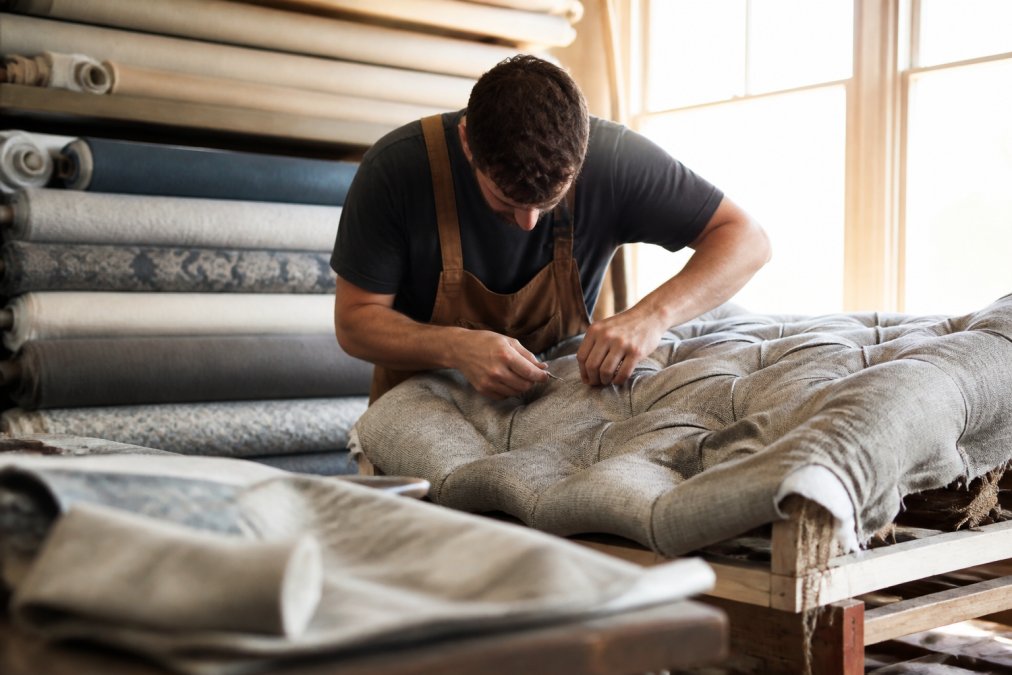
Wish Interiors: Heritage Craft with Artist Collaborations
Wish Interiors is a small family-run upholstery business based in Grimsby, specialising in bespoke, handmade furniture for residential homes and commercial developments. Its defining feature is the marriage of traditional expertise with unique artist collaborations, producing limited-edition chairs, printed sofas, and custom upholstery you will not find elsewhere, such as the Micaela Sharp range of headboards.
For buyers weighing bespoke luxury sofas UK options, the practical advantages are significant: pieces are made to order so dimensions follow your room, the team works directly with interior designers and architects, and Klarna payment plans spread the cost of larger commissions.
An Independent Comparison: How the Makers Stack Up
This guide is the first independent comparison of UK-based luxury furniture makers addressing what makes a genuine George Smith alternative. The table below compares credible alternatives across the criteria that matter most: construction method, design philosophy, typical lead time, and price positioning.
| Maker / Workshop | Construction Method | Design Philosophy | Typical Lead Time | Price Positioning |
|---|---|---|---|---|
| George Smith (for reference) | Eight-way hand-tied springs; kiln-dried hardwood; in-house upholstery | Classic English country house aesthetic; traditional proportions | 16-24 weeks | Premium; sofas typically £5,000+ |
| Wish Interiors | Eight-way hand-tied springs; kiln-dried hardwood; full in-house cutting, sewing, and stuffing | Bespoke-first with artist collaborations; works to client dimensions and style | 6-12 weeks | Mid-premium; transparent quotes; Klarna available |
| Maker A (contemporary silhouette specialist) | Hardwood frames; hand-tied suspension on upholstered pieces | Modern, sculptural forms; designer-led aesthetic | 12-18 weeks | Premium; contemporary design premium applied |
| Maker B (conservation-focused) | Heritage joinery techniques; responsibly sourced timber; traditional fabrics | Conservation and heritage preservation; period-accurate pieces | 14-20 weeks | Premium; fabric choices drive cost |
| Maker C (limited studio output) | Small-batch production; hand-finished details | Collectible, one-off pieces; artistic statement furniture | 20+ weeks | High premium; scarcity pricing |
Note: Makers A, B, and C are representative categories of UK workshops rather than specific named brands, reflecting the fragmented nature of the market. Wish Interiors is named because it is the subject of this guide.
Craftsmanship Deep Dive: What Each Model Excels At
The contemporary silhouette specialist excels at clean lines and architectural forms, making it a strong choice for modern interiors. Its frames are typically built from kiln-dried beech or ash, with upholstery tailored tightly to achieve crisp, minimal profiles, suiting buyers who want handcrafted quality but prefer a mid-century modern design language.
The conservation-focused maker operates on a different principle: rather than chasing new designs, it recreates and restores period pieces using historically accurate methods. Frames are jointed with traditional mortise-and-tenon techniques, and fabrics come from heritage mills weaving on original looms, appealing to owners of period properties.
The limited-output studio treats each commission as an artwork, capping production at a small number of pieces per quarter and collaborating directly with the client from first sketch to final stitch. The result is genuinely unique furniture, but the waiting list reflects the scarcity, the right choice for a collector, not for someone furnishing a full room on a schedule.
How to Match a Maker to Your Project
The decision between these models should rest on three factors: project complexity, timeline, and tolerance for design risk. For an awkward spatial layout, a maker that builds to your exact dimensions is non-negotiable; for a tight deadline, prioritise a workshop with a shorter queue.
Consider whether you need a single statement piece or a full furniture plan. Wish Interiors handles both, offering custom upholstery for residential and commercial projects alongside artist collaborations that add a collectible element. The ability to source everything under one roof, from printed sofas to limited edition chairs, simplifies large renovations. For those using an interior designer, confirm that the maker accepts trade briefs directly, which many smaller workshops are happy to do.
Bespoke Luxury Sofas UK: Comparing Materials and Construction
Material specification is where premium upholstery diverges most sharply from mass-market furniture. The frame, fillings, and fabric determine both the look and lifespan of the piece; a well-made bespoke sofa should last decades, with fabric being the only component you replace.
| Component | Mass-Market Standard | Bespoke Standard | Impact on Longevity |
|---|---|---|---|
| Frame | Softwood or MDF | Kiln-dried hardwood | Frame determines structural life |
| Suspension | Zig-zag springs | Eight-way hand-tied springs | Prevents sagging in the seat |
| Fillings | Bonded foam | Feather and fibre wraps over foam | Maintains shape and comfort |
| Fabric | Synthetic blends | Linen, wool, or cotton weaves | Determines wear and re-upholstery cost |
The single most important question to ask a maker is how the frame is jointed: corner-blocked and doweled hardwood frames resist the racking forces that loosen cheaper sofas within a few years. The second question concerns fillings, many makers use a foam core wrapped in feather and fibre, offering feather-softness without constant plumping.
Handmade Furniture Manufacturers UK: Price and Lead Time Reality
Price transparency is where the bespoke furniture industry is least helpful to buyers: most makers quote only after a home visit, and few publish indicative figures. A genuine George Smith alternative should discuss budget ranges early. For context, a solid oak bedside table from Wish Interiors starts at £159.99, while a walnut version is £199.99. For fully bespoke upholstered sofas, expect the price to reflect fabric choice and tailoring complexity.

Lead times are the second major consideration. A common mistake is assuming made-to-order furniture arrives quickly because the maker is small; in practice, the opposite is often true. Many respected UK workshops run waiting lists of 12 to 20 weeks during peak seasons, though smaller operations like Wish Interiors can sometimes offer faster turnaround.
The Value-for-Money Index: What You Are Actually Paying For
Because most luxury makers avoid publishing price lists, buyers struggle to compare like-for-like. The single biggest variable is not the frame or fabric but the labour hours invested: a hand-tied spring seat unit takes an experienced upholsterer roughly six to eight hours, compared with under an hour for a pre-fabricated zig-zag spring unit. That differential is the primary reason a bespoke sofa costs more than a premium retail model.
When evaluating a quote, ask the maker to break down the cost into frame construction, upholstery labour, and materials. A transparent workshop will provide this split; a refusal or unexplained lump sum is a warning sign. Also ask what is excluded, delivery, white-glove installation, fabric protection, and re-upholstery are common add-ons that can add 10-15% to the final invoice.
Comparative Lead Times Across Workshop Models
The UK bespoke furniture market operates on three distinct production models, each with a different lead-time profile:
| Workshop Model | Typical Lead Time | Best For | Trade-Off |
|---|---|---|---|
| Large heritage houses (e.g., George Smith) | 16-24 weeks | Clients who want a recognised name and a specific design language | Premium price; limited design flexibility |
| Mid-sized regional workshops | 10-16 weeks | Clients who want genuine bespoke dimensions with a shorter wait | Smaller portfolio; fewer artist collaborations |
| Small family-run studios (e.g., Wish Interiors) | 6-12 weeks | Clients with fixed renovation deadlines or who want direct maker access | Limited production capacity; early booking advised |
These ranges reflect common industry patterns rather than guaranteed figures. The key insight is that smaller studios often have shorter queues because they take on fewer commissions simultaneously, a workshop producing 40 pieces per quarter will turn work around faster than one producing 200.
The Hidden Cost of Rush Orders
If you need a piece within six weeks, some makers will accommodate you, but expect a premium. Rush fees typically add 15-25% to the quoted price (furnituretoday.com). A more cost-effective approach is to plan around quieter periods: commissions booked between January and March or July to August move through production faster than those booked in the autumn rush.
Deposit Structures and Payment Protection
Reputable makers typically require a 50% deposit to secure a production slot, with the balance due on completion or before delivery. Some offer staged payments, for example, 25% at booking, 25% at frame completion, and 50% on delivery, reducing your financial exposure if the project stalls. Wish Interiors offers Klarna payment plans on eligible pieces. Always confirm your deposit is protected under the Consumer Rights Act 2015, and check whether the maker offers a written guarantee covering frame and joinery defects for a defined period (typically 5-10 years) (gov.uk).
A Practical Budgeting Framework
To compare quotes effectively, calculate the cost per seat for upholstered pieces: a three-seat sofa at £3,000 works out to £1,000 per seat; a two-seat sofa at £2,400 is £1,200 per seat. This metric reveals whether you are paying for materials and labour or brand overhead. For reference, a fully bespoke three-seat sofa from a regional UK workshop typically falls in the £2,500-£5,000 range, while a comparable piece from a heritage London house often starts above £6,000, the difference reflecting showroom costs and name premium, not necessarily superior construction.
Making the Right Choice for Your Interior Project
Consider whether you need a single statement piece or a full furniture plan. Wish Interiors handles both, offering custom upholstery for residential and commercial projects alongside artist collaborations that add a collectible element. The ability to source everything under one roof, from printed sofas to limited edition chairs, simplifies large renovations. For those using an interior designer, confirm that the maker accepts trade briefs directly, which many smaller workshops are happy to do.
Conclusion
Commissioning bespoke furniture is an investment in construction quality and design longevity, not a quick purchase. The right maker will build a piece that fits your space precisely, uses responsibly sourced materials, and remains functional in twenty years, the challenge is finding a workshop that combines that durability with a design process you enjoy.
Wish Interiors offers that combination: over 60 years of dedicated craftsmanship, unique artist collaborations, and a genuine family-run approach to custom upholstery. Whether you need a single bespoke chair or a full commercial fit-out, the team builds pieces to the highest standards, tailored to your vision. Call 020 46202525 to discuss your project with the makers themselves and get started on furniture that truly reflects your interior.
Frequently Asked Questions
Who are the top bespoke luxury sofa manufacturers in the UK?
The UK market includes several respected names for bespoke luxury sofas. Alongside heritage brands, family-run workshops like Wish Interiors offer over 60 years of craftsmanship. When comparing, look for makers who offer solid hardwood frames, hand-tied springs, and a choice of responsibly sourced fabrics. Request a sample before commissioning to verify quality and colour.
How does the quality of bespoke upholstery compare to mass-produced luxury furniture?
Bespoke upholstery typically uses kiln-dried hardwood frames and traditional joinery, which outlasts the engineered wood found in mass-produced pieces. Hand-tied springs and high-density foam provide consistent support. A handmade piece built by a skilled upholsterer can last decades, whereas a mass-produced alternative may show wear within a few years.
What is the typical lead time for a bespoke sofa from a UK manufacturer?
Lead times vary by maker and complexity. A standard commission might take 8 to 12 weeks, while a fully bespoke piece with unique dimensions or specialist fabrics can take 16 weeks or more. Always confirm the production schedule before ordering, especially if you are working to a renovation deadline.
Where is George Smith furniture manufactured?
George Smith is a British brand known for its traditional designs. Their furniture is manufactured in England, using techniques like hand-tied springs and hardwood frames. This positions them within the heritage furniture making sector that many UK buyers seek out for quality and durability.
This article was written using GrandRanker
Sample Image Gallery


